
Russia Steps Up Multi-Front Pressure On Ukraine With Drones, Decoys, Missiles, And North Korean Forces – Analysis
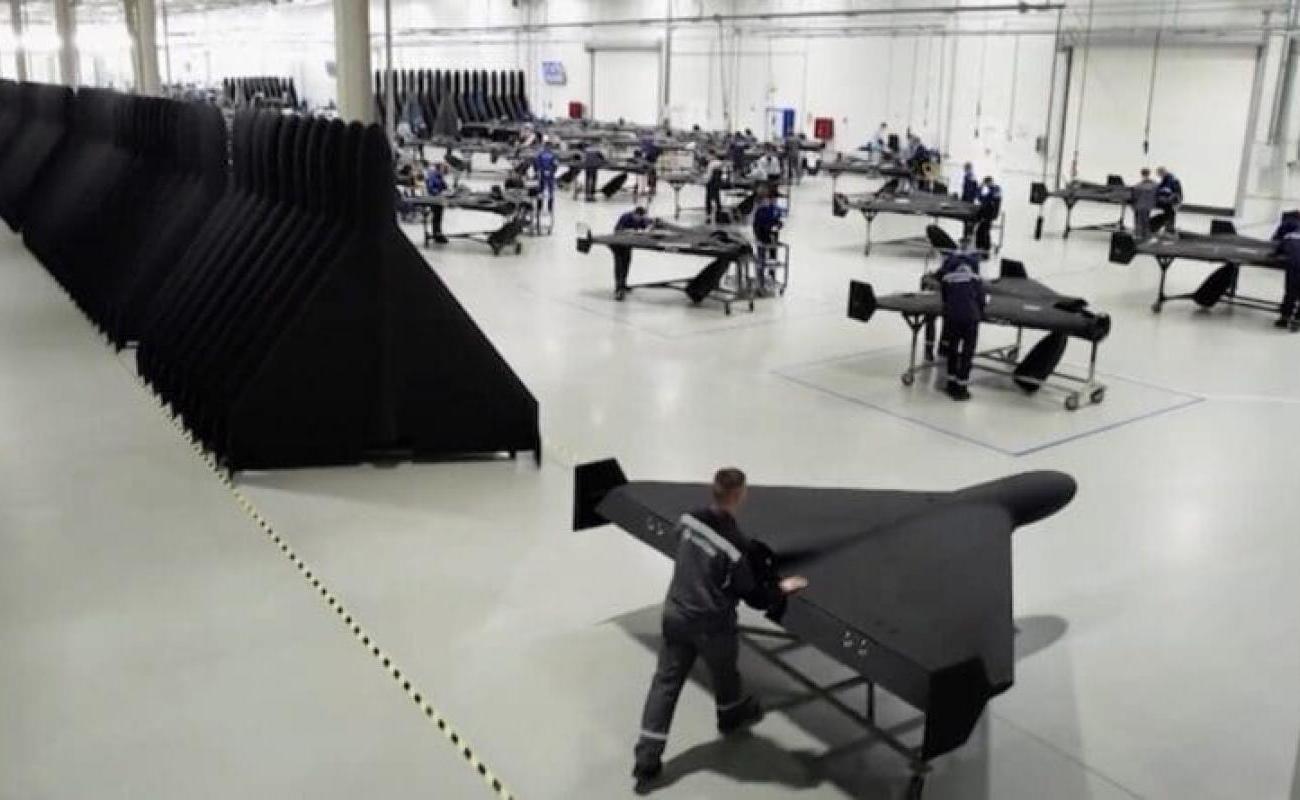
- Russia is intensifying mixed-vector pressure on Ukraine with large Shahed/Gerbera drone salvos, missiles, and decoys—including repeated strikes on Ukraine–Moldova border crossings—while North Korean personnel and drone/missile units expand Moscow’s capacity.
- Ground fighting remains heavy, with more than 200 daily engagements focused on Kostiantynivka, Pokrovsk, and other eastern axes.
- The UK authorized release of classified Storm Shadow/SCALP data so France and Ukraine can set up local assembly, shifting support toward Ukrainian production capacity; Moscow has already threatened UK arms factories in response.
1. Battlefield Assessment
Long-range salvos enabled by missile and drone warfare continued to shape the war. Overnight on August 25, a Russian Shahed drone struck the Vynohradivka international road crossing between Ukraine’s Odesa Oblast and Moldova. The strike damaged infrastructure, temporarily closing the checkpoint and redirecting traffic elsewhere.
The strike was Russia’s third attack in two weeks on a Ukraine–Moldova border crossing. This pattern suggests a coordinated Kremlin campaign rather than a series of isolated strikes. Moscow is likely targeting the connective tissue of Europe’s eastern frontier.
On the night of August 24–25, Russia also attacked Ukraine with 150 Shahed-Gerbera loitering munitions. Moscow launched Iskander-M and Kh-31 missiles, as well as Parodiya decoy drones, including jet-powered variants. Ukrainian aircraft, missile and electronic-warfare units, interceptor drones, and mobile teams neutralized 124 unmanned aerial vehicles involved in the attacks. Nonetheless, Russia struck 17 locations in Ukraine.
The barrage illustrated how Russia has organized its concept of operations around mixed-vector pressure designed to exhaust Ukraine’s layered defenses. In May 2026, Ukrainian intelligence services estimated that Russia intended for half of its Shahed drone-warfare deterrent to be jet-powered variants of the loitering munition. Russian planners aimed to produce 500 such jet-powered drones per month and launch 60,000 long-range attack drones and 50,000 decoy drones over the course of a year. Ukraine’s recently unveiled jet-powered Alexa Spatium interceptor is one part of Kyiv’s answer to Russia’s strategy.
Additionally, North Korea’s role in Russia’s war continued to expand into the robotic warfare domain. Major General Vadym Skibitskyi, the deputy head of Ukraine’s Defense Intelligence (GUR), reported that the Kremlin has deployed 8,500 North Korean personnel in Russia’s Kursk Oblast, including 400 drone operators assigned to reconnaissance and attack missions. A North Korean missile unit in Russia’s Voronezh Oblast could field six launchers and 120 ballistic missiles, supplementing the KN-23 and KN-24 missiles Pyongyang has already delivered.
The land-warfare segment of the conflict remained consistent with recent patterns. Combat activity remained elevated. Officials reported more than 200 tactical engagements daily. Kostiantynivka and Pokrovsk bore the brunt of the fighting. The axes of Lyman, Sloviansk, Kupiansk, and Huliaipole also remained highly active.
2. Ukraine’s Storm Shadow Moment
On August 24, UK Prime Minister Andy Burnham made a major announcement in Kyiv. He revealed that the United Kingdom had authorizedMBDA, a European multinational corporation that specializes in the design and production of missiles, to release classified data on the Storm Shadow/SCALP components. The decision enables France and Ukraine to establish local assembly lines to produce the missile, which to date has been produced primarily in the UK.
The UK first supplied Ukraine with the munition in 2023 and replenished its stocks in 2025. Storm Shadow, the UK variant of the joint Anglo-French cruise missile, has enabled Kyiv to strike command centers, air-defense positions, shipyards, logistics nodes, and hardened infrastructure beyond the front lines. Burnham’s announcement shifts British support for Ukraine from weapons transfers toward giving Kyiv greater control over its own strike capacity. The ability to manufacture the missile locally could reduce Ukraine’s dependence on European inventories and allow production to reflect Kyiv’s own adaptations and targeting priorities.
Moscow recognized the importance of Burnham’s announcement: Kremlin adviser Andrei Fedorov threatened British arms factories with “semi-military” attacks by “unknown sources.” This cryptic comment signaled Moscow’s potential willingness to expand the Ukraine conflict into Europe’s industrial rear through familiar methods of obscuring attribution, testing allied resolve, and raising the costs of supporting Kyiv. Russian strikes on UK manufacturing nodes could create production bottlenecks affecting engines, seekers, guidance systems, warheads, certification, financing, and launch aircraft.
Nonetheless, Russian threats only highlight the importance of the Storm Shadow/SCALP missile. MBDA describes the weapon as an air-launched deep-strike system for high-value fixed targets, including hardened bunkers and infrastructure. The missile operates in all weather, day or night, and combines inertial navigation, Global Positioning System capabilities, terrain referencing, low-altitude flight, and infrared image matching.
The munition provides Ukraine with precision, penetration, and survivability while allowing Kyiv to keep its launch aircraft beyond the reach of Russian air defenses. The missile’s dual-stage warhead can defeat hardened targets. Its principal limitation is that it is optimized for pre-planned fixed targets rather than mobile battlefield hunting. Regardless, domestic production of Storm Shadow/SCALP, previously available only in limited quantities, would allow Ukraine to sustain pressure on Russia’s operational depth.
3. What to Monitor in the Coming Weeks
Russia may intensify its shadow war against the UK in response to the transfer of Storm Shadow technology. Russian retaliation could include cyber intrusions, surveillance of MBDA-linked facilities, arson and sabotage carried out by criminal proxies, disruption of defense logistics, and attempted assassinations of senior British political, military, intelligence, or defense industry officials.
- About the author: Can Kasapoğlu is a nonresident senior fellow at Hudson Institute. His work at Hudson focuses on political-military affairs in the Middle East, North Africa, and former Soviet regions. He specializes in open-source defense intelligence, geopolitical assessments, international weapons market trends, as well as emerging defense technologies and related concepts of operations.
- Source: This article was published by the Hudson Institute