
A window for negotiations with Russia. What arguments does Ukraine already have?
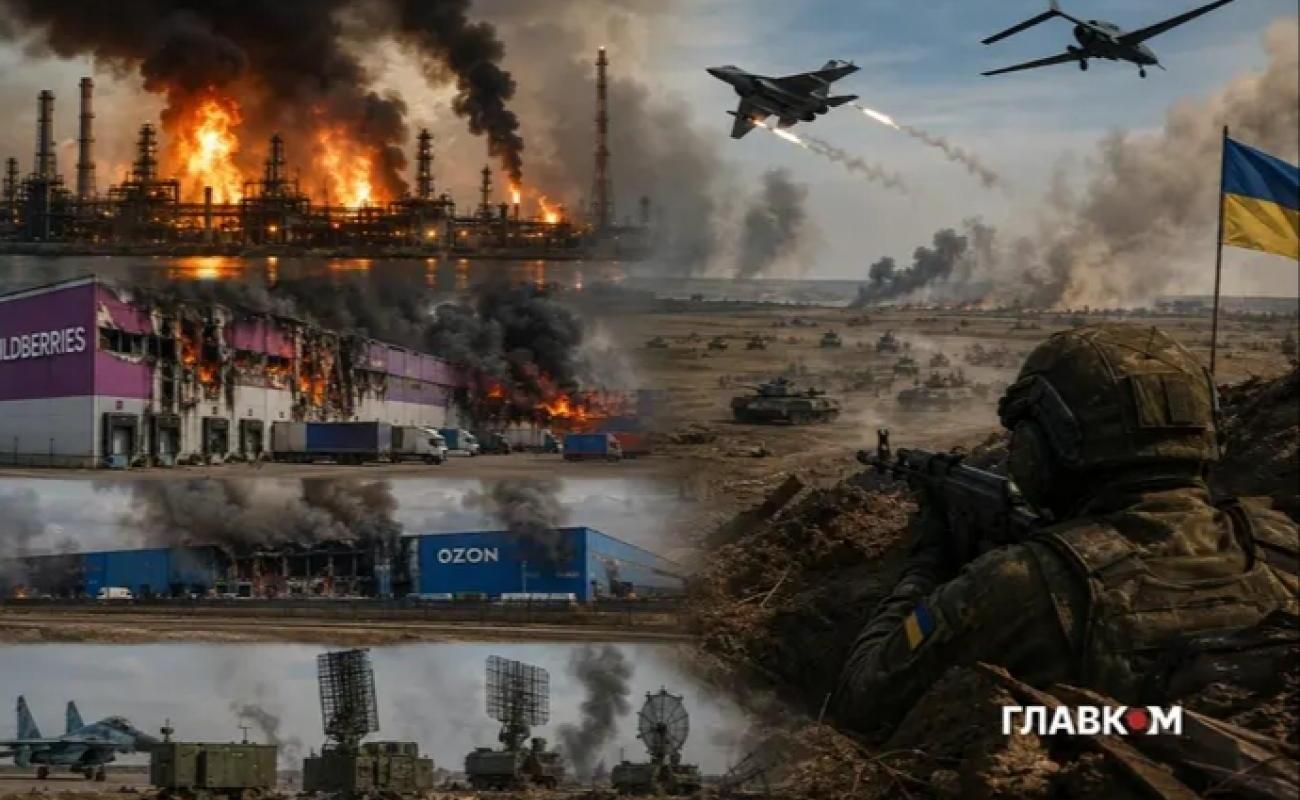
While Putin plans to wage war until the end of 2027, Ukraine is methodically weakening Russia.
The end of summer is upon us, after which the political season will begin in earnest.
We will summarize the promises and plans announced in the past few days later, as there are no details. In particular, the most important topic is investing 0.25 percent of European countries' GDP in their own defense through aid to Ukraine. The idea has been on the table for more than three years, and current comments are ambiguous.
Another turning point is the statement about the "window of opportunity" for agreements: late autumn 2026 - summer 2027. This means stating that a hypothetical exit from the war is tied to the American election cycle. This is not about good or bad. It is a fact: without serious involvement of the Americans, the chances are assessed as not very realistic.
We have already noted that Putin has the motivation to continue the war for another year (actually, until the end of autumn 2027), until elections are held in a number of important European countries, where he expects a favorable result. Combining these cycles will not be easy.
But Ukraine has arguments.
- The situation with Wildberries has stabilized, although several large warehouses still remain. The general problems of the Russian economy as a result of this campaign (direct losses of Wildberries, tax debts, growth of problem loans in banks, losses of sellers...) are already estimated at approximately a trillion rubles. This is no longer a local hole, but an exit to the macroeconomic level.
- By pure coincidence, some of the "Ozon" warehouses caught fire. The economy of another market is somewhat different, comparisons were made. "Ozon" is minimally not expected to make a profit this year. But the most interesting thing is where the warehouses have caught fire in recent days. These are Enem (Adygea, de facto - Krasnodar) and Tyube (Dagestan, de facto - Makhachkala).
Interest has also been expressed in the warehouse in Nevinnomyssk (Stavropol Territory). That is, we are talking about the disorganization of dual-purpose logistics in the south of the Russian Federation, where the shortest route runs through Turkey, Georgia, Armenia and is closest to the bases of the occupation group.
- More importantly, on August 23/24, the DGS hit four air defense targets in the Rostov region:
A MiG-29 fighter at the Millerovo airfield.
A Kasta 2E2 radar (Geraskin settlement).
A Kasta 2E2 radar (Karaichiv settlement).
A Radar Nebo-SV (Gukovo settlement).
Look at the map: these radars were located between the state border of Ukraine and the M-4 Don highway (the distance between the extreme points from north to south is approximately 145 kilometers). The MiG probably operated on the same route.
Approximately 20 kilometers south of Karaichiv and 30 kilometers north of Gukovo is the Kamensky plant, which produces fuel for long-range MLRS shells and several types of missiles. And where, too, operations were recorded.
In general, this creates certain gaps in air defense and is a signal for the logistics of the Don route. Not only in Crimea, but also on the Russian coast of the Caucasus will become dramatically sadder.
On August 23, Russian aircraft were shot down near Anapa (Krasnodar Territory). The Su-33 (formally a carrier-based fighter that can also act as an air tanker), the MiG-29 fighter, and the Orion drone are gone.
All of the above is just one area on Russian territory where holes now need to be patched up. After all, there have been notable successes in Crimean air defense, especially in terms of disabling air/missile defense.
- The gasoline crisis in the Russian Federation is being kept at bay. Video footage from various regions, especially from Moscow, shows that diesel is more or less available at gas stations. But the gasoline problems have become chronic. This is spoiling the mood of Russian citizens. Especially in light of the open statements of Putin and his closest associates that they want to fight a long war. Because what else is left?
But the main thing is to see: Ukraine has achieved a 25-30 percent reduction in the production of high-octane gasoline in Russia and is maintaining that level (new attacks on refineries are on the horizon).
There is not enough public data to assess what is more important/realistic - to try to work even deeper to destroy oil refineries or to destroy other industries - so there will be no assessment here. But the dynamics of visible defeats are measurable. It will be calculated in a week.