
EU Dreams Collide with Russia’s Hybrid War in Moldova
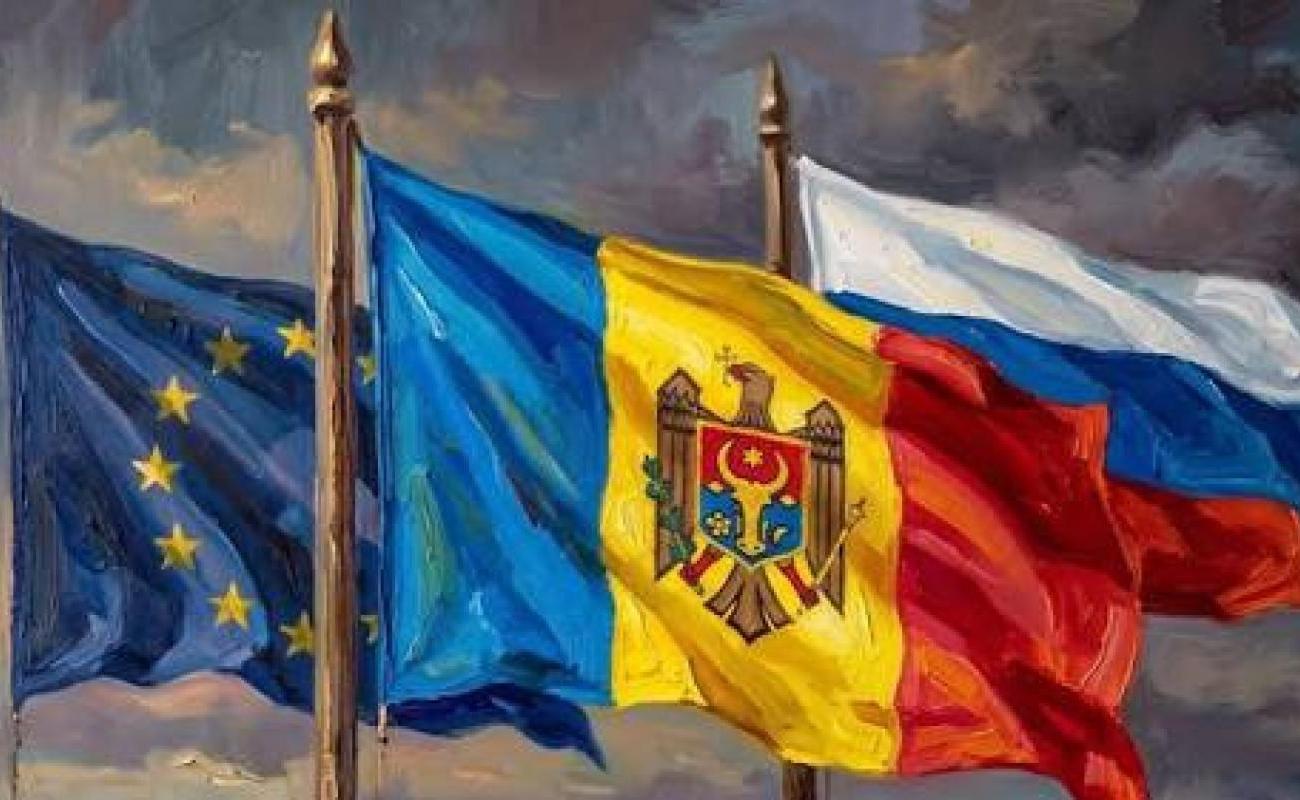
Moldova is small, but its geopolitical weight is no longer marginal. Wedged between Romania and Ukraine, close to the Black Sea and carrying the unresolved problem of Transnistria, the country has become one of the most exposed points in the contest between Russia and the European Union. The issue is not simply whether Chisinau can join the EU. It is whether a vulnerable post-Soviet state can move into the European political and legal space while Russia retains tools to destabilize it from within.
Russia’s full-scale invasion of Ukraine accelerated this strategic choice. Moldova applied for EU membership in March 2022, received candidate status in June 2022, and opened accession negotiations in June 2024. In June 2026, the EU and Moldova opened the first negotiation cluster, the “fundamentals” cluster, covering rule of law, democratic institutions, public administration reform, and economic criteria. This matters because Moldova’s European path has moved from symbolism to implementation.
For Moscow, Moldova belongs to the former Soviet space it still views as strategically consequential. The threat is not that Moldova could militarily challenge Russia. The threat is precedent: another former Soviet republic consolidating itself inside the EU’s political, economic, and regulatory orbit. In that sense, Moldova sits in the same family of cases as Ukraine and Georgia. It matters not only because of its territory, but because of what its successful transformation would represent.
Transnistria: Russia’s Lever and Liability
Russia’s most visible lever remains Transnistria, the separatist region along Moldova’s eastern border with Ukraine. The region has been outside Chisinau’s effective control since the 1992 conflict and still hosts a Russian military presence, including the Operational Group of Russian Forces and local security structures aligned with Moscow. Transnistria prevents Moldova from exercising full territorial sovereignty and gives Russia a permanent instrument of political pressure.
Yet the leverage is no longer as strong as it once was. Since 2022, the Ukraine war has isolated Transnistria. The territory has no land connection to Russia, and its economic and energy lifelines have become more difficult to sustain. This makes Transnistria both a tool of pressure and a liability. Moscow can use it to destabilize Moldova, but it also has fewer practical options to reinforce it than before the invasion of Ukraine.
The energy dimension reveals this change. For years, Russian gas subsidized Transnistria’s survival and shaped Moldova’s electricity dependence. When Russian gas transit through Ukraine ended at the start of 2025, the separatist region entered a serious crisis. International Crisis Group warned that Moldova was struggling with the energy shock centered on Transnistria, while Carnegie argued the crisis served as a vector for Moscow to weaken Moldova’s pro-European leadership. Energy, in this context, is not just a market problem. It is a weapon of influence.
The Hybrid Warfare Front
Moldova’s most immediate vulnerability is not a conventional invasion but hybrid pressure. Russian hybrid warfare spans cyber operations, opaque political financing, vote-buying, manipulation of energy prices, and the exploitation of internal divisions. This approach is cheaper and less risky than open military action, and it is well suited to a country with limited institutional capacity and a polarized electorate.
The 2025 parliamentary election showed both the danger and the resilience of Moldova’s institutions. The pro-European Party of Action and Solidarity won a majority in a setback for Russian-leaning forces. The campaign, however, took place amid allegations of Russian interference, disinformation, and vote-buying. Moscow denied involvement and later accused Moldova of limiting voting access for Moldovan citizens living in Russia.
The electoral result confirmed Moldova’s European direction, but it also showed that every national poll will function as a geopolitical stress test.
This is why Moldova has become a security issue for the EU. At the EU-Moldova summit in June 2026, European leaders reiterated support for Moldova’s sovereignty, security, and resilience. The joint declaration condemned Russia’s airspace violations, cyberattacks, foreign information manipulation and interference, weaponization of energy, and other destabilizing actions. The message was clear: Moldova is not only an enlargement candidate. It is part of Europe’s eastern security perimeter.
What Russia Wants and What the EU Must Prevent
Moscow does not need to occupy Moldova to shape its future. Its more realistic objective is to slow accession, keep the country divided, weaken trust in institutions, and make the European path appear costly. A destabilized Moldova would serve Russian interests even without a formal change of borders. It would complicate EU enlargement, create uncertainty on Ukraine’s western flank, and preserve a zone of Russian influence inside the European neighborhood.
Moldova’s strategy is the reverse: to turn vulnerability into anchoring. EU integration is not only a modernization project; it is a sovereignty project. For Chisinau, accession promises stronger institutions, access to markets, energy diversification, security cooperation, and a way to reduce the structural leverage that Russia has accumulated over decades.
The EU’s challenge is to make that promise credible before fatigue, economic pain, or hybrid pressure erode public support.
Three scenarios stand out. The first and most likely is an unstable status quo: Moldova continues accession talks while Russia maintains pressure through Transnistria, energy, and information operations. The second is a gradual weakening or neutralization of Transnistria’s separatist leverage, driven by Russia’s difficulties in Ukraine and by Moldova’s deeper economic integration with the EU. The third is renewed destabilization, perhaps through social unrest, an energy shock, or another manipulated electoral cycle. The first scenario is manageable; the third would be a strategic warning for Brussels.