
The winners and losers of the EU’s Growth Plan for the Western Balkans
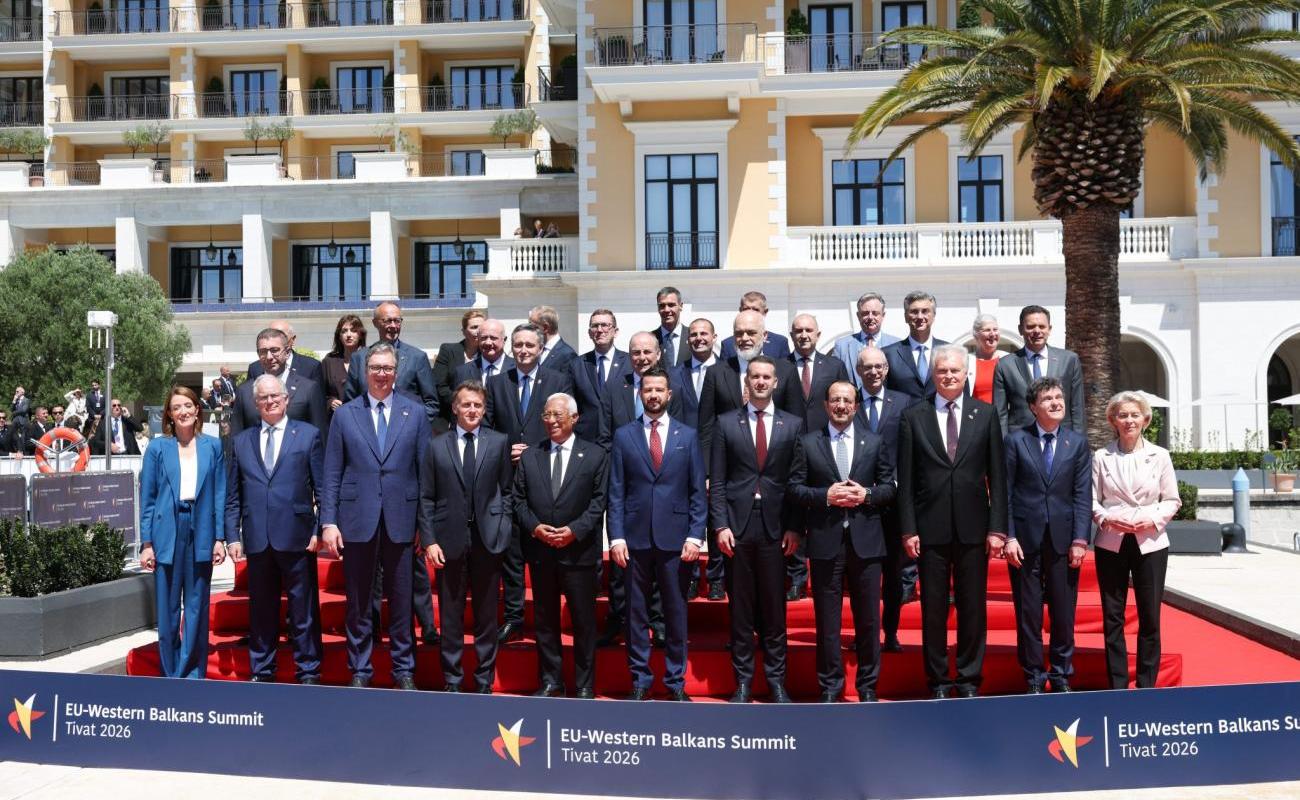
The EU’s €6 billion Growth Plan for the Western Balkans (2024–2027) is now roughly halfway through. Here are six key takeaways from its implementation so far.
The mid-term picture of the implementation of the Growth Plan is highly uneven. While some countries are making steady progress in implementing reforms and drawing down EU funding, others are moving slowly – or barely at all.
Montenegro, Albania and North Macedonia are broadly on track. Serbia, Kosovo and Bosnia and Herzegovina are lagging behind.
The Growth Plan aims to accelerate the region’s integration into the EU single market and support reforms through performance-based financing. Payments are made twice a year, based on progress reports submitted by beneficiaries. The European Commission then assesses whether individual reform milestones have been met. Each milestone effectively comes with its own price tag, and payments are released according to the level of implementation.
What has been achieved so far?
On July 15, Brussels confirmed that five partners from the region had submitted reports covering the fourth reporting period, which ended on June 30.
Although the Commission’s assessment is still pending, officials are keen to present a positive picture. They point out that all Reform Agendas have now been adopted, that a substantial number of milestones have already been completed and that implementation is accelerating across the region.
According to Commission figures, 57 percent of all milestones due so far have been completed, while work had begun on around 90 percent of them by June this year.
Less than two years into implementation, it may still be too early for a definitive assessment. There are no clear indicators yet showing how much the plan has accelerated economic convergence with the EU or brought the region closer to the single market.
What is already clear, however, is that performance varies significantly across the Western Balkans.
Who are the main winners?
Montenegro, Albania and, increasingly, North Macedonia.
In broad terms, the countries making the fastest progress towards EU membership are also the most successful in implementing the Growth Plan.
Montenegro and Albania are expected to reach implementation rates of around 90 percent, reflecting the strong momentum they currently enjoy in their accession negotiations.
North Macedonia has also stepped up its efforts significantly over the past six months and is expected to surpass the 50 percent mark.
For now, there is a clear overlap between the Growth Plan’s top performers and the countries making the strongest reform push towards EU membership.
Who are the main losers?
Serbia, Kosovo and Bosnia and Herzegovina
Among the countries that have already submitted four performance reports, Serbia remains well behind the frontrunners.
Although the Commission says Belgrade has accelerated implementation in recent months, its overall implementation rate is expected to be around 35 percent. Out of 37 reform milestones, only three have been formally confirmed as completed – roughly 11 percent.
For comparison, Montenegro has already completed around 50 percent of its milestones and Albania around 45 percent.
Kosovo is even further behind. Due to domestic political deadlock, it failed to ratify the agreements necessary to launch implementation on time. As a result, Pristina has so far received only the pre-financing payment, equivalent to seven percent of its total allocation.
Only this July did Kosovo submit its first report on completed reforms, which still has to be evaluated by the Commission.
Bosnia and Herzegovina has made virtually no progress at all. Internal political blockages have prevented implementation from getting off the ground. Although the country adopted its Reform Agenda last September, a year behind schedule, it has yet to start delivering reforms under the programme.
Delays continue to accumulate, creating a serious risk that Bosnia could lose a significant share of its allocated funding. Last year, the Commission already withdrew €100 million earmarked for the country due to delays — around 10 percent of its overall allocation.
How much money could be permanently lost?
Under the rules of the Growth Plan, funding linked to reforms that are not completed within the agreed deadline – including the additional grace period – can be permanently lost.
The first such grace period, covering reforms due in the first half of 2025, expired on June 30.
Based on the reports submitted on July 15, the Commission will now determine which milestones qualify as completed and which do not.
Back in April, Brussels warned that Serbia could lose up to €136 million, Bosnia and Herzegovina €374 million, Kosovo €69 million, Albania €67 million and North Macedonia €49 million.
The Commission now says that most beneficiaries have significantly accelerated implementation in recent months and that any eventual losses are likely to be considerably lower.
The exact figures should become clear by October.
Where will the lost money go?
The Growth Plan allows unused funds to be reallocated to countries that perform well, but that is only one possible option.
In practice, the Commission enjoys broad discretion over how the money is used and could decide to redirect it to other priorities, including projects outside the Western Balkans. However, the €100 million already withdrawn from Bosnia and Herzegovina remained in the region after being transferred to the European Innovation Council Compartment for the Western Balkans.
As for any future reallocated funds, the Commission says no decisions have yet been taken.
Will the Growth Plan continue?
The programme itself is not expected to be extended beyond 2027.
Its core principle, however, is likely to survive.
The Commission has already indicated that performance-based financing will become a central feature of EU enlargement funding under the bloc’s next seven-year budget.
In other words, the Growth Plan may come to an end, but the logic behind it – reforms first, money second – is here to stay.
For the region’s top performers, that could mean continued access to EU funding. For those falling behind, the lesson is equally clear: adapt to the new performance-based model or risk losing access to an increasingly important source of EU support.