
Western diplomats face surveillance but keep working in Russia
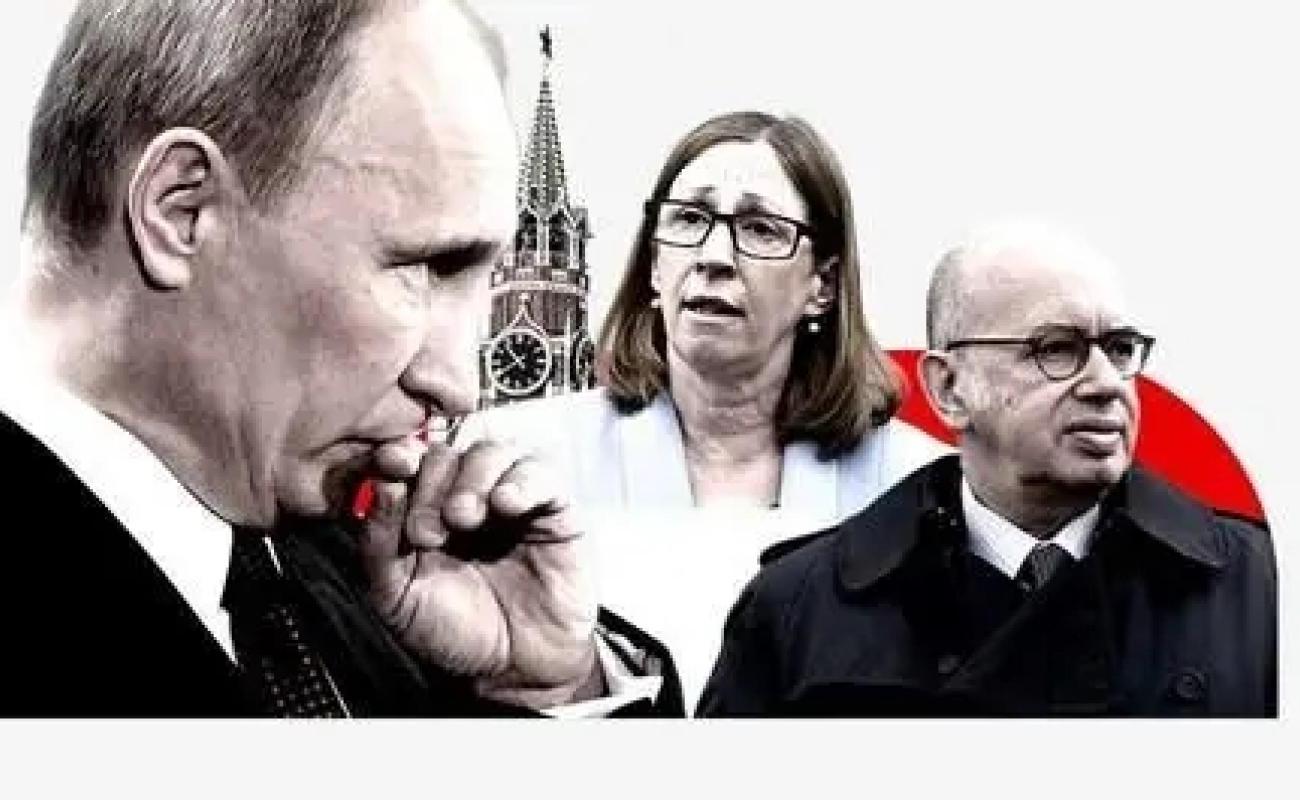
Western diplomats in Moscow face surveillance, shrinking missions and isolation from Russian officials. Their continued presence preserves fragile channels when direct political dialogue has nearly stopped.
Since the start of the full-scale war, Western diplomats in Russia have faced surveillance, staff cuts, financial and practical difficulties, and near-total isolation from Russian officials. Yet they continue to work in Moscow to maintain contact with the authorities, gather information about the country, and assist their citizens and businesses.
In the summer of 2022, a European diplomat arrived in Moscow to head his country’s embassy. He knew he could not expect a warm welcome: after Russia’s invasion of Ukraine, relations with many Western countries had been reduced to protest notes and reciprocal expulsions of diplomats. Even so, he decided to accept the posting, believing that preserving a channel of communication with the Kremlin was especially important during wartime. He left his family back home.
Soon afterward, the Russian authorities ordered him to dismiss the mission’s Russian staff members within two weeks. The staff had already been cut because of the expulsion of diplomats. At an embassy that had previously employed dozens of people, the new ambassador was initially left almost alone, with only one other diplomat beside him. He said he felt very lonely, and had to analyze important developments in Russia with almost no help. Reinforcements from his country arrived only several months later.
Such conditions have become commonplace for representatives of countries Russia has placed on its list of unfriendly states. Diplomatic work in Moscow has become so difficult that former U.S. ambassador Lynne Tracy called the posting the toughest of her career.
Surveillance and psychological pressure
Former psychiatrist Kenneth Dekleva, who headed the U.S. State Department’s program for supporting employees’ mental health, said in 2026 that stress levels for diplomats in Moscow are often higher than in active conflict zones or countries with high crime rates.
Serving as ambassador to Russia was probably the most difficult assignment of my entire career.
- Lynne Tracy, former U.S. ambassador to Russia
During her three decades in the diplomatic service, Tracy served in Armenia, Central Asia, and Pakistan, among other places. In 2008, she survived an armed attack. Yet despite the physical danger, working in Peshawar was easier than in Moscow: there, she could control some of the risks, whereas in Russia, uncertainty was the biggest obstacle to her work.
Diplomats say that uncertainty stems above all from constant pressure by Russian counterintelligence. Surveillance of foreigners in Moscow has a long history. In Soviet times, the KGB used concealed listening devices, spy dust, and people working in embassies. Foreigners could be drawn into personal relationships in an effort to obtain information.
Alan Mustard, who worked at the U.S. Embassy in Moscow as an assistant agricultural attaché in the late 1980s, recalled that American diplomats were warned they were being followed on the streets. Sometimes, he said, the intelligence services did not hide their surveillance - it was meant to intimidate people.
Mustard also described cases in which diplomats returned from trips to find windows left open in their homes and, in winter, frozen pipes. In other cases, he said, refrigerators and freezers were unplugged or cars were damaged. At the same time, he believed diplomatic work had been more meaningful then: the USSR and the United States were trying to prevent nuclear war.
Conditions for Western diplomats in Russia improved after the collapse of the USSR, but later deteriorated again. Some people interviewed say the current level of pressure is reminiscent of the Cold War.
In the spring of 2026, Russian state television aired footage of expelled British Embassy second secretary Yans Gerardus. Russia’s Federal Security Service accused him of espionage, while the British authorities rejected the charges. The footage showed him being followed by hidden cameras as he went jogging, skied, and met with Russian economists and businesspeople.
Diplomats say they are warned that their phones may be tapped and their homes surveilled. One European diplomat described being watched as an inescapable part of daily life, especially when traveling outside Moscow. For example, U.S. Embassy staff have to give advance notice of trips outside the Moscow region. Similar restrictions apply to Russian diplomats in the United States.
Intelligence services can now monitor diplomats using phones and other electronic devices, but they also rely on traditional physical surveillance. Former German ambassador Alexander Graf Lambsdorff recalled having dinner with German-language teachers in Nizhny Novgorod when two men at a nearby table filmed their conversation on a phone.
There are also cases of physical intimidation. In the summer of 2025, an employee of the European Union’s representation in Russia was beaten by unknown assailants in Vladivostok. Der Spiegel reported that the attackers may have had ties to the intelligence services, but this information was not independently confirmed.
Former French ambassador Pierre Lévy, who served in Russia from 2020 to 2024, said living on the embassy grounds protected him from direct contact with the intelligence services. At the same time, he said, some of his colleagues were intimidated and searched. Another former ambassador described an attempt to recruit two Russian embassy employees. FSB officers demanded that they pass on information about the mission’s work. The employees informed the embassy, but were eventually dismissed because of fears they could otherwise face criminal prosecution.
Russia’s Foreign Ministry was asked to comment on pressure against foreign diplomats, but had not responded by the time of publication. Separately, journalists from The Wall Street Journal reported in 2023 that U.S. diplomats returning home found their belongings rearranged or valuables missing. According to the publication, employees assigned to Russia or the United States receive special training and learn the informal “Moscow rules” that date back to the Cold War.
The Russian authorities openly say they consider representatives of unfriendly countries to be involved in espionage. Western diplomats, in turn, say they are subjected to extensive surveillance. Tracy believed the resources spent monitoring the U.S. Embassy in Moscow were incomparable to what Russians face abroad.
Not everyone can withstand constant surveillance. One former ambassador said his staff resigned because of persistent anxiety. For several months after leaving Russia, he continued to look over his shoulder, trying to work out whether he was being followed. Another diplomat tried not to dwell on it, continued taking the metro, and spent weekends outside the embassy. Tracy also encouraged staff to visit museums and restaurants and get to know Russian culture.
Some diplomats described the contrast between tense dealings with the authorities and ordinary everyday life on the streets. One former European ambassador said he had not encountered hostility outside the embassy. In St. Petersburg, a stranger at a restaurant even offered to pay for his dinner.
How the war changed diplomatic work
Relations between Russia and the West had been deteriorating even before the full-scale invasion. In late 2016, the United States expelled 35 Russian Embassy staff members, citing cyberattacks that Washington viewed as an attempt by the Kremlin to influence the presidential election, as well as harassment of American diplomats in Russia. Moscow responded by demanding that the U.S. Embassy cut its staff by 755, bringing its total from more than a thousand people down to a much smaller number.
A new wave of tensions began after the poisoning of former GRU officer Sergei Skripal and his daughter Yulia in Salisbury, England, in 2018. Dozens of Western countries expelled a total of 150 Russian diplomats. Moscow responded in kind.
In 2021, the Czech Republic accused Russian intelligence services of involvement in the 2014 explosions at military depots in the village of Vrbětice. After another round of reciprocal expulsions, Russia introduced a list of unfriendly countries. The Czech Republic and the United States were initially placed on it, and their embassies were restricted from hiring Russian citizens.
The invasion of Ukraine dealt a final blow to diplomatic relations between Moscow, Europe, and the United States. Dozens of diplomats were declared persona non grata. Russia expanded its list of unfriendly countries to include European Union states, the United Kingdom, the United States, Canada, Switzerland, Australia, New Zealand, Japan, Singapore, and South Korea.
In the first days of the war, some European governments discussed whether to keep their diplomats in Russia. The Baltic states recalled their ambassadors for consultations and later downgraded their diplomatic representation, leaving chargé d’affaires in Moscow. The embassies, however, remained open.
Lévy, who arrived in Russia in 2020, believed it was especially important to keep diplomatic channels open during the war. Before the invasion, embassies worked on trade, scientific, business, and cultural projects. After the war began, such cooperation became impossible, but diplomats still had to maintain contact with Russian officials, relay information to their capitals, and protect their staff and institutions.
Generals show what they are really capable of during wartime. The same is true of diplomats. When things get truly difficult, every action you take matters.
- Former ambassador of a European country to Russia
Sanctions and staff cuts made day-to-day work more difficult. After the U.S. Embassy was barred from hiring Russian citizens, it lost a significant part of its technical staff, along with their knowledge of the complex’s engineering systems. Even routine plumbing repairs became more difficult.
Financial restrictions also created problems. After banks were cut off from the SWIFT international messaging system and Mastercard and Visa left Russia, embassies struggled to pay their operating expenses. Diplomats shared advice, including on how to manage frozen accounts.
One of them said that currency problems left him unable to pay employees’ salaries. The solution came from a diplomat from another country who had been expelled from Russia: he sold him rubles and received payment into a European bank account. The cash was brought to the embassy in a suitcase and counted using special machines.
At the start of the financial difficulties, the U.S. Embassy was also concerned about how to pay for urgent medical care for its staff. Bank cards did not work, and people did not always have the required sums in cash. The mission eventually found a way to solve the problem, but it took time.
Logistics also became more complicated. Before the war, direct flights connected Russia with many European countries, and some capitals were also linked by rail. After sanctions were introduced, traveling home and returning to Moscow became longer and more difficult. French diplomats cut back on travel within Russia and preferred trains after Russian airlines lost their safety certificates.
Diplomats were also concerned about whether they would be able to leave the country in an emergency. One former ambassador recalled that such thoughts came up during crises, including the mutiny by Yevgeny Prigozhin and fighters from the private military company Wagner.
Another persistent problem was a shortage of staff. In the spring of 2022, Russia declared about 40 employees of the French Embassy persona non grata. They included finance and information technology specialists. According to Lévy, such expulsions could paralyze a diplomatic mission, since Russian intelligence services understood which staff members it needed most.
Replacing staff who had resigned or been expelled was also difficult because visa applications took a long time to process. The Russian authorities justified the restrictions on the principle of reciprocity, arguing that Russian diplomats faced similar difficulties in Western countries. Tracy acknowledged that both sides had problems, but stressed that the criteria the United States and Russia used when making visa decisions differed.
Contacts worth fighting to maintain
Communication with Russian officials became extremely limited during the war. Before the invasion, foreign ambassadors could meet with representatives of relevant ministries and regional agencies. After the war began, contact was mostly limited to embassy matters, protest notes, and summonses to the Foreign Ministry.
Journalist Alexei Venediktov, whom the Russian authorities added to the foreign agents register, said civil servants were not allowed to speak with Western diplomats, although, he said, there was no formal written ban. He believed this restriction narrowed diplomats’ options and could distort their understanding of the situation in Russia.
After the war began, former French ambassador Pierre Lévy tried to maintain the contacts he had previously established with the Kremlin and other government agencies, but over time officials became less and less willing to speak with him. He said many people had come to see him as an unwelcome interlocutor.
At the same time, some diplomats continued to engage with people in the arts, science, business, and civil society. But Russians increasingly declined to meet, fearing persecution. People who continued visiting Western embassies said security officers filmed visitors and recorded their details. Some planned meetings were canceled: one European diplomat said a regional university refused to host the ambassador after being told not to meet with him.
Under these conditions, Western diplomats communicated more often with colleagues from countries that maintained relations with Moscow, including India, China, and African states. These contacts helped them learn about discussions with Russian officials. European diplomats also created a group chat to share information and warn one another about pro-government rallies near embassies.
Contacts with Russian society also became a subject of debate in Western capitals. Some diplomats believed it was important not to equate Russians with their government and to preserve opportunities for communication. Others worried that such meetings could give the impression that relations with the Kremlin were being normalized.
Communication is not a sign of weakness.
- Pierre Lévy, former French ambassador to Russia
This dilemma even affected everyday decisions. One former ambassador turned down a game of golf because he did not want it to look inappropriate against the backdrop of the war. Another asked his superiors whether he could take part in sports competitions, and later chose not to post photos from them. Several European diplomats faced criticism after attending Vladimir Putin’s inauguration in 2024.
At the same time, the Russian authorities criticized Western ambassadors for being unwilling to engage. In 2024, after several EU diplomats refused to meet with Sergey Lavrov, Russian Foreign Ministry spokeswoman Maria Zakharova publicly questioned why they were staying in the country.
Why Western diplomats remain in Russia
Diplomats give various reasons for continuing to work in Moscow. For some, it is a way to communicate their governments’ positions to the Russian authorities at a time when direct contact between capitals has almost ceased. For others, it is an opportunity to gather information about developments in Russia and maintain ties between people that could become important in the future.
Lynne Tracy, who left Russia in the summer of 2025, considered one of her main tasks to be keeping the U.S. Embassy operational and maintaining contact with ordinary Russians. In her view, people-to-people ties could help restore relations if the political situation changed.
When relations between governments are going through a crisis like this, it is even more important to preserve ties between people. One day, there may be a chance for those relations to improve, and existing personal connections will help speed up that process.
- Lynne Tracy, former U.S. ambassador to Russia
Pierre Lévy recalled that after the invasion began, some colleagues thought an ambassador in Russia had nothing left to do. He, on the contrary, worked intensively, trying to explain to the French government what was happening in the country and what signals the Kremlin was sending.
For Western diplomats, working in Russia during the war means not the usual task of building bilateral relations, but trying to preserve what remains of them, protect staff, and retain the ability to understand what is happening in the country. Their options are limited, but diplomatic channels remain important precisely when political dialogue has almost ground to a halt