
How EU support transformed the food safety laboratory in Albania
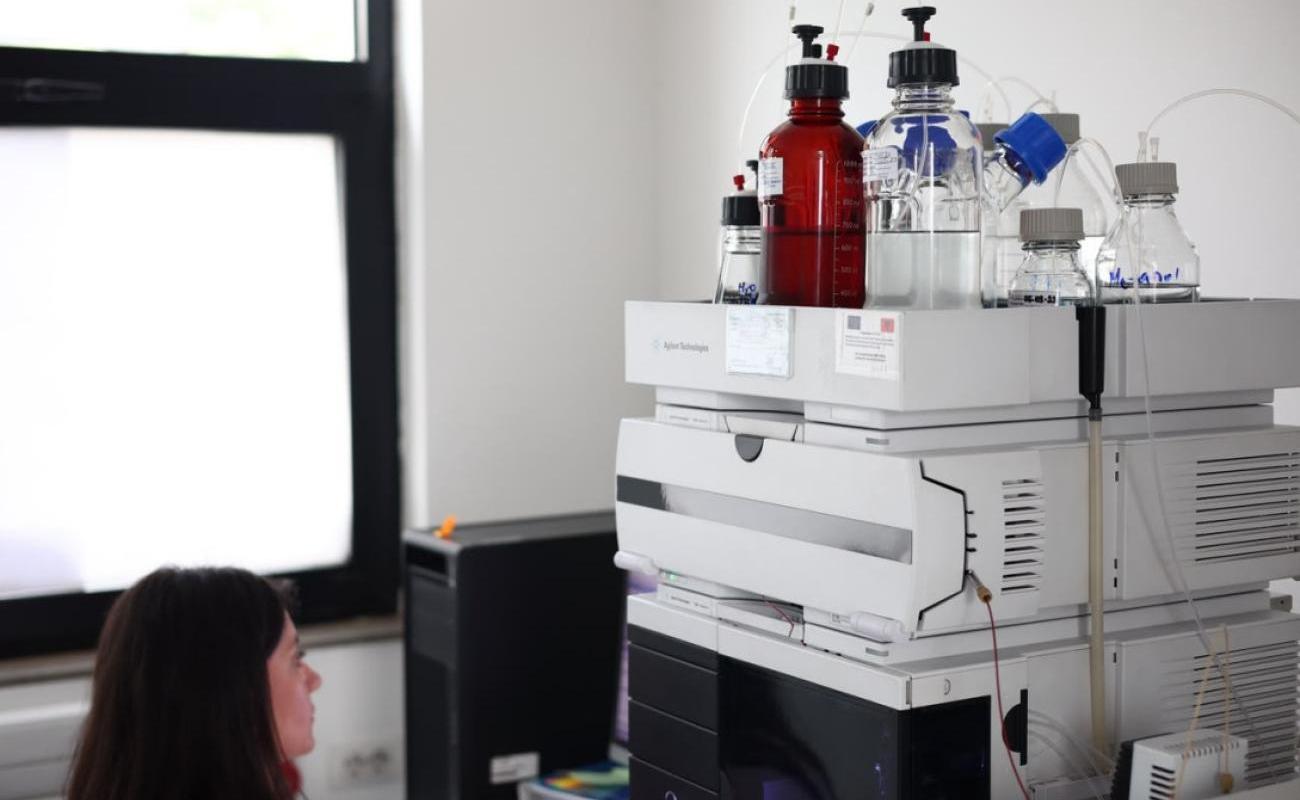
Ensuring that consumers have access to safe food, from farm to table, is a multi-step process. Beyond legislation and inspections, human and technical capacities are essential. As the national reference institution in Albania, the Institute of Food Safety and Veterinary (ISUV) carries out analytical work in the fields of food safety, animal health and plant health. ISUV is responsible for implementing surveillance programmes, monitoring plans, active and passive surveillance, and risk-based official controls across the entire agri-food chain.
This process has faced various challenges. “Through EU-supported projects, we were able to build and strengthen our laboratory and technical capacities, bringing our laboratories up to a standard comparable to those in the European Union. This investment enabled the expansion of accreditation for residues in products listed for export, such as heavy metals in fish and fish products, including crustaceans and seafood, as well as groups of products of animal origin. We are also accredited to analyse mycotoxins in milk and cereals, and pesticides in eggs and products of plant origin (fruit and vegetables),” explains Jonida Boçi, Head of the Institute.
Accreditation is required under EU Regulation 2017/625, which forms part of the obligations Albania must fulfil under Chapter 12. The Regulation, sets out rules for official controls and other official activities to ensure the application of EU legislation on, covering the entire agri‑food chain, including food, feed, animals, plants, and products. This also means that ISUV’s results are recognised internationally, leading to cost reductions, as every analysis previously sent abroad incurred additional expense. According to Boçi, this was not possible when the institute relied solely on screening methods, as residue tests were not recognised at the time. “We are currently certified to test for nitrites in products of plant origin, pesticides in fruit and vegetables (covering four classes according to DG SANTE standards), and pesticides in medicinal plants (analysing 250 parameters),” she says.
Through the EU-supported project Restructuring and strengthening the network of food safety and veterinary laboratories in Albania, national capacities were strengthened to ensure higher levels of food safety throughout the food chain.
The project aimed to help laboratories make better use of their staff and resources. Part of the work involved clarifying overlapping roles and aligning the laboratories with EU methods in relation to food safety, plant and animal diseases, and quality standards. In addition, laboratory equipment was provided to ISUV and to three regional laboratories of the National Food Authority (AKU) in Shkodër, Korçë and Gjirokastër.
EU funding has also strengthened biosafety at ISUV’s animal health laboratories, and the institute can now use sequencing techniques to identify the source of a disease. This helps strengthen controls at border points where live animals enter the country. ISUV also collaborates with EU laboratories and the European Food Safety Authority, helping it remain prepared for risks.
“Food safety is a matter of national security, and ensuring it is a daily battle that cannot be fought by state institutions alone, but requires co-operation with business operators, consumers and all stakeholders,” says Boçi. “It requires constant support so that we can respond quickly. This allows emergency measures to be taken in a timely manner, enabling food businesses to mitigate risks and improve their production chains.”
She cites cases of bluetongue disease, lumpy skin disease, and sheep and goat plague, diseases that, until recently, were primarily found in Africa. Today, they spread much more rapidly due to increased human and animal mobility, the continued growth of trade and tourism, and a warming climate that favours their transmission. In June 2025, cases of sheep and goat plague were confirmed at the Institute's laboratory, triggering immediate measures to manage the situation. Laboratories capable of rapid response make it much easier to contain such outbreaks in time. Now a more comprehensive initiative, EU4FoodSafety, focuses on preparing food production establishments to meet EU standards, in the context of EU accession chapters 11 and 12, which cover food safety and veterinary regulations.