
"Fast-food style agents": How Russian and Belarusian intelligence recruit ordinary citizens for sabotage in Europe
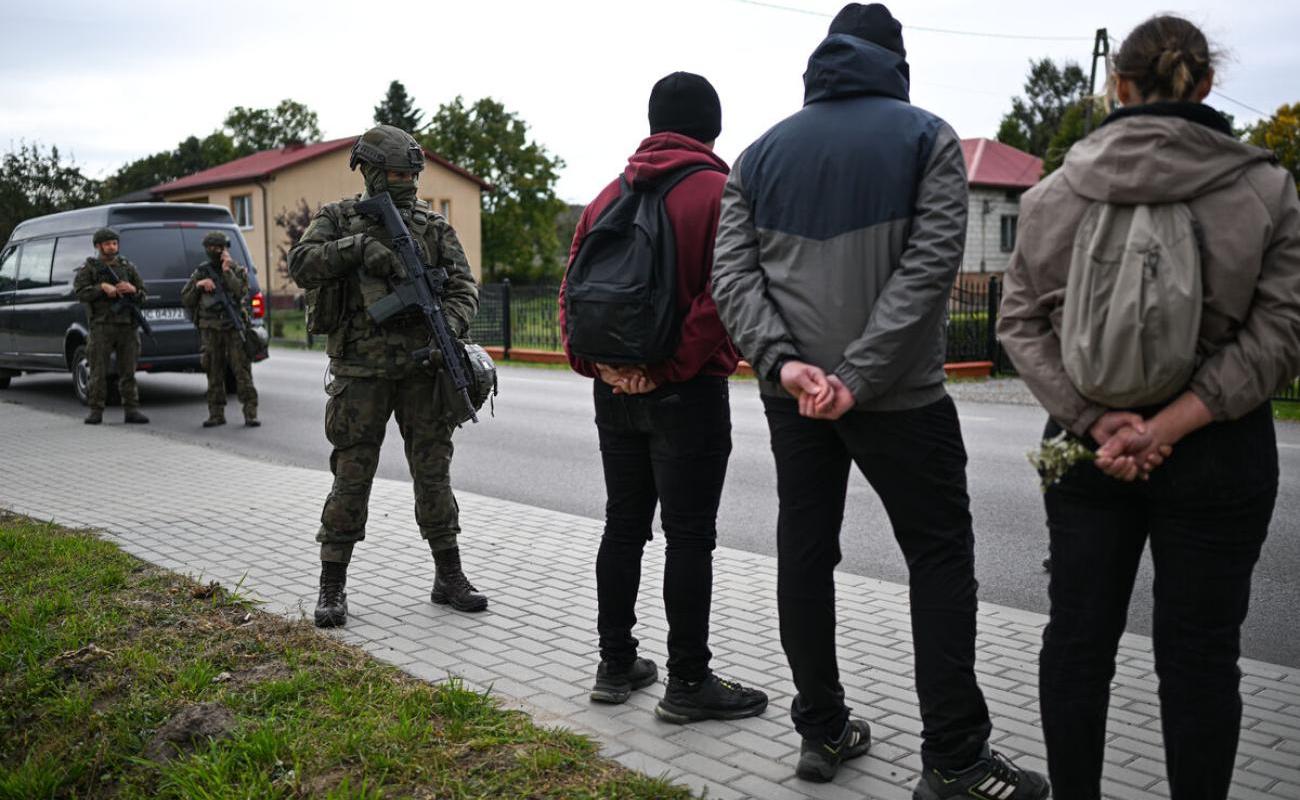
For a fee of approximately 110 USD to 220 USD, individuals can be hired to transport a backpack from one country to another, often without realizing it contains an explosive device. According to Ivan Stupak, a former employee of the Security Service of Ukraine (SBU), Russian and Belarusian intelligence agencies use ordinary citizens for sabotage operations in Europe. The Belsat program explored the involvement of Belarusian special services in potential attacks on Europe, discussing their recruitment methods and the profiles of those they typically enlist.
Europe is in turmoil
Europe has recently faced significant threats that could endanger lives. For example, on November 4, it was reported that hackers in France attempted to warm blood at a donation center. Fortunately, thanks to a staff member's vigilance, none of the products stored in cold storage were damaged.
In early November, hackers targeted the food industry by attacking refrigeration systems in supermarkets across seven European countries. These attacks affected dozens of retail outlets in Belgium and Luxembourg, as well as several stores in Sweden, Finland, Ireland, the Netherlands, and Estonia. During these incidents, the temperature in the refrigeration units was reset to +50° C, resulting in large batches of food being discarded. The first such attack was recorded in mid-October in France, and authorities have not yet identified the perpetrators.
Additionally, there have been reports of alleged bomb threats on passenger flights throughout Europe. According to The Guardian, at least 32 flights were canceled this week due to these false threats. European intelligence agencies are investigating how these incidents are connected and are working to identify those responsible.
These hybrid attacks, acts of sabotage, and provocations are prompting European security services to strengthen their defenses.
Are Belarusian special services involved in attacks on Europe?
Some sabotage and hybrid attacks in Europe are linked to Russia, although in other cases, investigations are still ongoing to understand the situation. Ivan Stupak points out that Russia is systematically increasing the frequency of hybrid attacks to keep Western European countries in a state of constant tension.
Stupak believes that not only Russian special services are involved in these hostile actions, but also Belarusian ones, specifically the KGB.
He states, "The challenge lies in determining the extent of the KGB's involvement in these operations. Is it 20-30%, or are they simply assuming the role of an assistant?"
He acknowledges that Belarusian special services can recruit individuals to carry out specific operations and can also share information about Belarusians who have gone abroad, including their contacts, with the Russian side. Potential agents may be offered money for certain actions, and representatives of the special services do not always immediately disclose their true identities, Stupak notes.
,,"They might offer you a salary by saying, 'We'll transfer approximately 110 USD to 220 USD to your card right now, but please go to the Czech Republic. Here's a dot on the map. Go to this address, pick up your backpack, and then take it to another address in Poland, which I don't know. Just leave it there, and that's it. It's nothing scary, nothing criminal.' However, explosives could be involved. This is how they operate."
Russian and Belarusian special services often focus on individuals from the post-Soviet space, as these individuals typically speak Russian fluently.
"It's difficult to find Italians because you need someone on the other side who understands Italian and can effectively communicate. While there is a translator, they can't always provide the depth needed to connect with a person's soul truly," Stupak explains.
Russian and Belarusian special services often operate in Europe with non-professional agents. Since the beginning of Russia's full-scale war against Ukraine, many countries have deported individuals identified as agents of Russian or Belarusian intelligence, Stupak adds:
,,As a result, intelligence services have begun using what they call fast-food-style agents. These agents could be conductors, unemployed individuals, librarians, or bloggers.
Referring to the Ukrainian experience, the expert highlights several categories of individuals typically recruited.
"The first category includes minors—people who, let's say, have 'Coca-Cola in their heads.' They do not fully grasp the consequences of their actions and cannot be held criminally liable, at least at this stage. The second category consists of individuals in desperate need of money because of difficult economic circumstances; they are willing to do anything.
Next are those who are addicted to gaming—specifically, individuals who engage in online gambling rather than games like World of Tanks. They are addicted and also require money to continue. Lastly, people are struggling with drug addiction. It is generally much easier to manipulate them; you can assign them any illicit task, even as serious as murder, for approximately 110 USD to 220 USD," emphasizes Ivan Stupak.
According to him, special services initially assign small tasks for a modest fee. Then, both the seriousness of the tasks and the compensation gradually increase.
"Once a person is involved, it becomes difficult for them to disengage. Only law enforcement agencies can ultimately put a stop to this criminal activity," Ivan Stupak concludes.