
"We don't want to die in Russia behind barbed wire": Crimean residents – 10 years in the Kremlin's prisons. Is there a chance for their release?
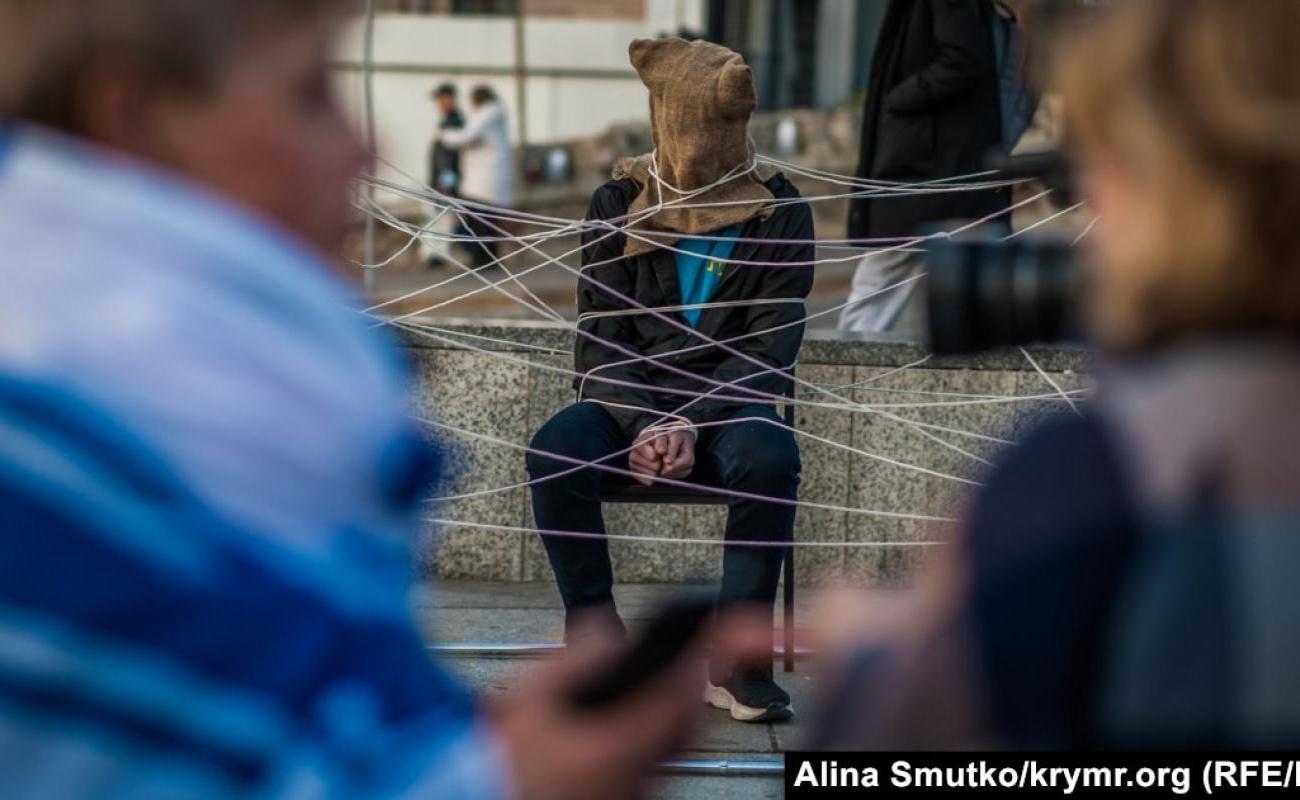
Ukrainian human rights activists are calling for renewed focus on the release of political prisoners who have been held in the Kremlin's prisons since 2014. These individuals are Ukrainian citizens—mostly residents of Crimea—whom the Russian authorities have kept imprisoned for decades in cases widely recognized as politically motivated. Amid the Russian Federation's full-scale invasion of Ukraine, the process of prisoner exchanges has effectively been "frozen." However, activists hope to bring this issue back onto the agenda of Ukraine's international negotiations, particularly those involving the Russian side. Is there any chance for the release of these political prisoners from Crimea? "It is time to remind ourselves that the war began in 2014, not 2022. Our task is to draw attention to those who have been imprisoned for 10 or 12 years, and to point out that, unfortunately, we have seen no releases since 2022. As of 2025, Russia has stopped releasing even those who have already served their full sentences. These individuals have been held captive since 2014, 2016, or 2018; it remains unknown when—or if—they will ever be released," says Igor Kotelyanets, head of the Association of Relatives of Kremlin Political Prisoners.
The organization has launched an advocacy campaign titled "The Longest-Held," designed to push for the demands made by international institutions: the immediate and unconditional release of civilians—Ukrainian citizens classified as political prisoners—who are currently held in detention facilities within the Russian Federation.
According to human rights activists, this concerns the fate of dozens of people who ended up in Russian detention centers during the early years of the Russian annexation of Crimea, as well as hundreds of residents from other Russian-occupied Ukrainian territories whom the Russian authorities have labeled "spies" or "saboteurs," or accused of "treason" during the full-scale war against Ukraine.
"Sevastopol Saboteurs": Decades in Russian Prisons
Sevastopol residents Dmytro Shtyblykov and Oleksiy Besarabov, along with their close friend—former Ukrainian soldier Volodymyr Dudka—have spent 10 years in Russian prisons. Prior to the 2014 Russian annexation of Crimea, Shtyblykov and Besarabov conducted research on national security and Euro-Atlantic integration in the Black Sea-Caspian region for the Ukrainian think tank "Nomos." They were also members of the editorial board of the Ukrainian journal *Chornomorska Bezpeka* (Black Sea Security), which has been published since 2005.
In November 2016, Russian special services detained them in Sevastopol on charges of "preparing acts of sabotage against military infrastructure and life-support systems in the city"—allegedly on the orders of Ukrainian intelligence—as well as illegal possession of weapons.
In April 2019, a Russian-controlled court in Sevastopol sentenced Volodymyr Dudka and Oleksiy Besarabov to 14 years in prison. Both pleaded not guilty.
During the investigation, independent lawyers were denied access to the detainees for an extended period. Consequently, Dmytro Shtyblykov declined the services of independent counsel and entered into a plea agreement with the investigators, admitting guilt. Human rights activists believe this decision was the result of pressure exerted on him by Russian security forces.
The Russian-controlled court in Sevastopol sentenced Dmytro Shtyblykov to a relatively lenient term of five years in prison. However, after serving his sentence in November 2021, the Crimean resident could not be released. Russian authorities initiated new criminal proceedings against him—for "high treason." In April 2022, a Russian court in Rostov-on-Don sentenced Dmitry Shtiblikov to 19.5 years in prison.
Ukrainian and Russian human rights activists consider Dmitry Shtiblikov, Alexey Besarabov, and Volodymyr Dudka to be political prisoners. Their families hope for their release through an exchange of civilians between Russia and Ukraine, but this has not yet taken place.
"People are sentenced to death in Russian prisons"
President of the Ukrainian Center for Global Studies "Strategy XXI", editor-in-chief of the publication "Black Sea Security", Mihailo Hončar recalls that 10 years ago, he was surprised by the news about the detention of his colleagues in Sevastopol.
"I was in Dnieper when I received a call from a Radio Liberty journalist with a question I didn't understand. I didn't know this abduction had happened. It seemed unreal. But the reality was exactly that. It was a revenge action by the Russian regime against colleagues for their activities. Decades of efforts to free them did not bring them freedom. Therefore, the fight continues," he said at a press conference in Kyiv.
Many hoped for the release of the "Sevastopol saboteurs" in 2021, when, on the eve of the visit to Kiev by the then US Secretary of State Anthony Blinken, Aleksey Besarabov sent him an appeal from a Russian prison. It states that political prisoners are "almost forgotten, because the issue of Crimea is not considered in international negotiations".
In response, Anthony Blinken assured that the US has not forgotten these people and promised to "continue to call on Russia to release those it has illegally detained."
"That was five years ago. Nothing happened. And that's why it's obvious that appeals just don't influence the Kremlin. And so, now, 10 years later, this is a fight for freedom for both our colleagues and those who have been in captivity for a long time. Against the background of the large-scale prisoner of war exchanges that are happening (during the Russian Federation's full-scale invasion of Ukraine - KR), the fact that there are those who have been in Russian captivity since 2014 has somehow fallen into the background. And that makes the topic the release of those who have been in captivity for the longest time", says Mihailo Hončar.
Today, Dmitrij Štiblikov, Oleksiy Besarabov and Volodymyr Dudka are being held in Russian captivity in the most difficult conditions, says Pavlo Lakijčuk, head of security programs at the Center for Global Studies "Strategy XXI".
"As soon as Russian or Ukrainian holidays come, they hide in a detention center. They are afraid of them, even when they are silent. My friends have been in prison for 10 years for their professional activities. And how much longer they will be in Russia is unknown. People are simply sentenced to death in Russian prisons," says Lakiychuk.
Valentin Vyhovsky: From Prison to Captivity
Valentin Vyhovsky from Kyiv is another recognized political prisoner who has been persecuted by the Russian Federation since 2014.
In 2014, he traveled to annexed Crimea at the request of a friend, who asked him to bring money—allegedly for a relative's medical treatment. However, Russian special services detained him on charges of "espionage."
Following his arrest, the Ukrainian was taken to Moscow. He claims that he was "beaten, subjected to a mock execution (simulated shooting) near him," and forced to sign a confession. A Russian court sentenced Valentin Vyhovsky to 11 years in prison. He spent eight of those years in solitary confinement.
In September 2025, the Ukrainian completed his prison sentence. Yet, he has not been released. He was transferred from prison to a deportation center in Kirov, Russia. Since then, Russian courts have regularly extended his detention there, citing the alleged impossibility of his return to Ukraine due to the military actions of the Russian Federation.
While in the deportation center, the Ukrainian effectively remains in captivity. Ukrainian authorities and public figures have yet to find a way to secure his release. Furthermore, as a precedent has been set, other Ukrainian citizens held within the Russian Federation could find themselves in a similar situation.
Three Sentences for Oleg Prikhodko
Since October 2019, Oleg Prikhodko, a blacksmith from the village of Orikhove in the Saksky District, has been held in Russian custody.
Following the Russian annexation of Crimea in 2014, he continued to keep Ukrainian symbols at his home and made no secret of his pro-Ukrainian stance. Shortly thereafter, Russian security forces accused him of terrorism, claiming to have seized—alongside the Ukrainian symbols—an alleged explosive device, fragments of a TNT-based bomb, and other incriminating items. The Crimean resident denied the charges.
"I am accused of terrorism because I defended the honor and dignity of our Ukrainian flag in occupied Crimea! We are not the first, nor will we be the last, to continue the struggle for the survival of our identity and our nation," he emphasized in a letter sent from the detention center to the Ukrainian people.
Oleg Prikhodko alleged that he was subjected to beatings and torture by Russian security forces, as well as mistreatment while in prison.
In March 2021, the Southern District Military Court in Rostov-on-Don, Russia, sentenced the Crimean resident to five years in prison.
In November 2023, a court in the Russian Federation added another four and a half years to his sentence based on two new charges. Furthermore, in 2026, it was revealed that Oleg Prikhodko had been charged under two additional, more serious counts: "facilitating terrorist activities" and "incitement to treason." According to the FSB, he allegedly suggested to other prisoners that they go to war against Ukraine, kill their commanders, and surrender to the Armed Forces of Ukraine. Oleg Prikhodko’s position on this is unknown.
On November 11, the Southern District Military Court of the Russian Federation sentenced him to 18.5 years in prison, the Russian outlet Mediazona reported.
Under these circumstances, the prospects for the release of the 67-year-old Crimean resident—absent the possibility of a prisoner exchange—remain unclear.
Halina Dovgopola: Seven Years of Captivity
Halina Dovgopola, a 71-year-old pensioner from Sevastopol, has been in Russian custody for seven years. Russian special services accused her of "espionage for the intelligence services of the Ministry of Defence of Ukraine." She maintains her innocence.
The Russian-controlled City Court of Sevastopol sentenced her to 12 years in prison for "high treason." Human rights activists view this prosecution as politically motivated, stemming from the Crimean pensioner's pro-Ukrainian stance. She had publicly condemned the Russian occupation of Crimea and maintained contact with Ukrainian volunteer organizations.
Halina Dovgopola has been held in Russian detention since 2019, a period that has severely damaged her health.
"Our oldest political prisoner—71-year-old Halina Dovgopola—recently suffered a stroke. She spent some time in a hospital before being returned to prison. She cannot move on her own and requires a wheelchair. She writes that she will not survive the coming winter," reports Vladislav Yesipenko, a freelancer for Krym.Realii who maintains contact with her via prison correspondence.
She writes that the most harrowing aspect of her experience at Penal Colony No. 1 in the village of Golovino (Vladimir Oblast, Russian Federation) is the local climate; last winter, the cold and freezing temperatures persisted for six months.
Halina Dovgopola hopes to be released as part of a prisoner exchange between the Russian Federation and Ukraine. In her letters, she asks Ukraine not to forget her and the other prisoners of the Kremlin.
"I ask everyone to stand united—please, do not raise any money for me! The only real help is a broad-based campaign and reminding the Ukrainian government about the political prisoners... We are waiting here, and each of us is fighting for our own life, so that we do not 'die in Russia' behind barbed wire. Please, do not forget us," writes the resident of Crimea.
"Russia has crossed all boundaries of humanity"
Criminal cases involving charges of "espionage," "sabotage," and "treason"—tactics Russia has employed in annexed Crimea since 2014—have been used on a mass scale in the occupied territories of the Kherson and Zaporizhzhia regions since 2022, says Olga Skrypnyk, head of the Crimean Human Rights Group (CHRG).
According to her, the CHRG has documented at least 500 individuals from Crimea, as well as the Kherson and Zaporizhzhia regions, who are being persecuted by Russian authorities for political reasons.
"We see that Russia is not persecuting people for actual crimes. It is fundamentally important to understand that people are currently being persecuted—and held in Russian torture centers—simply because they resisted the occupation in various ways. Individuals are being imprisoned because they are former soldiers, or because they previously participated in the ATO [Anti-Terrorist Operation], and so on," says Olga Skrypnyk.
The human rights activist notes that, throughout the Russian Federation's full-scale invasion of Ukraine, the number of serious criminal cases brought against civilians in the occupied territories has been rising, and the sentences handed down are becoming increasingly severe. "Until 2022, there were almost no women in such cases. Now, however, there are more than 80. In other words, Russia has crossed every conceivable boundary of humanity—if such boundaries can even be said to exist. They simply do not. It persecutes men, the sick, the elderly, and women—including women with children. For Russia, there are no limits. It is terrifying that we are now talking about 10-year sentences (in the Russian Federation). Yet, as it turns out, we have still not found a way to bring back those who are behind bars. Sadly, they remain in penal colonies, living in horrific conditions," says Olga Skripnik.
"Russia Prepares the Harshest Detention Conditions for Ukrainians"
During the full-scale invasion of Ukraine, Russian authorities and security forces have been expanding detention facilities for Ukrainian citizens and illegally transferring them to prisons within the territory of the Russian Federation, says Tetiana Katrchenko, head of the Ukrainian NGO "Media Initiative for Human Rights."
"The places where Ukrainian citizens—both civilian detainees and prisoners of war—are currently being held in the Russian Federation vary. There are locations beyond the Arctic Circle where Ukrainians are being kept—places where temperatures drop to minus 50 degrees and there is 10 centimeters of ice on the windowpanes. As a rule, Russia consistently prepares specific, exceptionally harsh detention conditions for Ukrainians, including punitive isolation cells," says Katrchenko.
Under international law, Russia is obligated to return civilians to Ukraine "unconditionally," notes Tetiana Katrchenko. However, it fails to do so, claiming that these individuals are not merely civilians, but rather "criminals" whom it has the right to detain. "There are major problems regarding the return of civilians. The last large-scale return took place in 2019. Since then, the full-scale invasion (by the Russian Federation into Ukraine – KR) began, and these individuals are not being returned. It is crucial for Ukraine to state that all its civilians in the occupied territories have been unlawfully detained and convicted, and are being held illegally by Russia; Ukraine must demand their return. Furthermore, it is essential for Ukrainian society to voice a clear demand: that no one be forgotten. We cannot accept the reality that civilians remain in detention and are destined to serve out their full sentences within the Russian Federation," the human rights activist asserts.
Participants in the "Longest-Held" advocacy campaign view it as a positive development that the release of civilians—who hold the status of political prisoners—is being addressed by the Ukrainian negotiating team, which engages with the Russian side during the full-scale war waged by the Russian Federation against Ukraine.
According to human rights activists, a list of Ukrainian citizens, including civilians, has previously been submitted to the Russian Federation for the purpose of an exchange. However, as long as hostilities between the Russian Federation and Ukraine continue, it is primarily prisoners of war who are being released.
Ukrainian human rights activists hope that the issue of releasing civilians will gain momentum within relevant Ukrainian institutions, and that international partners will be engaged in these humanitarian initiatives.
Ukrainian authorities are coordinating the release of prisoners of war and civilians from the Russian Federation through various mechanisms. These include the activities of the Coordination Headquarters for the Treatment of Prisoners of War—which is working on the potential release of both military and civilian detainees—cooperation with the European Union and specific international platforms, as well as negotiations with the Russian side, conducted notably through the commissioners for human rights of both warring countries.