
Vladimir Putin's fatal calculation in Ukraine
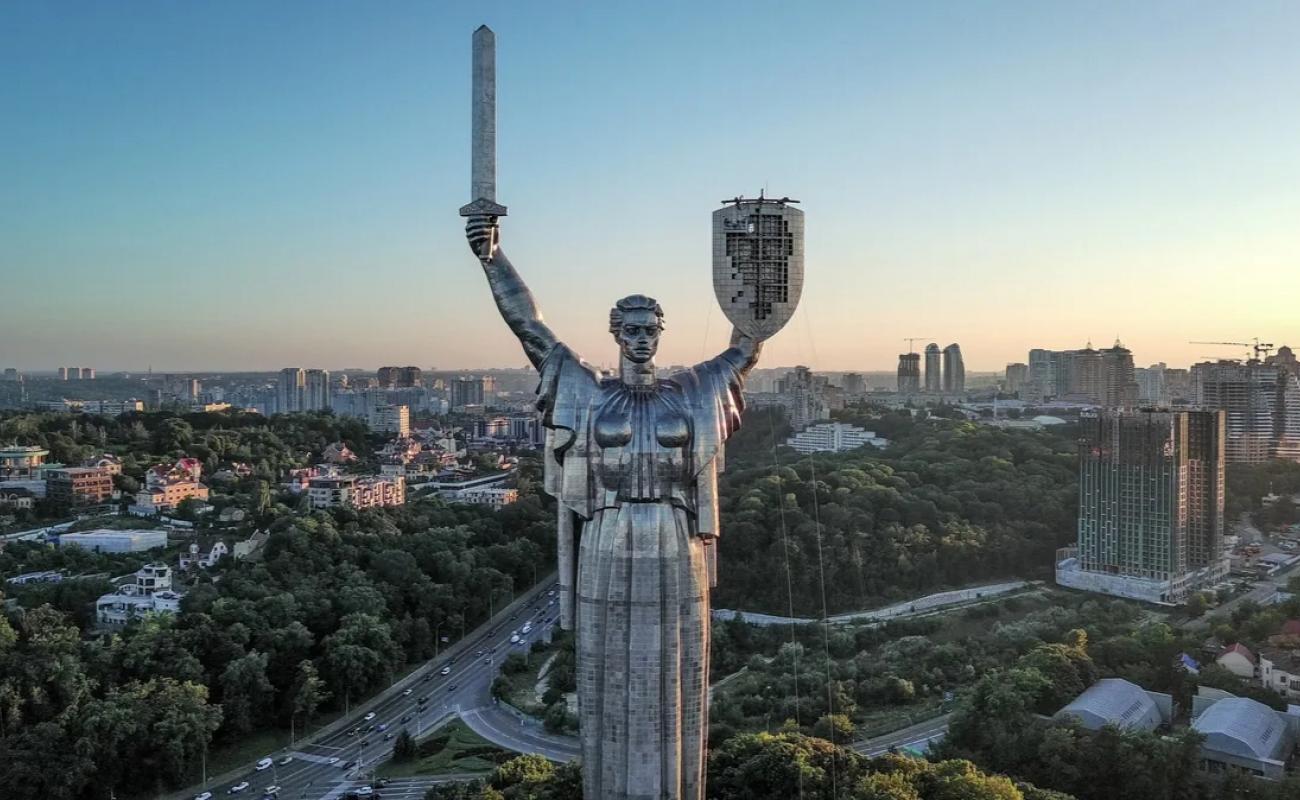
Putin's misguided attempt to subjugate Ukraine has only helped cement its national identity, and it will never stop fighting.
Russia's Deputy Foreign Minister, Mikhail Galuzin, recently proposed placing Ukraine under UN control in order to "put a capable government in power with which a full peace treaty could be signed."
Although Galuzin's comments can hardly be described as new in any way – Putin himself already described Ukraine's leadership as ineffective and claimed it did not represent its people a year ago – it is nevertheless quite remarkable that after making those comments, Galuzin traveled to Geneva to negotiate directly with its representatives in an attempt to broker a peace deal that would give Russia some of the spoils of its ill-advised war.
The supposedly second-rate nature of Ukraine has long been a topic of discussion in Russia, but it received significant amplification from state propaganda after Russia's illegal annexation of Crimea and the start of the war in Donbas in 2014.
What kind of country forces its president to leave, while protesters armed only with wooden shields roam the government district, seemingly unfazed by the presence of special police units, they asked. A little outside intervention was all it took to cut off the coveted Black Sea peninsula from Kiev, whose miners in the east were quickly prepared to face government troops with a hail of bullets. “A failed state,” laughed Russian propagandists on state television.
This contemptuous attitude was further intensified when Ukraine voted overwhelmingly to elect a bona fide comedian as its next president, a man who only a few weeks earlier had come to Moscow to make people laugh on TV. This strange development, coupled with the general assurance from Putin’s personal pick for Ukrainian president, Viktor Medvedchuk, that an invading Russian army would be greeted by flower-bearing civilians, has the Kremlin eager for a repeat of the Crimean invasion – and the euphoria that followed – in February 2022, albeit on a truly grand scale, culminating in a Victory Day parade through central Kiev.
What a stinging slap this would be to Russia's "Western partners," whose weakness was revealed for all to see when they failed to respond convincingly to the annexation of Crimea, the occupation of Donbas, or even the tragic downing of Malaysia Airlines Flight 17.
As another Russian deputy foreign minister, Sergey Ryabkov, said just a month before the invasion began, NATO should “pack its bags” and withdraw to the 1997 borders – words dictated by the same contempt.
The Russian military was surprised to encounter such fierce resistance from the Ukrainian Armed Forces.
But then something went wrong once the invasion finally began. The Russian military was surprised to encounter such fierce resistance from the Armed Forces of Ukraine (AFU), which was all the more remarkable considering that the AFU had also made a miscalculation, expecting the Russian invasion to focus exclusively on the Donbas.
As a result, elite Russian special forces and paratroopers found themselves on the outskirts of Kiev, facing off against diverse units of volunteers, police officers, National Guard troops, and military units gathered from across the country.
Then the war gained momentum and within a month, the invading Russian army suddenly found itself in the rear and was forced to make a humiliating retreat from the regions of Kiev, Chernihiv, and Sumy.
By September, they had spread into the Kharkiv region, and by November they had surrendered the city of Kherson, the only regional center they had managed to capture. The brutal legacy of the Russian occupation uncovered by the AFU as they recaptured towns and villages only served to galvanize the Ukrainian side, which realized it had no choice but to fight.
Since then, there has been almost no major change on the front line, with Putin's forces crawling, at great human cost, just 60 kilometers from Donetsk to Pokrovsk in the last three years, with losses exceeding 1 million.
At the same time, the Russian military maintains ever-impressively superior manpower, aviation, armaments, and artillery, not to mention the fact that in the fourth year of the war, the Kremlin received an incredible deus ex machina in the re-election of Donald Trump, who, upon taking office, immediately ended military and humanitarian aid transfers to Ukraine and placed Washington’s entire relationship with its ally on a commercial basis. However, Ukraine has not yet been destroyed, and two massively mismatched armies remain at odds.
Trump, incidentally, knows nothing about Ukraine either. “You don’t start a war against someone 20 times bigger than you!” he said indignantly at the start of his second term. The courage and cunning of Ukraine are truly amazing!
Putin faced that audacity and cunning in 2004. Before that, he had persuaded and threatened the then-president of Ukraine, Leonid Kuchma, to forge ever closer ties between Ukraine and Russia. In 2003, Kuchma even became head of the Commonwealth of Independent States at Putin’s behest, while the Common Economic Space (CES) agreement was signed in Crimea.
However, a few months earlier, Ukraine’s parliament, the Verkhovna Rada, had passed a law defining the country’s foreign policy objectives as “gaining membership in the EU and NATO, while maintaining good neighborly relations and a strategic partnership with Russia.” Shortly before the signing of the SES agreement, Kuchma had had the audacity to launch his book Ukraine is Not Russia, and in Moscow, no less.
But 10 days after the CIS summit, Russia launched the Tuzla Island conflict, a territorial dispute over an uninhabited island between Crimea and Russia, which was Ukrainian territory. At the height of the conflict, Alexander Voloshin, then head of Russia’s Presidential Administration, half-jokingly declared: “We will drop a bomb on it if we need to.”
Intense debates followed, with Putin and Kuchma meeting dozens of times in 2003 and 2004, with some meetings lasting days, a sure sign of how important it was for the Kremlin to keep Ukraine as a close junior partner at the time. Indeed, on the eve of Ukraine’s crucial 2004 presidential election, Putin spent three days in Kiev on what was his 10th visit to Ukraine that year alone, during which he openly campaigned for the pro-Moscow candidate, Viktor Yanukovych.
Sadly, neither his superhuman effort nor the poisoning of opposition candidate Viktor Yushchenko helped. Now that we know Putin's penchant for poison, any remaining doubts that may have existed about who ordered Yushchenko's poisoning can be confidently dismissed.
The result was the Orange Revolution, in which Ukrainians clearly demonstrated that they, not the authorities, would make the decisions. Kuchma later recalled that Putin had insisted that he use force against unarmed protesters, which, to his credit, the Ukrainian president refused in what must have felt like the ultimate rebuke to the Kremlin.
The Orange Revolution has since become a running joke in Russia, and the progressive, iPhone-wielding president, Dmitry Medvedev, from whom Russia’s liberal public eagerly hoped for impossible miracles, gave Yushchenko a cold eye, promising to send an ambassador to Kiev only after a change of leadership. Ukraine then had the audacity to support Tbilisi in the five-day Russo-Georgian war of 2008.
Medvedev, and then Putin, met with Yanukovych, who eventually got his dirty hands on the presidency, many times. Once a corrupt leader in their own image was finally installed in Kiev, the Kremlin saw an opportunity to corner Ukraine and realized it had made another miscalculation only when it was too late. The result was the Euromaidan of 2013, which culminated in the Revolution of Dignity the following year, this time accompanied by bloodshed.
Ukrainian blood has been spilled since then, the price it has been forced to pay for its stubbornness, defiance, and unwillingness to bow to the Kremlin’s henchmen. Perhaps, too, Ukraine is being punished for being irrefutable proof that Putin’s “strategic genius” was always an empty joke, and for exposing the moral ugliness of the terrorized criminal state built by him and for him.
Ukraine has borne the responsibility and consequences of living by the maxim coined by the Belarusian poet Yanka Kupala: “Do not be cattle.” But turning everyone and anyone he can into cattle is the priority of Putin and his state. A major shift in philosophy that is evident on this fourth anniversary of full-scale war, 12 years after the Revolution of Dignity and the start of Russian aggression.
No, we can't just call Russia a ruined autocratic country, although it seems to be keeping that fact a secret for all the world to see. Resisting attempts to make it follow in Moscow's footsteps, Ukraine seems destined to be locked in a perpetual conflict with its giant neighbor, and yet it won't stop fighting.