
How Ukraine’s economy survived four years of war—and what it cost
10 million missing people, every power plant hit, and a €90 billion lifeline held hostage by Hungary.
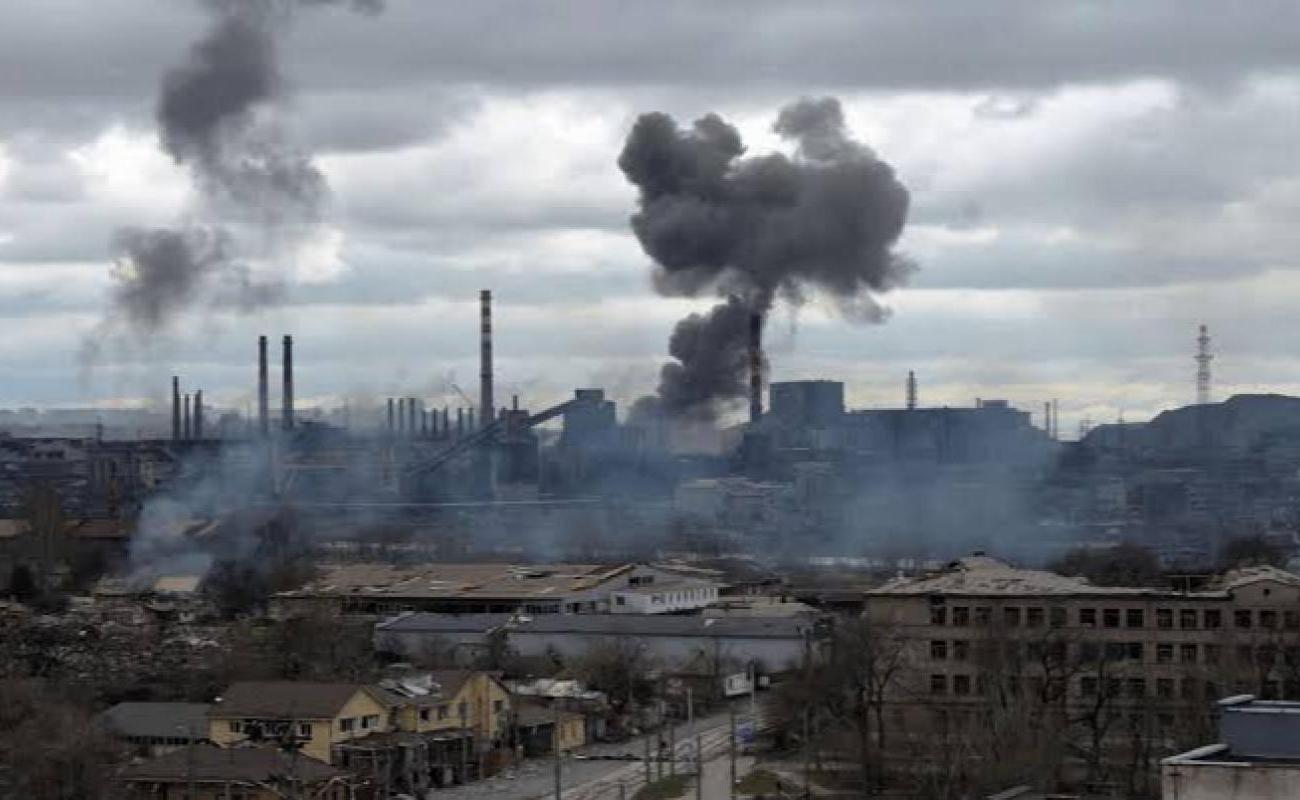
In the spring of 2022, Ukraine’s economy was supposed to collapse. Real GDP fell 29.1%—the deepest annual drop in the country’s history. Millions fled. Factories, power plants, and ports fell to Russian forces or Russian missiles. Western governments scrambled to keep Kyiv solvent week by week, wiring emergency cash as the hryvnia cratered and tax revenues evaporated.
The collapse never came. Ukraine’s nominal GDP exceeds its pre-war level—$210 billion, up from $200 billion in 2021. The country built a defense industry producing $12 billion annually—with capacity for far more—from almost nothing. Tax revenues grew 23% in real terms.
In real terms, the economy remains around 17% smaller than before the invasion.
But in real terms, the economy remains around 17% smaller than before the invasion. Ten million people are gone. Fertility has dropped below one child per woman. Every power plant has been hit. Public debt is crossing 100% of GDP. And the €90 billion EU lifeline that was supposed to keep the economy afloat through 2027 is, on the eve of the war’s fourth anniversary, being held hostage by Hungary.
Maksym Samoiliuk, an economist at the Centre for Economic Strategy (CES), described 2025 to Le Monde as a year of “forced normality”—when society and businesses accepted that war had become the baseline. The numbers below show what that normality looks like.
What Russia destroyed
From the first weeks of the war, Russia targeted Ukraine’s economy. In spring 2022, Russian forces seized the Zaporizhzhia nuclear plant—Europe’s largest—shelled Mariupol’s Azovstal steelworks into rubble, and blockaded the Black Sea ports that carried 90% of grain exports.
Bridges, railways, factories, and fuel depots were hit across the country. That first winter, 2022–2023, brought rolling blackouts across Ukraine after Russia launched its first mass campaign against the power grid in October 2022, firing hundreds of missiles and drones at substations and thermal plants.
All 15 thermal power plants have been damaged or destroyed.
Each year since, the attacks have escalated. In 2025 alone, Russia launched 612 targeted attacks on energy facilities, and by winter 2025–2026, not a single power plant had escaped damage.
All 15 thermal power plants have been damaged or destroyed, their share of the energy mix collapsing from 23.5% to roughly 5%. In 2024 alone, Ukraine lost approximately 9 gigawatts of generating capacity—equivalent to one-third of pre-war consumption.
Four winters of bombardment came to a head in 2025–2026, one of the harshest in years. In January, Russia conducted near-daily strikes on energy infrastructure across at least 17 regions. Millions were left with electricity for just a few hours per day.
Rolling blackouts of 12 to 18 hours cut heat and water across the country.
In Kyiv, power cuts lasted up to 20 hours, with missiles striking combined heat and power plants that supply central heating to nearly 6,000 apartment buildings. In the Dnipropetrovsk oblast, more than 800,000 households lost power. Rolling blackouts of 12 to 18 hours cut heat and water across the country.
Ukraine’s Deputy Energy Minister Mykola Kolisnyk told ABC News: “The enemy’s plan is social instability through total blackout. This is not a hybrid threat. This is a military threat.”
The National Bank of Ukraine cut its 2026 growth forecast from 2.2% to 1.8%, citing energy attacks as the primary drag.
By January 2026, Ukraine was importing a record 896 GWh of electricity—with no exports since November—buying power from the very neighbors whose political support it depends on. The National Bank of Ukraine cut its 2026 growth forecast from 2.2% to 1.8%, citing energy attacks as the primary drag.
The people who aren’t there
At the start of 2022, about 41–42 million people lived within Ukraine’s borders. At the beginning of 2025, approximately 31 million remained, including the temporarily occupied territories. As of 2024, 6.9 to 8 million Ukrainians are abroad, mainly in the EU.
About 900,000 people serve in the armed forces, including more than 70,000 women. The fertility rate has collapsed to 0.7 children per woman—among the lowest ever recorded globally.
In 2024, Ukraine registered 176,679 births against 495,090 deaths—2.8 deaths for every birth, according to Ministry of Justice data. In the first half of 2025, 86,795 babies were born while 249,002 people died—holding steady at three deaths per birth. The birth rate has halved in a decade: from 32,000 births per month in 2016 to just 14,000 in 2025.
With an average soldier age of 43, most casualties are married fathers.
Ukraine’s population is decreasing by more than 300,000 people each year from natural decline alone—before counting emigration. With an average soldier age of 43, most casualties are married fathers—leaving an expanding population of widows and orphans, with 59,000 children now living without biological parents.
The financial ties between Ukraine and its diaspora are weakening, too. Private remittances from Ukrainians abroad are declining as refugees integrate into their host countries—finding jobs, opening local bank accounts, building lives they increasingly won’t leave.
Every soldier mobilized is a worker the economy loses. Ukraine’s workforce has shrunk by a quarter since 2021. Employers posted 427,000 job openings in 2025; only 63% were filled. A November 2025 survey by the European Business Association found 83% of Ukrainian companies have a staff shortage, with 74