
EU launches two major initiatives to boost digital connectivity across Serbia
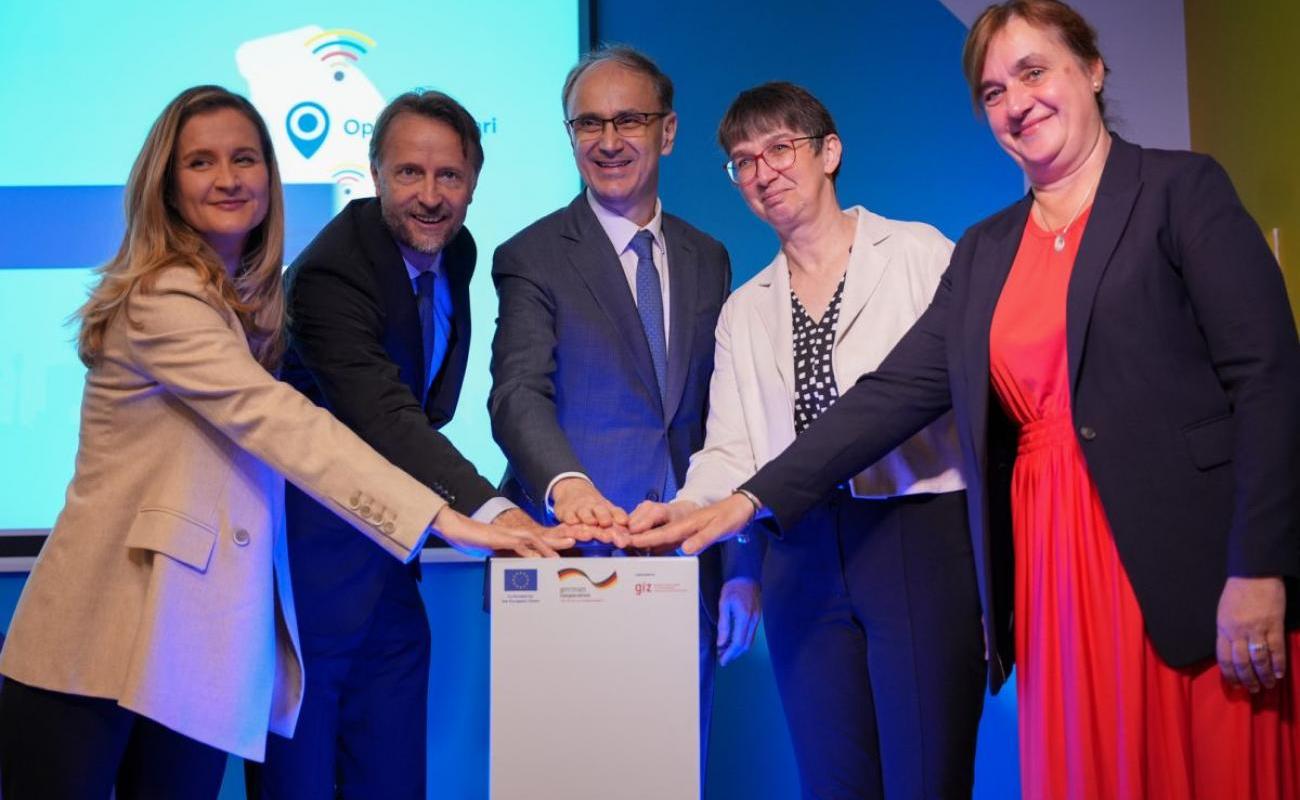
Fast and reliable internet is now a basic necessity, not a privilege — this was the shared message from participants at the event “Connecting Serbia: Digital Access for Every Community”, held today at Europe House in Belgrade.
On this occasion, the European Union presented two new initiatives aimed at improving digital connectivity across Serbia: WiFi4WB (Wi-Fi for the Western Balkans) and the Rural Broadband Rollout. Through these projects, supported by a total of EUR 42.5 million in EU grant funding secured through the Western Balkans Investment Framework (WBIF), the goal is to ensure that citizens across the country, especially those in remote and undeserved communities, gain better access to the internet, digital public services, education, information and economic opportunities.
The event was hosted by the Delegation of the European Union to Serbia, together with the European Bank for Reconstruction and Development (EBRD) and German Development Cooperation (GIZ), reaffirming Team Europe’s support for Serbia’s digital transformation and connectivity agenda.
Participants included Prime Minister of the Republic of Serbia Đuro Macut, Ambassador of the EU to Serbia Andreas von Beckerath, German Ambassador to Serbia Anke Konrad, EBRD Deputy Head in Serbia Jelena Čeperković, and GIZ Country Director for Serbia Sabine Olthof.
“The projects we are discussing today represent the very essence of what the EU truly is – something we may have forgotten amid the sea of high politics and bureaucracy – connectivity at every level: between people, economies, and societies. Connectivity as the foundation of the modern digital age, connectivity as an indispensable condition for progress”, emphasized the Prime Minister of the Republic of Serbia Đuro Macut.
Ambassador of the EU Delegation to Serbia Andreas von Beckerath stressed that broadband internet today is as essential as roads, electricity or water.
“It is the backbone of all modern economies, the lifeline for businesses, and the gateway to education, healthcare, and public services. The two initiatives we are kicking off today will not just change how Serbian citizens access the internet, they will change how they access opportunity. This is what European integration looks like in practice – tangible, transformative, and inclusive,” said Ambassador von Beckerath.
Free public Wi-Fi in 117 municipalities across Serbia
Through the WiFi4WB initiative, municipalities across Serbia will roll out free public Wi-Fi networks in 117 locations nationwide, including squares, parks, libraries, schools and other public spaces.
The initiative will improve access to digital services and strengthen local connectivity. It is implemented under the EU4Digital programme, co-financed by the European Union and the Government of the Federal Republic of Germany, with GIZ leading implementation.
The programme builds on the successful WiFi4EU model, through which thousands of local communities across Europe have already gained free public internet access.
“Today, as Team Europe, Germany together with EU, we are launching the WiFi4WB initiative, that brings free internet to 117 municipalities in Serbia. Located in central public places, these hotspots will provide free WiFi available to everybody: citizens and visitors alike, students, entrepreneurs, families and friends”, underlined the German Ambassador to Serbia Anke Konrad.
Fast internet for more than 1,000 rural settlements and 800 schools
The Rural Broadband Rollout project will expand high-speed internet access in rural areas across Serbia, particularly in communities where broadband infrastructure is currently unavailable or of insufficient quality.
The project is expected to connect more than 1,000 settlements and around 800 elementary schools, enabling households, businesses and public institutions in smaller communities to benefit from significantly improved internet access. The pilot phase of the project has already been successfully completed, while the second phase is now beginning.
EBRD Deputy Head in Serbia Jelena Čeperković highlighted that, thanks to the project, more than 800 schools and around 150,000 households across approximately 1,000 settlements throughout Serbia will gain access to high-speed internet.
“This will create the conditions for better-quality education, improved business opportunities for local enterprises, and more efficient public services. In this way, we ensure that place of residence is no longer a barrier to opportunity, contributing to an improved quality of life in rural areas,” said Čeperković.
The project is financed through EUR 118 million in EBRD loans and EUR 35 million in EU grant support provided through the Western Balkans Investment Framework (WBIF).