
The Russian far-right has taken root in the region: "Russian" connections lead from Visegrad and Belgrade to the front in Ukraine
The Russian far-right movement “Russo-Slavic Unification and Revival”, known by the abbreviated name “Rusov”, maintains ties to political and far-right circles in Serbia and Bosnia and Herzegovina, while individuals affiliated with this organization participated in the war in Ukraine.
One of these connections is shown by a photo published in April 2026 on the Telegram channel “Rusova”. It shows Velibor Zeković, a member of the Socialist Party of Srpska (SPS) in the Visegrad Assembly, posing together with Željko Durović with the flag of the Russian movement on the Zaglavak hill near Visegrad, writes Radio Free Europe.
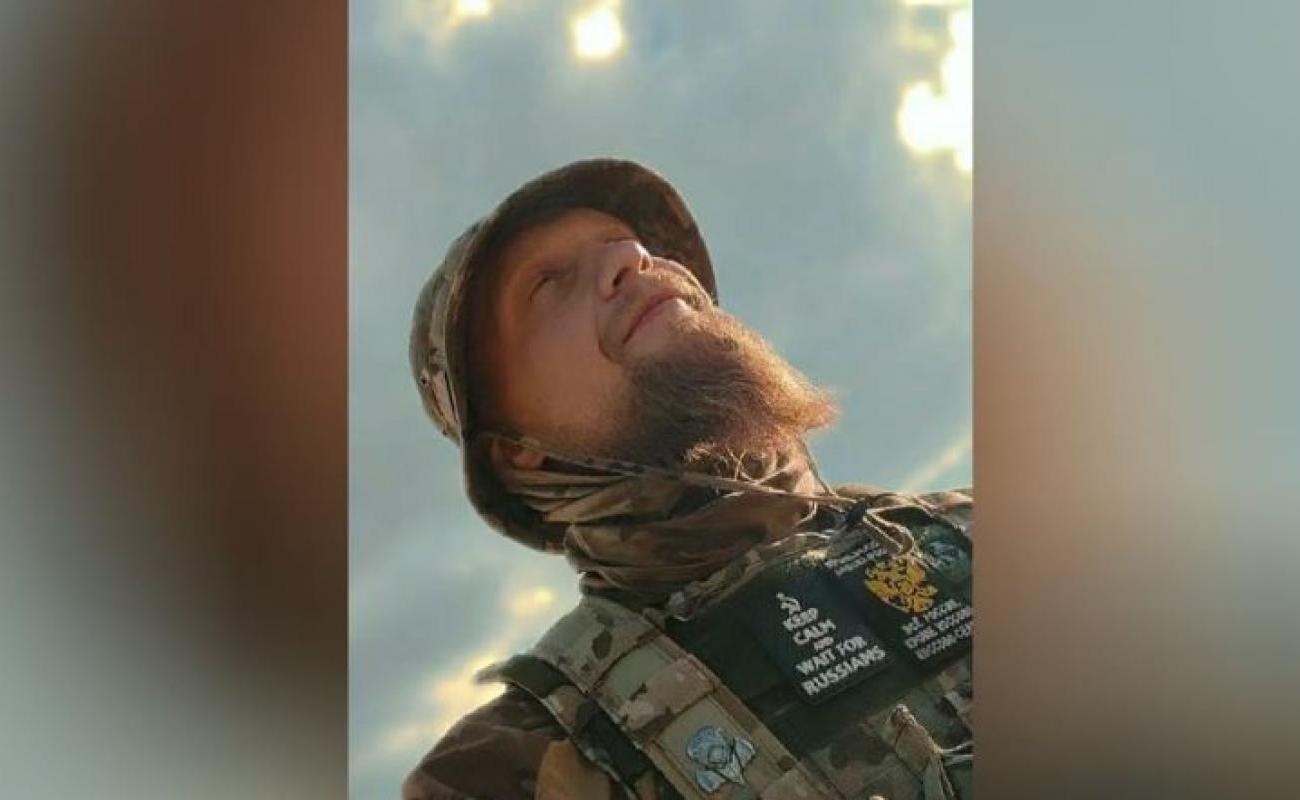
Ten years ago, Đurović presented himself as the head of the Serbian branch of the all-Russian movement “Kosovo Front,” an organization that Ukrainian authorities labeled as an entity linked to organizing the departure of people from the Balkans to the Ukrainian battlefield. In the photo, Đurović also wears the “Rusova” emblem on his sleeve.
In the photo's description, Zekovic and Đurović are presented as "Serbian allies of the Rusov movement", and it is said that they are at the memorial cross at the place where in 1993 Russian volunteers "fought and shed blood side by side with Serbs for Serbian Bosnia".
Zeković did not respond to RFE/RL's calls and messages about his contacts with "Rusova," and no response came from his Socialist Party of Srpska. Questions addressed to Đurović and the Russian movement itself remained unanswered.
Relations between politics in Republika Srpska and the Russian right
Journalist from Banja Luka, Đorđe Vujatović, who follows issues of foreign influence in Bosnia and Herzegovina, believes that such connections are not the exception.
"It is paradoxical that parties that nominally call themselves socialist flirt with right-wing organizations and have nothing to do with the ideology of the left," Vujatović told RSE.
According to him, the connections of political actors from Republika Srpska with Russian right-wing organizations have existed for years.
As one of the examples, he cites events attended by high-ranking officials and officials, where Alexander Zaldostanov, known as “The Surgeon,” the leader of the Russian motorcycle club “Night Wolves,” which is under US sanctions, also appeared.
"The entire mainstream political scene is connected to the Russian Federation," says Vujatović.
He sees the main reason for such an orientation of political parties from Republika Srpska in political opportunism. According to him, public opinion in RS reacts positively to Russian political messages and Vladimir Putin's policies.
"Political actors realized that it was worth coming to power and everyone rode the wave of that populism, playing with the card of historical ties with Russia, Pan-Slavism and Orthodoxy as connecting factors," says Vujatović.
On the other hand, for Russian organizations, the Balkans represent a suitable area for expanding their influence.
"Due to historical ties, the Balkans are the best space for such indirect actions and to show belonging to the multipolar world, as they call it," Vujatović assesses.
From the war in Bosnia to the war in Ukraine
The location where Zekovic and Durovic were photographed also has strong symbolism. They unfurled the “Russian” flag behind a makeshift cross made from empty grenade launcher containers, in a location where members of the Army of Republika Srpska and Russian volunteers operated during the war in Bosnia and Herzegovina in the 1990s.
Veterans’ organizations in Republika Srpska have celebrated “Russian Volunteer Day” for years. However, this year, BiH authorities banned some Russian volunteers from entering the country, so the commemoration was attended by representatives of veterans’ organizations from RS and family members of Russian volunteers.
Among those denied entry was Aleksandar Kravchenko, a former Russian volunteer in Bosnia and founder of the “Kosovo Front,” an organization with which Zeljko Durović was also affiliated.
The “Kosovo Front” was also active during the conflict in Donbas, before the start of the full Russian invasion of Ukraine in February 2022. Ukrainian authorities have labeled the organization as one of the structures involved in recruiting volunteers from the Balkans, which Kravchenko has previously denied.
Vujatović believes that the connections between Russian and Serbian actors alone do not represent a major immediate threat to the internal security of Bosnia and Herzegovina, but warns of the problem of insufficient processing of people going to foreign battlefields.
"Going to foreign battlefields is reprehensible, but the state does not react, partly because some of these people have obtained Russian citizenship," he said.
"Danube" and "Sava" went to help the "Russian brothers"
The connections between certain actors from the Balkans and Russian structures continued even after the beginning of the invasion of Ukraine.
It is not known exactly how many BiH citizens went to fight on the Ukrainian front. However, Europol announced in 2025 that among the hundreds of identified members of the Russian mercenary formations Wagner and Redut there were citizens of Bosnia and Herzegovina, without publishing more detailed information.
One of the most famous names is Davor Savicic, a Bosnian Serb who holds the rank of colonel in the Main Directorate of the General Staff of the Armed Forces of the Russian Federation, better known as the GRU. Ukrainian authorities have opened criminal proceedings against him for war crimes.
In early 2023, a video appeared on Telegram of two masked men announcing in Serbian that they had joined Russian forces in Ukraine, namely the "Sudoplatov" battalion.
Presented under the codenames “Danube” and “Sava,” they described themselves as “Serbian patriots and Russophiles” who had come to help their “Russian brothers.”
Their identities have never been officially confirmed, but investigative media in Bosnia and Herzegovina have reported that they are citizens of that country for whom an Interpol arrest warrant has been issued for criminal offenses.
In the video, both were wearing the "Russian" emblem.
Who is behind the "Rusov" movement?
“Russian-Slavic Unification and Revival” was founded in 2012 and is led by Andrey Rodionov.
In the movement's official manifesto, one of the main goals is the restoration of "historical Great Russia, the protector of the Slavs, the stronghold of traditional values, and the guarantor of the construction of a socially just society."
After the war in eastern Ukraine began in 2014, the movement supported pro-Russian separatists. Rodionov claims to have founded the “Phoenix” unit, which fought as part of the “Prizrak” brigade, which also included some volunteers from Serbia.
In the photo, which is said to have been taken in 2015 in the territory of the self-proclaimed "Lugansk People's Republic", Rodionov is shown wearing a camouflage uniform while standing with another man holding a red flag with the wheel symbol, which appears in the iconography of some far-right organizations and is also called the "Slavic swastika."
After the Russian invasion began in 2022, Rodionov posted photos of himself in uniform and with a weapon on Telegram. He also claimed to have joined the Volunteer Assault Corps of the Russian Federation in 2023.
Rodionov has been building connections in the Balkans for years.
The founder of "Rusova" has been visiting the Balkans for years, and has documented his contacts and travels with photos on social networks.
In an interview with Radio Belgrade in 2020, he said that “not only other organizations and movements, but also political parties” are approaching his movement.
Investigative media in North Macedonia writes that Rodionov has been to that country several times since 2017. In 2018, he organized a camp near Skopje where participants learned martial arts and were introduced to the “spiritual traditions of Ancient Russia.”
His connections in Serbia are particularly important.
Rodionov maintains contacts with the unregistered far-right group “People’s Patrol”, known for its anti-immigrant actions. In 2021, together with its leader Damnjan Knežević, he marked the 100th anniversary of the exodus of Russian monarchists after the October Revolution in Belgrade.
In the same year, Knezhevich stayed in Moscow, where, among other things, he met Rodionov.
Ordinary flags on the Donetsk front
Meanwhile, "Rusov" established ties with the little-known Serbian far-right group "Srpski soko".
In July 2024, this organization organized a rally in Novi Sad dedicated to, as they called it, the “liberation of Srebrenica”, on the occasion of the anniversary of the genocide committed by the forces of Republika Srpska under the command of Ratko Mladić during the occupation of the enclave in July 1995. Mladić was sentenced before the Hague Tribunal to life imprisonment for genocide and other crimes.
An even more direct connection between the “Serbian Skifter” and the Russian movement emerged in May 2025.
In the photo published on the Serbian organization's Instagram profile, Andrei Rodionov is seen with three masked and armed men in uniform. "Russian" and "Serbian Skifter" flags appear next to them, while the location is listed as the Donetsk region in eastern Ukraine.
"Russian comrades with Serbian falcons on the front line of defending Orthodoxy," the photo caption reads.
The symbol of “Rusova” – a yellow falcon with the sign of the solar cross – also appeared at rallies in support of the Russian invasion of Ukraine, organized by far-right groups in Belgrade.
The same symbol was found in April 2026 near Visegrad, on the flag with which local councilor Velibor Zekovic and Željko Durovic were photographed. Thus, the connection that has been going on for years between Russian nationalist structures, certain political and right-wing actors in the Balkans, and the people who went to the battlefield in Ukraine has reappeared.