
Mobilization "in the red": how the Russian Federation is trying to compensate for its own losses on the battlefield
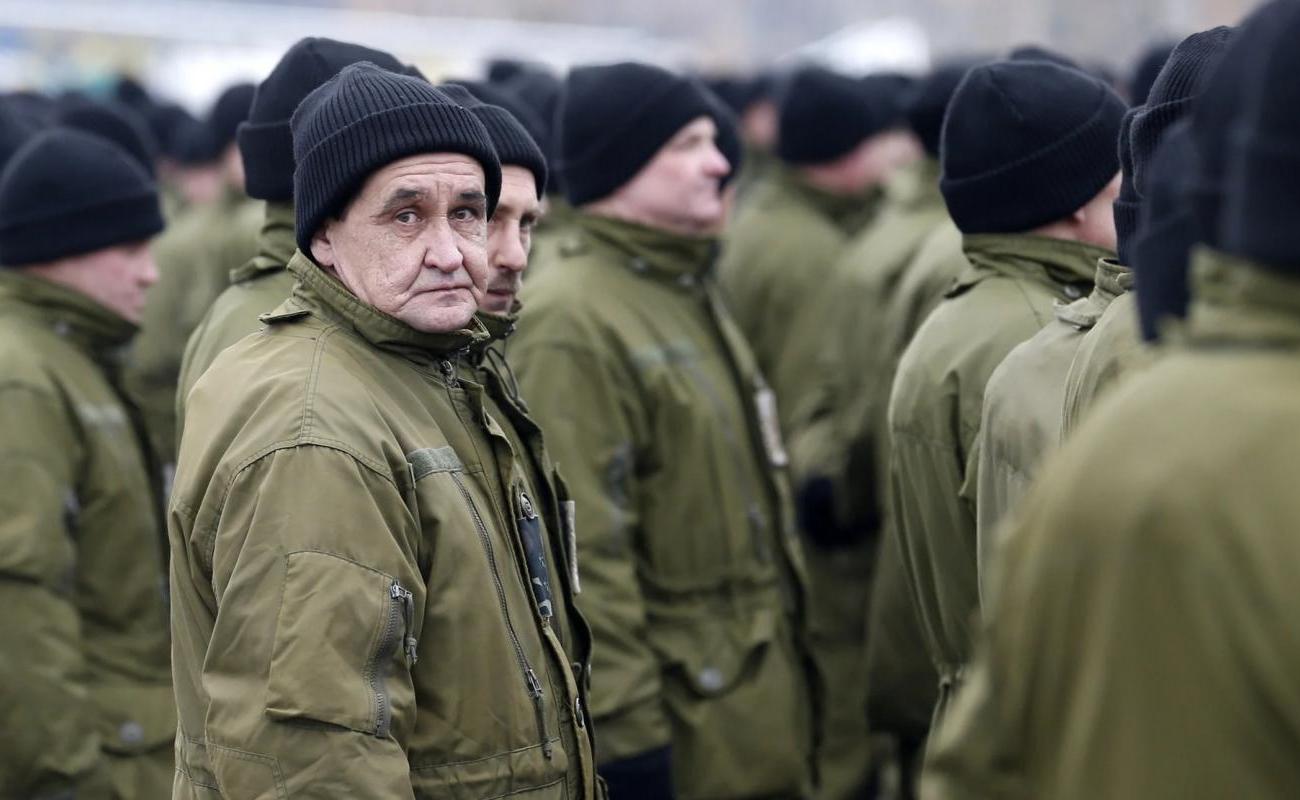
The Russian authorities officially declare that they do not intend to carry out mobilization this fall - and, it seems, they are telling the truth, agrees military expert Dmitry Snegirev. But this does not mean that the replenishment of the Russian army will not take place - the mobilization will simply be covert, and its mechanisms have long been known and are already in effect.
Recently, Ukrainian President Volodymyr Zelensky, citing intelligence, stated that Russia is preparing a new large-scale mobilization wave for the fall of 2026. The head of state emphasized that the Kremlin plans to announce it immediately after the parliamentary elections to the State Duma of the Russian Federation, which are scheduled for September 18-21.
According to the President of Ukraine, Russia plans to mobilize from 300,000 to 500,000 people by the end of 2026, and also plans a similar number of recruits for next year.
However, the Kremlin will not publicly announce the mobilization, fearing the reaction of its own society, which, according to internal polls, opposes forced conscription. Putin's plan is to use small, "pocket" parties in the "elections" to demonstrate the alleged full support of the Russian people for the war, and then launch hidden mobilization mechanisms.
According to Ukrainian intelligence, since August 2026, signs of preparation and strengthening of general mobilization readiness have been recorded in the Russian Federation. The legal basis for this remains the current mobilization decree signed by Putin in 2022, which has not yet been canceled.
A possible new wave of mobilization is associated with the fact that the current recruitment rate can no longer cover losses at the front.
"In less than seven months of this year, 221,000 people have joined the ranks of the Russian Armed Forces. While Russian losses over the same period amounted to almost 225,500, of which 131,000 were killed, almost 93,000 were wounded, a significant number of wounds are serious, because the Russians have poor medical care at the front," the president stressed.
The total mobilization reserve (mobilization resource) of the Russian Federation, according to estimates by Ukrainian and international intelligence agencies, is between 23.5 and 25 million people. This is the maximum number of citizens who are subject to conscription, have military registration or related specialties and can theoretically be included in the armed forces.
It is worth noting that since the beginning of the full-scale invasion of Ukraine, Russia has already mobilized (including covert and so-called "partial" mobilization) approximately 1.3-1.4 million people. An offensive group of over 720,000 people is currently deployed on the territory of Ukraine.
The Russian authorities are trying to publicly demonstrate the success of the campaign to sign contracts with the military in order to avoid panic over a possible new open mobilization.
Thus, in July 2026, the Deputy Chairman of the Security Council of Russia Medvedev stated that in the first six months approximately 200,000 people signed contracts with the Ministry of Defense. Of these, 40,000 were allegedly sent to the units of unmanned systems.
The Russian independent publication "Important Stories" together with the German economist Janis Kluge analyzed the expenses of the Russian Ministry of Finance on federal payments to conscripts. Officially, 131,300 people received payments in the first half of 2026. In the first quarter, 71,200 people signed contracts, and in the second quarter - only 60,100. It is worth noting that at the beginning of the year, the average daily influx of recruits fell to 700-800 people per day, which is the minimum three-year figure since the beginning of the full-scale war.
In this sense, mobilization measures were extended in places of detention on the territory of Russia. Law enforcement and special agencies carry out forced mobilization among the so-called "special contingent".
Over the past four and a half years, the number of prisoners in pre-trial detention centers and places of detention in Russia has been reduced to 282,000 people, said the director of the Federal Service for the Execution of Sentences (FSVP) Arkady Gostev. According to him, by the end of 2021, there were 465,000 prisoners in Russia.
It is noteworthy that in 2025, the Russian army, according to Western analysts, attracted at least 126,000 to compensate for the losses of personnel from the so-called "special contingent". According to Ukrainian intelligence, in order to cover human losses at the front, Moscow plans to mobilize at least 10,000 soldiers from the "special contingent" every month.
Back during the coup of Yevgeny Prigozhin, the Russian president signed a decree that prisoners have the right to directly sign contracts with the Russian Ministry of Defense. Putin's latest decree continued this practice, in particular, on the fact that prisoners can sign a contract with the Russian Ministry of Defense directly in the courtroom.
In addition, forced mobilization is gaining momentum in the temporarily occupied territories of Ukraine. First of all, total mobilization has affected the temporarily occupied territories of Lugansk, Donetsk, Zaporizhia and Kherson regions. The Russians are trying to recruit their personnel precisely thanks to Ukrainian citizens living in these territories.
We recall that, according to the new law, from January 1, 2026, the recruitment of Russian citizens for military service will be carried out without dividing it into traditional spring and autumn campaigns. The age limit for mobilization is set from 18 to 65 years. At the same time, the borders with the Russian Federation from the territory of the temporarily occupied Lugansk and Donetsk regions are actually closed in order to prevent the departure of the local population to Russia, and then to European countries. That is, the recruitment of personnel is taking place almost exclusively thanks to the population of the occupied territories.
It is impossible to name the exact number of Ukrainians forcibly mobilized into the Russian army since the beginning of the large-scale invasion. According to open sources, it is 46,327 people. The largest number is from Crimea, over 35,000 people. In Sevastopol – more than 5,000 and the same number in the occupied part of Donetsk region.
Russia has also significantly increased the participation of foreign mercenaries. More than 28,000 foreign mercenaries have signed contracts with the Russian Armed Forces, and this number continues to grow. The occupation forces include citizens of 136 countries of the world, with the exception of military personnel from North Korea. At least 3,080 foreign mercenaries remain in the Russian army, even after the expiration of their contracts.
This year, Russia plans to recruit a record 18,500 foreigners - this is an important resource for Russia in the context of massive losses of its own population in the war against Ukraine.
The Russian army is also being replenished by raids on residents of Central Asian states and labor migrants residing in Russia.
According to calculations by the analytical service of the audit and consulting network FinExpertiza, based on data from the Russian Ministry of Internal Affairs, in 2022 there were 11.8 million cases of registration of foreign workers for migration. These statistics include both the extension of registration of those who have been living in Russia for several years, as well as initial registration.
Currently, raids are being carried out throughout the Russian Federation for residents of Central Asian states, the so-called labor migrants, who are caught and have a choice: either you will be deported back to Tajikistan, Uzbekistan, Kyrgyzstan, or you will sign an appropriate contract with the Russian armed forces.
According to information directly from the scene, the Moscow authorities have opened a recruitment point in the Sakharovo migration center. The Russian authorities are massively involving labor migrants in the reconstruction of occupied Ukrainian cities and the construction of military fortifications directly on the front line.
All this is happening against the background of statements by representatives of the official Kremlin that there is currently no need for a second wave of partial mobilization. In particular, the Russian permanent representative to the UN Nebeznya recently stated that mass mobilization in Russia is not currently planned. "It has been officially said many times that we do not need mass mobilization at the moment, and as far as I know, it is not planned or expected," Nebeznya noted.
It is worth noting that the State Duma of the Russian Federation has adopted a law on increasing the mobilization reserve by raising the age limit for being in the reserve. The new law raises all age limits for members of the reserve and mobilization reserve formations by five years. The age limit for being in the mobilization reserve is also increased - up to 65 years for senior officers and up to 60 years for junior officers. For all other categories, the age limit for being in the mobilization reserve is immediately raised by 10 years - from 45 to 55 years.
As a reminder, the President of Ukraine Zelensky stressed that, in response to the Kremlin's plans, special services have already been assigned tasks to complicate the implementation of the Kremlin's plans as much as possible. In addition, Ukraine calls on international partners to act preventively: to strengthen total sanctions against Russia, to create critical problems for Russian military logistics, fuel supplies, and to block the possibilities of financing the defense industry.