
Belarus fails to break free from Russia’s economic grip
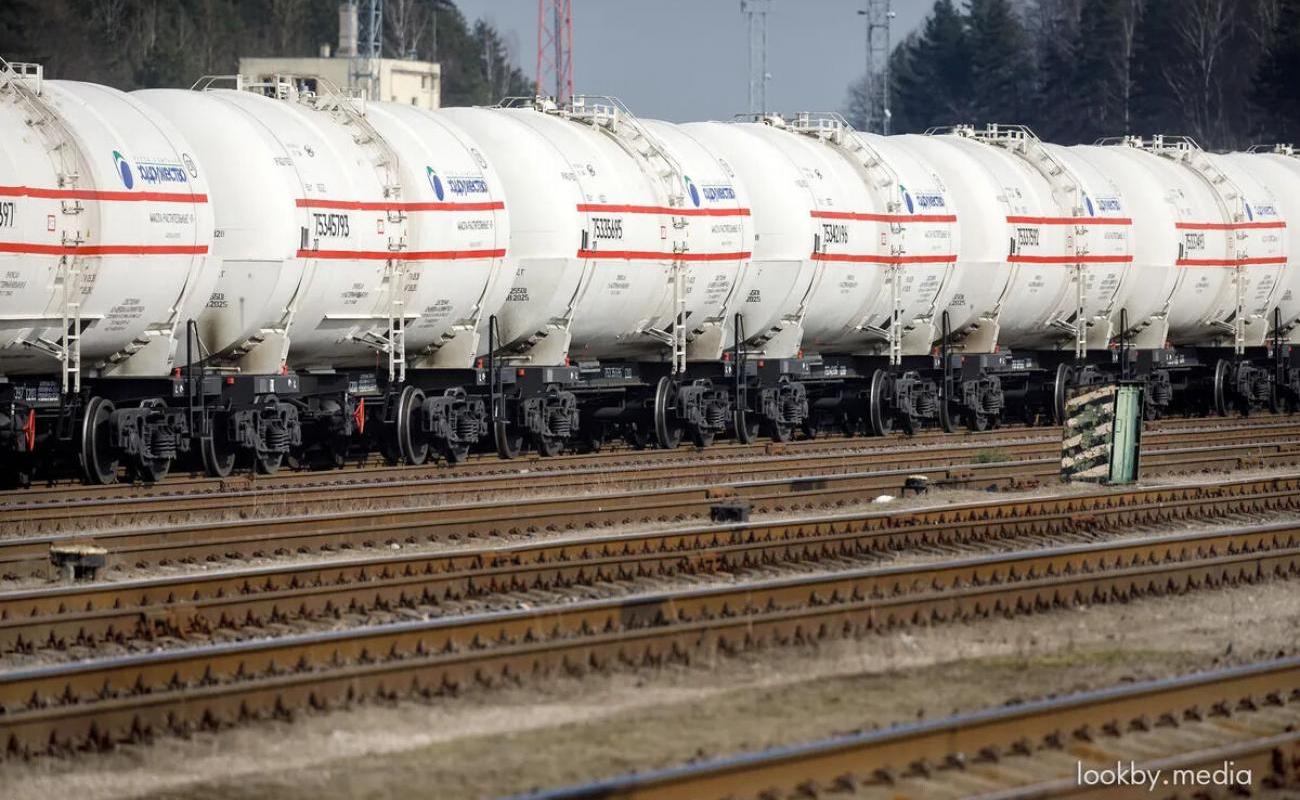
The European market for Belarusian goods continues to shrink, while the shift towards China has created an imbalance, with Belarus buying almost four times more from China than it sells there. The easing of United States sanctions has also failed to produce any significant effect. As a result, Belarus remains critically dependent on its main trading partner, Russia. We looked at how trade in goods with Belarus's main partners developed in the first half of 2026.
According to Belstat, between January and June 2026, Belarus exported $23.756 billion worth of goods and imported $26.536 billion. Commonwealth of Independent States countries accounted for 71% of exports, primarily Russia. Their share of imports was lower, at 59%.
Imports increased by 19.6% compared with the first half of 2025. Exports grew faster, by 23.2%. Nevertheless, Belarus's trade balance in goods remained negative, at minus $2.78 billion.
Belarusian Prime Minister Alyaksandr Turchyn also acknowledged the problems with goods exports on 26 August, although he said that the first-half results were encouraging:
,,“But we all understand the difficulties involved in exporting our goods to traditional markets. Therefore, of course, services exports will be the most important reserve for balanced economic growth in the medium term.”
Turchyn did not specify which countries were causing problems. Belarus's largest trading partners are Russia, China and the European Union, while before Russia's full-scale aggression against Ukraine, Ukraine was also an important partner.
Europe is increasingly shutting out Belarusian goods
There is now virtually no trade with Ukraine, while the situation with the European Union is difficult. Following the 2020 presidential election, the forced landing of a Ryanair flight in Minsk and Belarus's involvement in Russia's aggression against Ukraine, European Union sanctions against Belarus have continued to expand.
According to Eurostat, trade continued to decline in the first half of 2026. During this period, Belarus exported just €160 million worth of goods to the European Union, accounting for only about 0.7% of Belarusian exports. This was €80 million less than in the first half of 2025 and almost 14 times less than during the same period in 2022.
Traditionally, the main buyers of Belarusian goods in Europe have been:
Poland — 38% of total purchases in the first half of 2026;
Lithuania — 15%;
Latvia — 9%.
Compared with January–June 2025, Poland reduced its purchases by more than a third. Supplies to Lithuania also declined slightly, while exports to Latvia fell 3.7-fold.
At the same time, Luxembourg is the only European Union country that does not purchase anything from Belarus.
The main Belarusian exports to the European Union are:
plastics and articles thereof — 13% of total exports;
animal or vegetable fats, oils and waxes — 11%;
aluminium and articles thereof — 6%;
vehicles and their parts, excluding railway and tramway rolling stock — approximately 6%.
In the first half of 2025, fertilisers ranked third. Their exports increased in 2024, but during the first half of 2026 Belarus again sold very little fertiliser to the European Union, just €6 million worth. By comparison, Belarus exported more than €103 million worth of fertilisers to the European Union during the first half of 2022.
Other goods that previously generated hundreds of millions of euros for Belarus, such as timber, iron and steel, are now banned.
Belarusian imports from the European Union remain stable and have even increased slightly. In the first six months of 2025, Belarus imported €2.25 billion worth of goods from the European Union. During the same period in 2026, the figure was €2.67 billion. This is comparable to the level recorded in the first half of 2022.
In 2023 and 2024, there was a surge in imports due to the resale of European cars to Russia, but sanctions on European car purchases were subsequently extended to Belarus.
The main suppliers to Belarus are:
Poland — 33%;
Germany — 15%;
Lithuania — 14%.
Belarus imported nothing only from Cyprus and Malta.
The largest categories of goods Belarus purchases from the European Union are:pharmaceutical products — 15%;
nuclear reactors, boilers, machinery and mechanical appliances, and parts thereof — 14%. This category includes agricultural and forestry machinery as well as household appliances;
vehicles and their parts, excluding railway and tramway rolling stock — 12%.
In monetary terms, imports in all three categories increased. Pharmaceutical imports during the first half of 2026 were higher than in the corresponding periods of the previous four years. At the same time, imports of machinery and vehicles from the European Union have been declining when compared with figures from the past five years.
China is expanding its presence in the Belarusian market
Trade with China can be said to be developing and increasingly replacing Europe for Belarus. However, there is a problem here as well: Belarus buys several times more from China than it sells there.
According to China's General Administration of Customs, Belarusian exports to China increased by 25% in the first half of 2026 compared with the same period in 2025, reaching $1.83 billion.
The increase was driven by fertiliser exports, which amounted to $696 million during the period, almost twice as much as in the first half of last year. Almost all of this revenue came from potash sales.
As a result, fertilisers account for 64% of Belarusian exports to China. Animal and vegetable fats, oils and waxes rank second, at 10%, although their exports declined. Timber, articles thereof and charcoal rank third, at 9%. Belarus sold $100 million worth of these goods, almost the same as in the first half of 2025.
At the same time, imports from China were almost four times higher than exports there, reaching $4.19 billion. This was 30% more than in the first half of 2025.
Belarus's main imports from China are :vehicles and their parts, excluding railway and tramway rolling stock — 32%;
nuclear reactors, boilers, machinery and mechanical appliances, and parts thereof — 20%, meaning various types of machinery that are in fact unrelated to nuclear technology;
electrical machinery and equipment and parts thereof, as well as sound recording and reproduction equipment, television image and sound recording and reproduction equipment, and parts thereof — 16%.
Imports of these goods have increased in recent years amid a decline in their supplies from the European Union.
The easing of United States sanctions has not helped much
The United States has lifted some sanctions on Belarus, including sanctions on potash, but there has been no breakthrough in trade.
Between January and June 2026, Belarus imported just $7.6 million worth of goods from the United States and exported $8.5 million worth of goods there. These figures are negligible for a country of Belarus's size. Similar levels have been recorded since the beginning of Russia's full-scale aggression against Ukraine.
Although the United States was not a key trading partner for Belarus even before the sanctions, trade volumes were considerably higher. For example, in 2021 Belarus imported $217.7 million worth of goods from the United States and exported $479.2 million worth, mainly fertilisers.
The United States' easing of restrictions on potash has also failed to revive Belarusian trade with Brazil, which, together with India and China, was one of the main buyers of Belarusian fertilisers before the sanctions.
During the first six months of 2026, Belarus exported only $655,000 worth of goods to Brazil, compared with $1.348 million during the same period in 2025. Almost half of this amount consisted of tools, implements, cutlery, spoons and forks made of base metal, as well as parts thereof.
Until 2021, Belarus exported $500–600 million worth of potash fertilisers to Brazil every year.
Exports to India amounted to just $35 million, roughly the same as during the corresponding period in 2025. The main export category was aircraft, spacecraft and parts thereof.
Imports from India have not taken off either, amounting to $39 million. About one-third of this sum was pharmaceutical products.
Dependence on Russia remains
Russia is Belarus's largest market. Last year, it accounted for 60% of Belarus's total trade in goods. However, the exact nature and volume of trade between the two countries are unknown because both have closed their trade statistic
.At a meeting with Alyaksandr Lukashenka on 25 August, Russian First Deputy Prime Minister Denis Manturov said that bilateral trade had increased by 12.5% during the first six months of 2026. Industrial products accounted for 65% of this trade
.As BEROC research centre expert Anastasiya Luzhina previously told Belsat, Belarusian exports may have increased during the first five months of the year partly because of fuel and consumer goods exports to Russia
.However, this situation is dangerous for Belarus because of its heavy dependence on Russia. Moscow could reduce its purchases for both economic reasons and as a means of exerting political pressure