
Sexual violence as a weapon of war: how the UN finally put Russia on the “list of shame” and why it matters
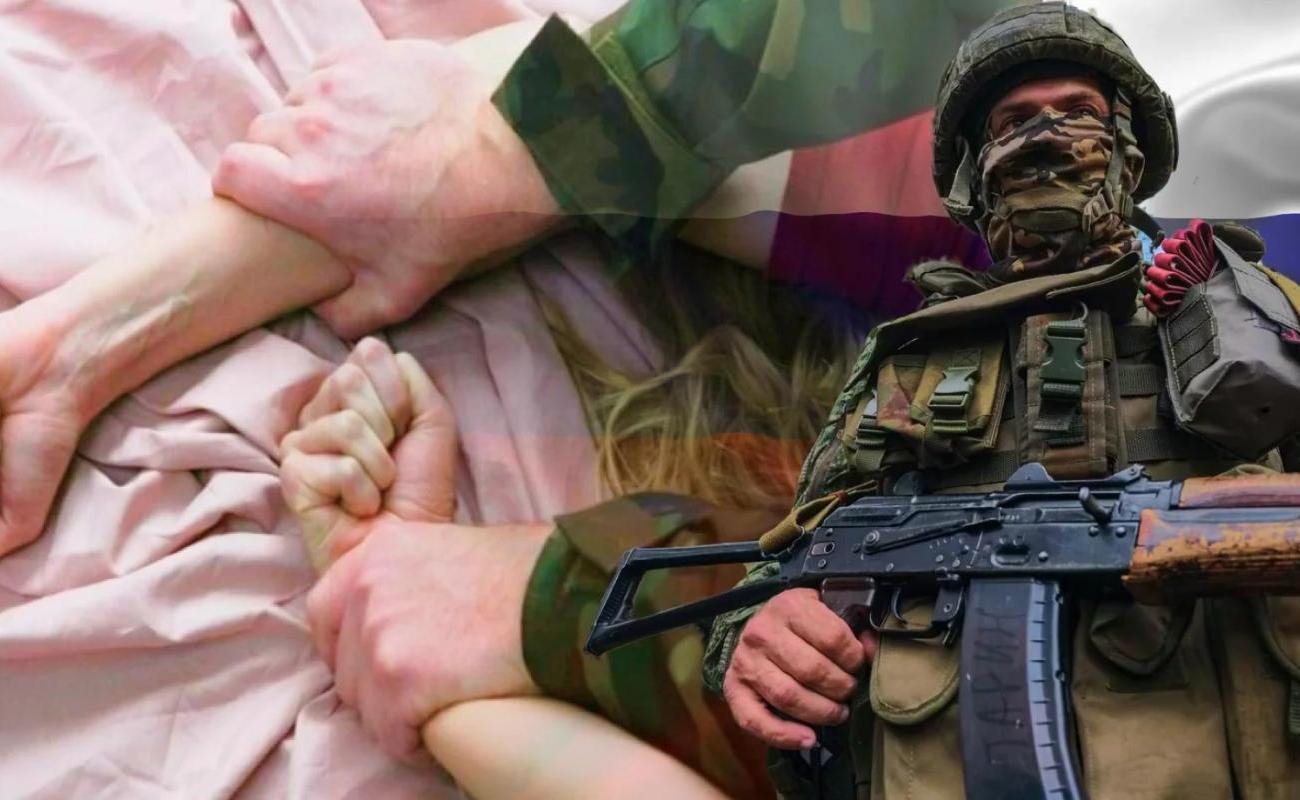
On August 12, 1949, the Geneva Conventions were signed, which were supposed to establish rules, even for war, and protect those who do not or no longer take part in hostilities. 77 years later, Russia is waging a war against Ukraine, during which civilian killings, torture and sexual violence have been recorded. Focus examined the extent to which international humanitarian law can actually protect victims of such crimes and what the inclusion of the Russian Federation on the UN “list of shame” changes.
August 12 marks the 77th anniversary of the signing of the four Geneva Conventions of 1949 - the fundamental international treaties for the protection of victims of war. They established rules for the treatment of wounded and sick military personnel, prisoners of war and civilians during armed conflicts. Certain provisions of international humanitarian law prohibit rape and other forms of sexual violence.
However, Russia’s war against Ukraine has once again demonstrated the gap between the norms set out in international documents and what happens to people in real war. Victims of sexual violence are often left alone with the consequences of their experiences, from psychological trauma to difficulties in accessing medical care, even after they flee to safe countries. This was felt particularly strongly by Ukrainian women who, after the occupation and the atrocities they experienced, were forced to seek safety abroad. In some cases, they faced new challenges - bureaucratic barriers, limited access to reproductive services and a support system that, at the beginning of the full-scale invasion, was unprepared for the scale and specifics of the Ukrainian tragedy.
Why are victims of sexual violence left alone with their problems
One of the most painful consequences of sexual violence during the war was when Ukrainian women, raped by Russian soldiers, went abroad while pregnant. There, too, they faced not only psychological trauma and the need to start a new life, but also legal restrictions regarding abortion.
As explained by Olga Dunebabina, strategic communications manager of the public organization "La Strada-Ukraine", this problem was not a direct concern of the UN. First of all, it was connected with the legislation of the specific countries to which Ukrainian women went.
According to her, this problem was most noticeable in Poland, where abortion is effectively prohibited or allowed only in very limited circumstances.
“We saw this big problem in Poland, where abortion is practically banned. There is a very small range of reasons why a woman can get a referral for an abortion. And when Ukrainian women who were raped by Russian war criminals went abroad, pregnant, which was a consequence of rape, of course, many wanted to terminate this pregnancy. But in countries where abortion is banned or very clearly restricted, they often did not have such an opportunity,” Dunebabina tells Focus.
In such cases, according to her, women were forced either to return to Ukraine to have an abortion here, or to look for other ways. The situation became especially difficult in the later stages of pregnancy, when an abortion is often possible only for medical reasons. If the fetus was developing normally, there may not be any formal grounds for the procedure.
“La Strada” recorded at least one complaint from a Ukrainian woman who, after being raped, tried to have an abortion in Poland. In the end, she returned to Ukraine, where she received the necessary medical care.
At the same time, as Dunebabina notes, not all cases in Europe were related to the ban on access. Another illustrative experience was in Romania. There, according to her, the appeals did not refer to the legal impossibility of abortion, but to the quality of communication with the medical system and trust in the procedure.
"Illustrative cases were in Romania. Our partner organizations were more surprised by the courage of Ukrainian women in choosing a clinic, communicating with doctors about the possible consequences and the way the procedure itself will be carried out. Our citizens were interested in ensuring that the termination of pregnancy resulting from rape was carried out without consequences for their health," she explains.
That is, in Romania, according to the representative of "La Strade", there were no critical problems with access. The problem was that women wanted to clearly understand how the procedure would take place, what risks there might be and whether it would be safe for their health. Romanian public organizations played a significant role in such situations, helping Ukrainian women to find their way in the local system.
According to Dunebaba, these stories showed a wider problem: in 2022, the international system of helping victims of war was not really prepared for the Ukrainian crisis.
"Let's be honest: in general, there was no system of assistance and protection for victims of war. European countries had systems of shelters, refugee shelters, but for many years they worked with other categories of people - with refugees from the Middle East or from Africa. European countries were not physically prepared for the fact that millions of Ukrainians, primarily Ukrainian women, would come to them," she says.
According to the expert, Ukrainian refugees were different from the groups with which European assistance systems had previously worked. These were people who were not fleeing poverty, but from war, and in many cases they had a normal standard of living at home, access to medicines, digital services and social services.
That is why some of the assistance initially offered to Ukrainians seemed irrelevant. Dunebabina recalls that Ukrainian refugees could have been offered, for example, computer literacy courses, although Ukraine is a fairly digitalized country, and for most people this was not a primary need.
“The system, which was built on the example of refugees from other regions, turned out to be irrelevant for Ukrainian women and men. European NGOs also had no experience in working with people who had survived sexual violence during the war, torture, occupation, bombing. They learned through work - what works, what doesn’t work, how to communicate, how to help. And, of course, there were mistakes,” notes the representative of “La Strade”. According to her, the situation now looks different: the flow of refugees has decreased, many Ukrainians abroad have already partially integrated into the societies of the countries in which they live. But at the beginning of a large-scale war, this was a huge problem - not because of a lack of desire to help, but because of the system’s unpreparedness for the scale and specifics of the Ukrainian tragedy.
The UN, the “list of shame” and Russia: why it matters for Ukraine
Speaking about the role of the UN in combating sexual violence during war, Dunebabina suggests separating the political bodies of the UN and the specific agencies that work with people on the ground.
According to her, when it comes to the General Assembly, the UN Security Council or general political statements, one often gets the feeling that the international system only expresses indignation. But within the UN system there are separate structures that do practical work.
“It is very important to distinguish between UN agencies - such as UN Women, the UN Population Fund and the Office of the UN High Commissioner for Refugees. These are organizations within the UN structure that provide assistance to the work of civil society organizations on the ground - both in Ukraine and abroad, where they work with Ukrainian refugees and victims of the war. If we take a specific UN agency, they are useful,” Dunebabina explains.
At the same time, the political level of the UN, in her opinion, remains much more problematic. This is especially true of the Security Council, where Russia still has the status of a permanent member, even though its own army is accused of war crimes, including sexual violence against Ukrainian civilians, civilian prisoners and prisoners of war.
“It sounds absurd when a country that commits war crimes, including crimes of sexual violence, cynically sits in the UN Security Council and lies that the Russian army does not commit such crimes, and instead accuses the Ukrainian army,” says the representative of “La Strade”.
That is why, according to her, an important decision was the inclusion of Russia on the so-called UN “list of shame” for systematic sexual violence in conflicts.
This list has more than just symbolic significance. If a country appears on it three times, it can lead to a ban on its participation in UN peacekeeping operations. For Ukraine, this is fundamentally important, because Russia uses its presence in international peacekeeping missions not only as a reputational tool, but also as a mechanism for political influence, especially in African countries.
“What does it give? If a country is on this list several times, it is banned from participating in UN peacekeeping operations. This is very positive for us, because Russia’s influence on African countries is largely carried out through these peacekeeping operations,” Dunebabina explains.
According to her, Ukraine has been insisting on this decision for more than a year. Active advocacy has been going on since 2022 - at the level of the Ukrainian government, civil society organizations, as well as Ukraine’s partners abroad.
Dunebabina notes that in 2025, UN Secretary-General Antonio Guterres will actually issue a final warning to Russia: if sexual violence in conflicts is not stopped, the country will be included in the “list of shame.” In 2026, she says, this finally happened.
“Of course, we would have liked this to have happened much earlier. But in a situation with such bureaucratized organizations as the UN, where there is great Russian influence, such a step is important for us. It means that justice has finally triumphed over the huge money that Russia spends on diplomacy and lies,” she says.
According to Dunebabina, the inclusion of Russia on this list is also important because it captures the systematic nature of the crimes. This is not about “individual cases” or “individual perpetrators,” but about the model of behavior of the Russian military and structures associated with Russia in different countries.
“It is important for us that more and more diplomats and international partners understand: what Russia is doing in Ukraine, it is not doing only in Ukraine. Russian military contingents are present in many countries of the world - at the level of UN peacekeeping forces, intermediary forces, private military companies. And sexual violence is not a matter of individual bastards who rape Ukrainian women, men, civilians or prisoners of war. It is a system,” the representative of “La Strade” emphasizes.
She emphasizes: the UN decision cannot be considered a final victory. It is important that Russia remains on this list and that the international community does not lose sight of the crimes committed by the Russian military in Ukraine.
“Finally, we can say that the UN has shown: it not only proclaims justice and peace in words, but also demonstrates it in action. But this work is not finished. We are interested in further highlighting these actions of Russia,” summarizes Dunebabina.
Earlier, Focus wrote that the UN called May the deadliest month for the civilian population of Ukraine in recent times due to a sharp increase in the number of Russian attacks on cities.
Focus also reported that Ukraine continues to seek international accountability for Russia at the UN level for war crimes, including crimes against the civilian population and violations of international humanitarian law.