
Putin is changing generals. Why the Kremlin is doing it now
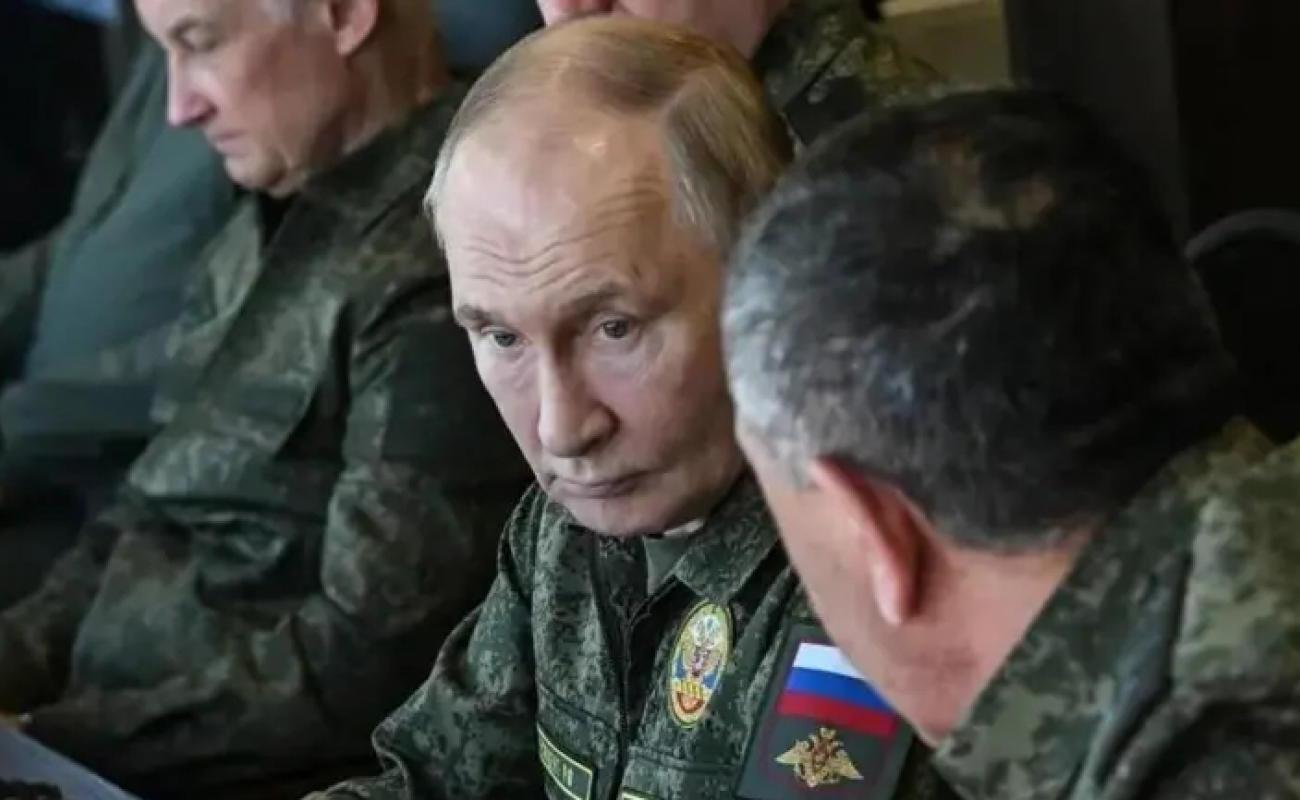
Vladimir Putin has announced major personnel changes in the Russian army. The changes concern logistics, troop management and unmanned systems. At the same time, Western analysts believe that this is not so much a reform as an attempt by the Kremlin to find an answer to the problems facing the army at the front.
During a meeting with the leadership of the Ministry of Defense, Putin said that the logistical support services will now work under a single command. They were headed by the former commander of the Center Force, Valery Solodchuk.
According to the Russian president, in the current conditions, the support of the army is "full-fledged combat work."
There have also been changes among the commanders of the military force groups.
Putin has officially appointed the first commander of a new branch of the Russian Armed Forces - the Unmanned Systems Force of the Russian Armed Forces. This is Lieutenant General Denis Lyamin.
These decisions were made at a time when Russia is facing several serious challenges at once.
Ukrainian attacks on oil refineries have caused fuel prices to rise and fuel supply problems in dozens of Russian regions.
At the same time, Ukrainian drones continue to attack logistics infrastructure inside Russia.
Since mid-July, warehouses and distribution centers of Russia's largest trading platform Wildberries have been attacked. According to available data, at least 15 facilities have been damaged.
The Kremlin is trying to "revive the offensive"
In this context, the Wall Street Journal is considering personnel changes.
According to the publication, the Kremlin is trying to give new impetus to the military campaign, the pace of which has noticeably slowed down in recent years.
This summer, the Russian offensive is developing at the slowest pace in recent years. Despite Moscow's statements about progress, Russian troops have not yet managed to achieve the operational breakthrough that the Kremlin is counting on, the WSJ indicates.
Russian troops continue to advance slowly in the Donbass towards Sloviansk and Kramatorsk. However, these gains remain insignificant and come at a high price.
The Black Bird Group research organization also came to similar conclusions. According to their assessment, Russia has captured the least territory this summer since the start of a large-scale invasion. At the same time, Ukraine has managed to launch counterattacks on some parts of the front.
Michael Kofman, a senior fellow at the Carnegie Endowment for International Peace, believes that a change of commanders alone will not change the situation.
“The initiative that Russia has had for some time is now passing to Ukraine. The Russian military mistakenly believed that by continuing the offensive, it would eventually achieve its goals. Instead, the results are decreasing, losses are increasing, and the offensive has largely stalled. Changing commanders at the highest level will not fix this,” Kofman believes.
The Wall Street Journal also notes that Putin has not begun a radical overhaul of the military’s top brass.
Instead of appointing new people, he simply reassigned positions among the current generals.
According to the publication, this is in line with the usual style and manner of work of the Russian president, who avoids public dismissals of military leaders, even when they do not achieve results.
Special emphasis in these new replacements is placed on the development of unmanned systems.
In this, the official course of the Kremlin coincides with one of the key trends in modern warfare.
At the same time, as analysts note, Russia has not yet managed to narrow the gap with Ukraine in this area.
According to the Wall Street Journal, Kiev uses unmanned technologies more effectively thanks to Western financial and engineering support, while Moscow has difficulties with training operators and developing its own technological solutions.
Why a Tanker Led Drone Troops
BBC journalist Ilya Barabanov draws attention to the fact that the official appointment of Denis Lyamin was actually the first full-fledged appointment of the commander of the Unmanned Systems Forces, although the creation of a new branch of the military was announced back in November last year.
47-year-old Lyamin is a professional tanker, a graduate of the Chelyabinsk Higher Command Tank School. For the past two and a half years, he has been the chief of staff of the troops of the Central Military District, and now he leads the troops responsible for one of the most technologically advanced areas of modern warfare.
Barabanov connects this appointment with the recent scandal surrounding the development of drones for the Russian army.
Last week, several officials and businessmen were arrested in Russia in connection with the possible embezzlement of funds allocated for the creation of heavy combat drones.
The investigation claims that the money was allocated, in particular, for the development of a Russian analogue of the Ukrainian drone "Baba Yaga".
As Ilya Barabanov writes, in practice it turned out that this device was not the result of Russian development, but rather a Chinese product, which, moreover, proved unsuitable for actual combat use.