31.07.2026. ‘Please send adult diapers’
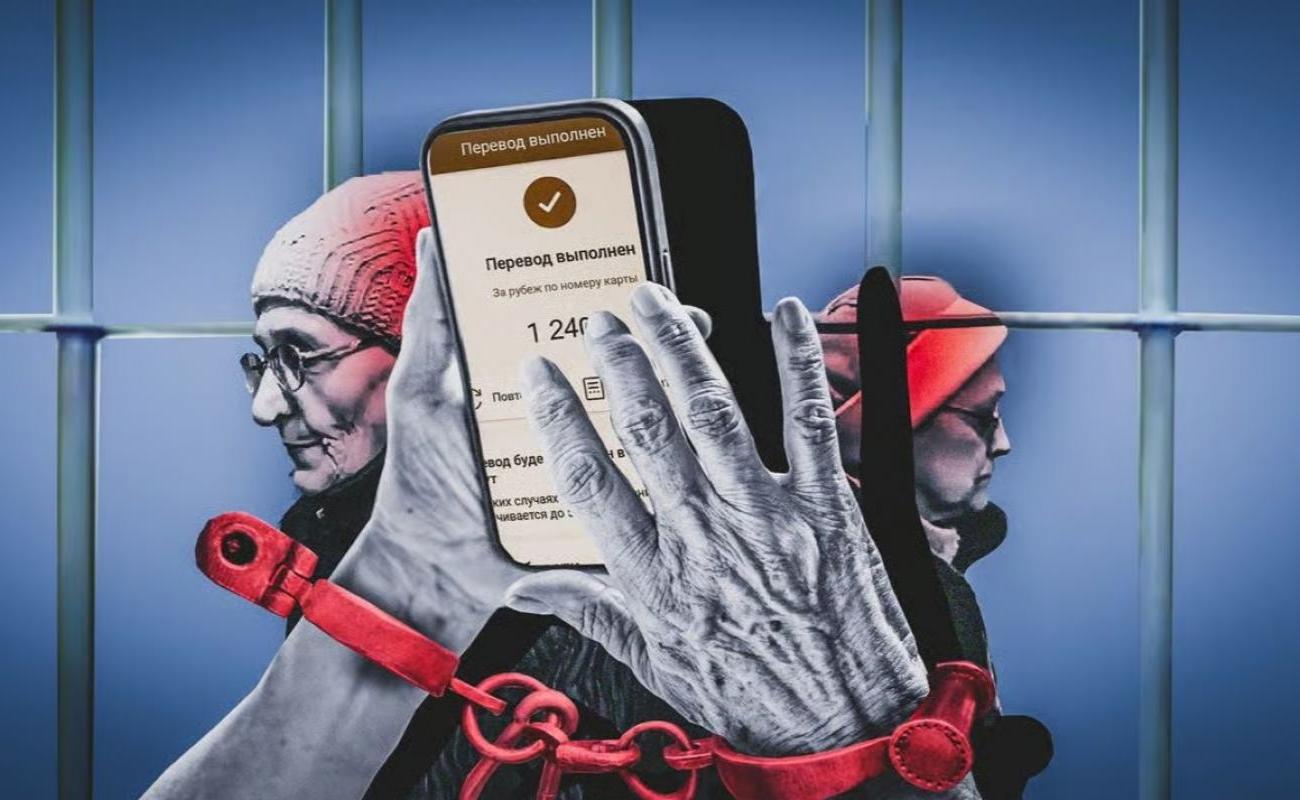
Halyna Bekhter, 68, is a pensioner from Ukraine’s Zaporizhzhia region who suffers from progressive dementia. She was also convicted of “treason” for allegedly making a single donation to the Armed Forces of Ukraine (AFU). On July 6, a Russian occupation court increased Halyna’s 11-year prison term to 12.5 years. The ailing pensioner is currently being held in Pre-Trial Detention Center No. 1 (SIZO-1) in Simferopol, Crimea. She refuses to eat, showers in her clothes, and relies on her cellmates to feed and change her. Pensioners Ivan Chorniy, Nataliia Kozlova, Larysa Bieliaieva, Iryna Sukhovey, and Svitlana Loi are being held in the same detention center, having also received long sentences for “treason.” Novaya Gazeta Europe reports on how Russian forces are locking up elderly Ukrainians in the occupied territories.
‘We drag her to the table’
Human rights activist Darya Kostromina was the first to report the conditions of Halyna Bekhter’s imprisonment in the Simferopol detention center. It’s thanks to her that Bekhter’s case gained widespread attention.
“I found out about Halyna Hryhorivna from a Zaporizhzhia regional court press release,” Kostromina told Novaya Gazeta Europe. “They filmed a short video, where she’s being brought in for the sentencing.”
Kostromina was already corresponding with Svitlana Loi, another pensioner from the Zaporizhzhia region who was sentenced to 15 years in prison for alleged “treason” against the Russian Federation. “And since the Crimean prosecutor’s office led the prosecution in both cases, I guessed that Halyna Bekhter could also be found in the Simferopol SIZO,” she explains.
Kostromina sent a letter addressed to Bekhter to Pre-Trial Detention Center No. 1, and eventually received a response from her cellmate. “At first, she wrote that Halyna Hryhorivna didn’t have glasses, she couldn’t see well, and so her cellmate was taking down her dictation. But then it became clear that Bekhter simply couldn’t conduct correspondence herself,” Kostromina recalls.
According to Huseynova, the Bekhters never hid their pro-Ukrainian stance, which brought them into conflict with some of their pro-Russian neighbours. In November 2024, Russian forces raided the Bekhters’ home under the pretense of looking for weapons. They seized their passports, phones, laptop, and the bank cards for the Ukrainian accounts where their pensions were deposited. Then, the Bekhters were taken to a police station in the occupied village of Mykhailivka for questioning.
The couple didn’t tell anyone what had happened. But soon after, Halyna found herself in conflict with a pro-Putin neighbour once again. According to Huseynova, in the heat of the moment, Bekhter retorted: “Our boys will return soon. We’ll see how you talk then!”
On July 29, 2025, while her husband was at work, Halyna returned home in the afternoon to find a dozen Russian soldiers waiting for her. She called her husband from Melitopol to tell him that she’d been arrested. Her daughter’s family hired a lawyer, but there was little he could do to help.
That September, Halyna was transferred to Yakymivka, another village in the Zaporizhzhia region. From there, she was taken to Donetsk. Then in January 2026, she was placed in Simferopol’s Pre-Trial Detention Center No. 1 (SIZO-1). On March 5, a Zaporizhzhia occupation court convicted Halyna of “high treason,” sentencing her to 11 years in prison.
Investigators allegedly established that Halyna had provided “financial aid to a foreign state, directed against the security of the Russian Federation.” Halyna’s daughter and grandchildren maintain that she was denounced by a neighbour who didn’t share the Bekhter family’s political views.
Halyna’s husband was unable to withstand the stress; he died in his home village, under occupation, in January 2026.
“I’m not really hoping for a positive decision from the court. But my soul still harbours a miracle. I know that my prayers are not in vain and God will not abandon me. I believe in miracles!”
“There, people are led around ‘swallow style’ (bent over, hands raised behind your back). They’re taken out for walks separately, if at all. Even during evening roll calls, the FSB officers speak so quietly that the prisoners in the neighbouring cell can’t hear anything.”
As activist Darya Kostromina explains, residents of the occupied territories who were issued Russian passports are typically charged with “treason” under Article 275 of the Russian Criminal Code; those who have retained their Ukrainian passports are charged with “espionage” under Article 276. (The latter specifically applies to foreign nationals and stateless persons.) Crimean Tatars, meanwhile, often face additional charges of “terrorism” under Article 205.5 (“participation in the activities of a terrorist organization”).
According to Bariieva, Crimean Tatars born abroad are also under threat of being deprived of Russian citizenship (which was forcibly imposed upon them) and, after they’ve served their sentences, being deported to their place of birth. “It’s effectively hybrid deportation,” Bariieva says.
“Our database currently contains 857 Ukrainian [civilians] who are facing criminal charges,” says human rights activist Sergei Davidis, who leads the Support Political Prisoners Memorial project. “In reality, of course, there are many more of them, but I can only speak about those whose names and charges we know about.”
“The scale of repressions per capita in the occupied territories is 2.5 times greater than in Russia. This includes extrajudicial kidnappings and incommunicado detention for many months,” Davidis notes.
Moreover, serving a sentence in full is no guarantee of release. Vladyslav Yesypenko recalls the case of political prisoner Yevhen Shved, with whom he was in prison in Kerch. Shved was serving 2.5 years for allegedly “discrediting” the Russian military.
“He wrote a post on social media and received a prison sentence,” Yesypenko says. “In the prison colony, he also didn’t mince words. He expressed his civic position, called the Russians occupiers. I told him, ‘Please don’t say anything else, unless you want to get a new prison term and be locked up until your old age.’ But he replied: ‘I can’t do that. My parents raised me this way; I always say what I think.’”
“In the end, I got out in June 2025, and Zhenya was supposed to get out in July,” he continues. “And just as he was leaving the Kerch prison colony, the FSB arrested him! He was charged again over an old social media post about the bombing of the Crimean Bridge, this time with “justifying terrorism”. Zhenya is [still] in prison. His new sentence is four years.”