
Explosion at Bulgarian arms plant revives Russian sabotage concerns
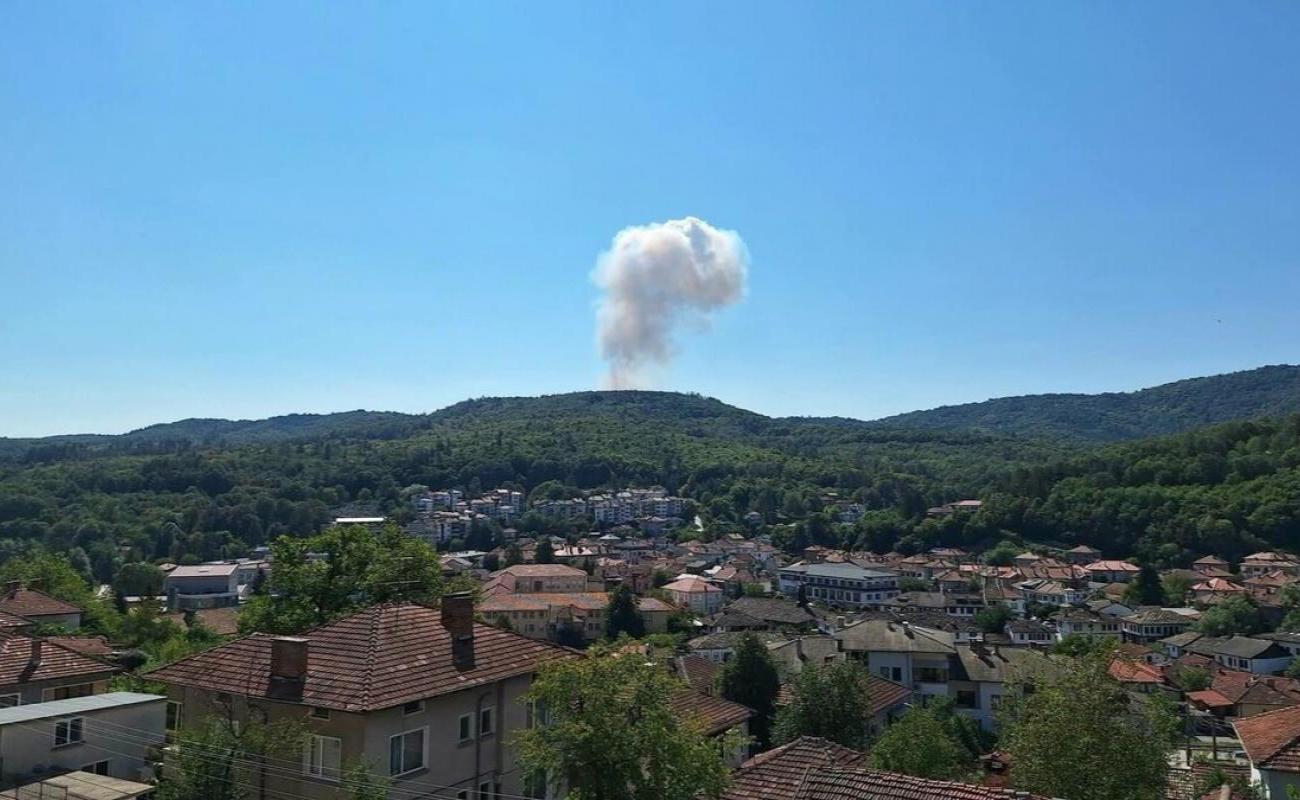
explosion at the EMCO arms manufacturer’s storage facility near the mountain town of Tryavna has raised fresh concerns over possible sabotage, with the company pointing to a history of similar incidents at Bulgarian defence plants and previous allegations of Russian involvement.
An explosion and subsequent fire broke out at a storage facility operated by the privately owned Bulgarian arms manufacturer EMCO near Tryavna on Monday morning, with the company openly raising the possibility of sabotage.
The incident occurred at around 10:30 local time at the company’s storage site in the village of Belitsa. No injuries, environmental pollution or damage to third-party property were reported. Video footage filmed from distance showed clouds of smoke.
“The causes of the incident are being clarified together with the competent authorities. Human error is ruled out,” EMCO said in a statement, in what amounts to an almost direct reference to possible sabotage.
The company’s management recalled that explosions caused by suspected acts of sabotage had occurred at its storage facilities in 2011, 2022 and 2023.
Similar incidents have occurred at other Bulgarian defence manufacturers over the past 15 years, including the state-owned VMZ Sopot in spring 2015.
“Investigations into these incidents remain at a dead end to this day, despite all our calls for results,” EMCO said.
The latest incident comes against the backdrop of previous Bulgarian investigations into explosions at military production and storage facilities. Five years ago, Bulgarian prosecutors publicly linked a series of blasts at Bulgarian arms plants to Russia’s military intelligence service, the GRU, and announced that six Russian intelligence officers were wanted internationally. No criminal proceedings were brought in absentia at the time.
Conflicting versions
The initial account from Bulgarian authorities appeared to differ from EMCO’s suggestion of sabotage.
Interior Minister Ivan Demerdzhiev said the causes were still being investigated but suggested that an internal cause was more likely.
“The causes of the incident are being clarified, but it happened during the day, in a process in which workers were present. We believe the causes are more likely to be internal,” Demerdzhiev said.
According to preliminary information, a lorry caught fire, triggering a blaze in one of the ammunition storage facilities and subsequent explosions.
Tryavna Mayor Dencho Minev said the fire had led to explosions in part of the ammunition storage area at the plant in Belitsa.
“Until the exact causes of the accident are established, access to the area is not permitted. Fire and police teams have been sent to the scene,” Minev said, adding that the municipality was in constant contact with law enforcement and the governor of Gabrovo region.
The area around the explosions was cordoned off and police immediately established checkpoints.
According to local residents, the blast could be heard within a radius of around 15 kilometres. Windows and furniture in nearby homes were reportedly shaken by the explosion, while around 300 people working at the plant at the time of the incident had to be evacuated.
Previous Russian sabotage allegations
The incident revives a particularly sensitive chapter in Bulgaria’s defence industry, which has repeatedly been hit by explosions at arms factories and ammunition depots.
In recent years, dozens of people have been killed in explosions at facilities including Arsenal in Kazanlak, the Gorni Lom plant, the Petolachkata ammunition depot, Kostenets, Maglizh and Iganovo.
After years of delays, Bulgarian authorities concluded that four explosions at military storage facilities were likely carried out by officers from Russia’s military intelligence service, the GRU. One of the cases involved an EMCO storage facility in Lovnidol.
EMCO owner Emilian Gebrev was himself the target of an assassination attempt in 2015, which investigators later linked to Russian intelligence and which became known as Bulgaria’s “Novichok” case.
For years, however, Bulgarian prosecutors showed little interest in the case. The investigation gained momentum only after the poisoning of former Russian intelligence officer Sergei Skripal and his daughter in the UK in 2018.
In 2020, Bulgarian prosecutors charged three Russian GRU officers in absentia: Denis Sergeev, Sergei Lyutenko and Egor Gordienko.
EMCO and Ukraine
The latest explosion also comes as Bulgaria remains an important supplier of ammunition to Ukraine, although Sofia has maintained a politically sensitive distinction between direct state deliveries and exports by private defence companies.
Three years ago, Bulgarian arms dealer Emilian Gebrev, who owns EMCO, publicly said he was ready to join a coalition aimed at supplying Ukraine with artillery shells.
EMCO’s facility in Belitsa, Tryavna, manufactures, repairs and modernises artillery and tank ammunition of various calibres and modifications, including 100 mm, 115 mm, 122 mm, 125 mm, 130 mm and 152 mm rounds.
Bulgaria is one of the major exporters of arms and ammunition to Ukraine, making the security of its defence-industrial infrastructure an increasingly important issue amid Russia’s war against Ukraine.