
Trostianets: the specific crimes that demand names and answers
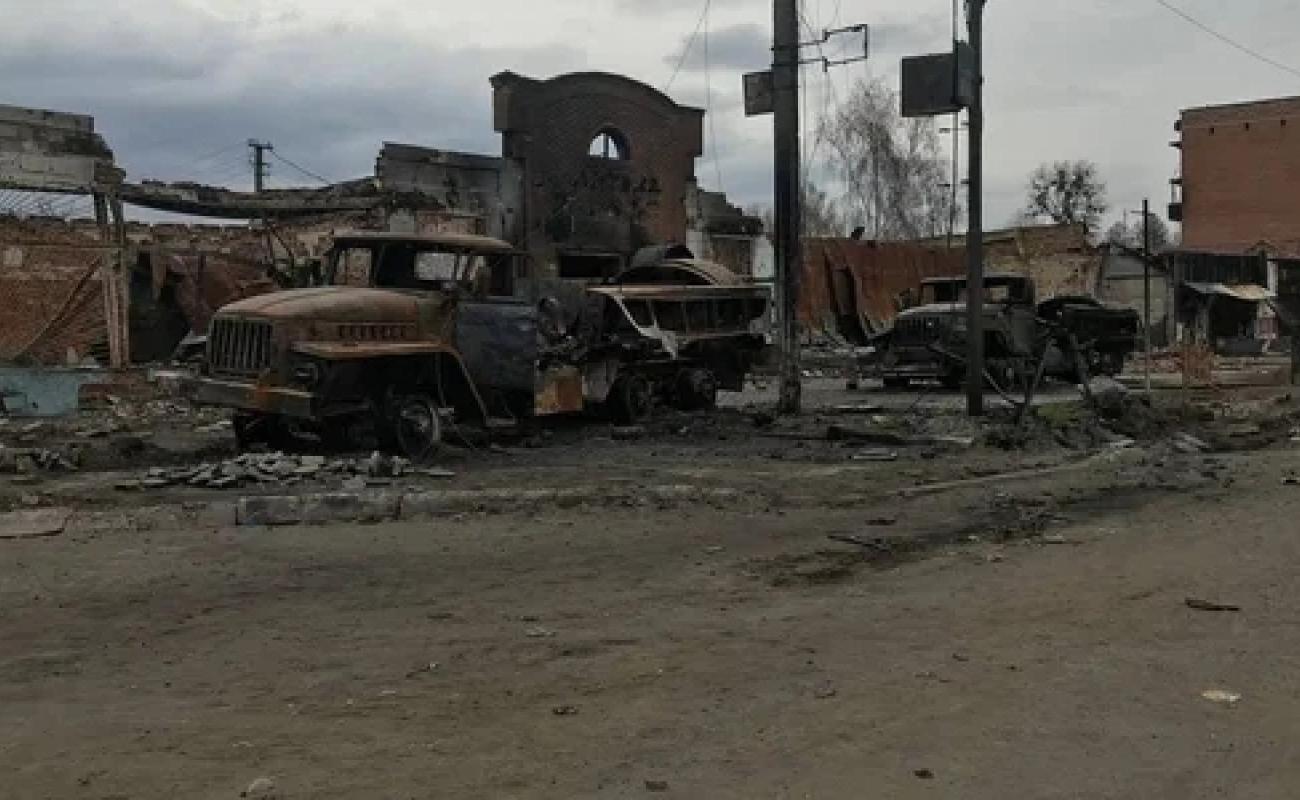
Trostianets is a small town in the Sumy region, but its story during the first month of the full-scale Russian invasion is large: it is a lesson in how organised military power may be turned into organised abuse. Its victims deserve justice, and its perpetrators — whether low-level foot soldiers or the commanders who ordered, facilitated, or ignored the crimes — must be held accountable.
When Ukrainian forces retook Trostianets on 25–26 March 2022, they entered a town that had not simply endured occupation but had been systematically brutalised. The scenes investigators and prosecutors documented in the days that followed were stark: bodies showing gunshot wounds to the head: men and women found with their hands tied; deep bruising, ligature marks and signs of violent, prolonged beatings. These were not isolated acts. They formed a pattern of summary executions, torture, and enforced disappearances that residents described in detail as they emerged from cellars and makeshift detention sites.
The hospital — a place that should have been protected at all times — became a target on 18 March 2022. Two members of the tank crew were subsequently convicted in absentia for firing on the hospital, one of the first such judgments connected to this area.
Residents returning to their homes found them stripped bare. Fridges, televisions, furniture, generators, vehicles — even equipment from the local chocolate factory — had been taken or destroyed. Shops were emptied, ambulances were looted, and vital medical supplies disappeared. This was not opportunistic theft committed in the chaos of retreat. Witness accounts describe organised, systematic pillage carried out by occupying forces.
Throughout the occupation, Russian forces commandeered schools, administrative buildings, and private homes as improvised prisons and interrogation centres. People taken from the streets or from their houses were beaten, questioned about alleged cooperation with Ukrainian forces, and held in degrading conditions. Survivors describe hearing others scream from nearby rooms; some detainees never returned and remain missing to this day.
Among several places of detention, civilians faced severe torture while being held at the Trostianets railway station, where Russian Federation Armed Forces (RFAF) servicemen tortured one of the detainees for his statements against the occupation: they tied him in the «swallow» position - a form of restraint in which an individual's hands are tied to his feet, forcing the body into an unnatural and painful posture and kept beating him until other detainees heard his bones breaking and his breath turned into a mere wheeze. Despite appeals from the other detainees, RFAF members did not provide any medical help to the man, and he subsequently died from injuries sustained. The next day, RFAF members concealed his remains.
The cumulative impact of these crimes on the community was profound: death, injury, and psychological trauma that will endure long after the physical scars fade.
The pattern in Trostianets — hospital shelled, detainees tortured or executed, mass looting, civilians disappeared — mirrors other documented atrocities that RFAF committed in parts of Ukraine they occupied.
Who occupied the town
The perpetrators of these crimes were not nameless irregulars. Units of the 1st Tank Army of the Western Military District — including the 4th Tank Division and its 423rd Motor Rifle Regiment, which was the only unit permanently operating in and around Trostianets during the occupation, as well as elements of the 47th Tank Division — were in command of troops in the area throughout the occupation.
This matters because accountability begins with identifying who exercised control over the units and servicemen who committed the crimes. Several servicemen from the 423rd Regiment have already been formally notified of suspicion and indicted by Ukrainian prosecutors and investigators for torturing civilians in the Trostianets area. Colonel Yaroslav Sergeyevich Gladkikh, the regiment’s commander, was among those associated with the unit’s operations there. Whether he — or other senior commanders of the 1st Tank Army — ordered, condoned, or failed to prevent these crimes is precisely what investigators must now determine.
What should happen next
Sumy regional prosecutors and investigators have already taken important steps. Notices of suspicion have been issued to direct perpetrators, and more than 2,000 pieces of evidence linked specifically to Trostianets, and the surrounding settlements have been collected. But the path to meaningful accountability runs higher.
This requires rigorous work: mapping unit movements, verifying communications, analysing intercepted data, and cross-checking victims and witness testimonies with other evidence. It means asking not just who committed the crimes, but who allowed them to continue. Names like Gladkikh — and senior officers of the 1st Tank Army — should no longer sit comfortably as abstractions on organisational charts. They should be subjects of transparent, public-facing investigations that victims and observers can follow.
Accountability here would resonate far beyond Trostianets. It would signal that the responsibility of commanders is not theoretical, and that crimes committed under occupation do not simply dissolve into the fog of war.
Global Rights Compliance (GRC), working with the Sumy Regional Prosecutor’s Office, has introduced a regional mapping approach designed to match crimes with the specific Russian units present at the time. The method is simple in concept but powerful in practice: document each incident; track which Russian formations held which areas; reconstruct the chains of command; and connect the dots. It will allow the issuance of notices of suspicion and bring to justice those responsible not only for committing crimes but also those who gave orders and planned a campaign of atrocities, up to the high-ranking political and military Russian commanders.