
Podgorica Clinical Center and 46 schools will be renovated with support from the EU, KfW and EBRD
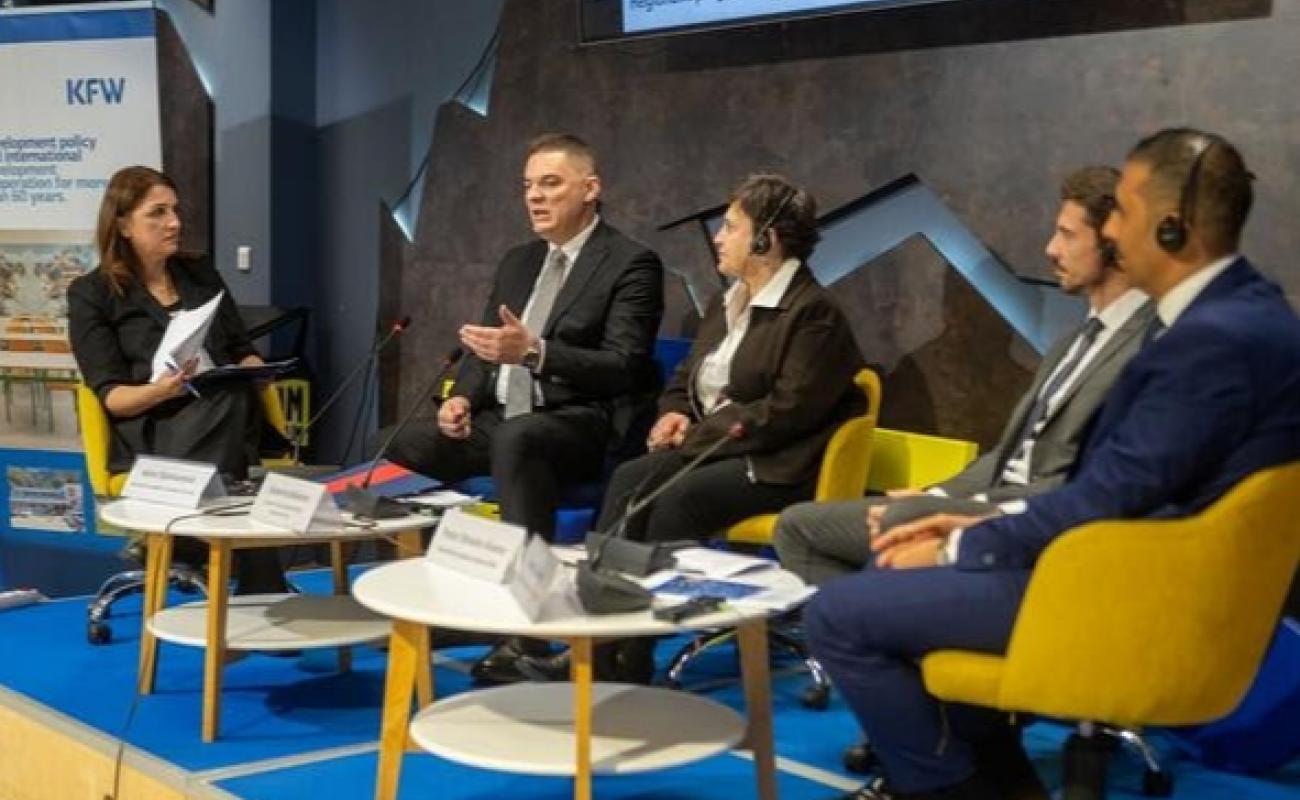
Montenegro's public buildings, primarily schools and hospitals, as well as a large number of households, are undergoing modernization thanks to investments worth over 100 million euros. The loan and grant are provided by the European Union (EU), the German Development Bank (KfW) and the European Bank for Reconstruction and Development (EBRD) through the Regional Energy Efficiency Programme (REEP), which helps Western Balkan countries improve the energy efficiency of buildings and align their legislation with the EU acquis.
As stated in a joint statement by KfW and EBRD, at an event held at the Europe House in Podgorica, representatives of the EU, the Government of Montenegro, KfW and EBRD presented the latest results and the impact of the REEP program on Montenegro's infrastructure and the green transition.
"With €104 million provided for energy efficiency improvement projects - including €12,6 million in grants from the EU and other donors and €82 million in loans from the EBRD and KfW - REEP is impacting tangible improvements in the education, health and housing sectors in Montenegro. The energy-efficient reconstruction of the Clinical Center in Podgorica and 46 schools is underway, while 180 households have already been given the opportunity to introduce innovations with long-term positive effects on health and living comfort. These efforts are expected to save 48,722 MWh of energy annually and reduce CO₂ emissions by 13,429 tons," the statement said.
The European Commission's Program Manager (Western Balkans Investment Framework), Ekaterina Bakalova, said that the EU is Montenegro's largest investor and strategic partner, supporting its EU accession process with comprehensive financial and technical assistance.
"REEP is an example of how the EU, together with KfW, EBRD and the Government of Montenegro, is encouraging large-scale sustainable investments. Every renovated school and hospital improves people's quality of life. One of the pillars of the EU Growth Plan is strengthening economic integration with the European Union's single market, where the integration and decarbonisation of energy markets are of high priority," said Bekalova.
In addition to financing, REEP provides technical assistance for legislative work and capacity building, enabling Montenegro to adopt strategic documents and regulations aligned with the EU Green Deal and the objectives of the Energy Community.
"The REEP program has helped us align our energy efficiency legislation with EU directives, raising standards and quality in the construction sector. So far, seven schools in Nikšić, Kotor, Tuzi, Bar and Cetinje have been completely renovated, improving conditions for students and employees. This program improves the quality of life, with sustainability as a guiding principle. I would like to thank all partners for their support," said Admir Šahmanović, Minister of Energy and Mining of Montenegro.
"Our energy efficiency program in public buildings in Montenegro is worth 60 million euros and includes 19 schools, one nursing home, one administrative building and the first building with nearly zero energy consumption in the country," said Pablo Obrador Alvarez, Head of Energy for Southeast Europe and Turkey at KfW.
As reported, many buildings, some of which date back to the 1930s, have been renovated to address problems such as outdated heating, poor insulation and inadequate air quality, significantly improving conditions for students and staff.
In healthcare, the EBRD is financing the energy rehabilitation of three major hospitals: the Clinical Center Podgorica and facilities in Cetinje and Bijelo Polje. In addition to hospitals, the EBRD is also financing the renovation of 24 schools. In cooperation with partner banks, the EBRD is also providing financing for households for the energy rehabilitation of individual homes.
"We are proud to stand with the Government of Montenegro in implementing projects that make a real difference to people's lives. Through our partnership with the European Union under the Regional Energy Efficiency Programme, we are investing in improving the energy efficiency of twenty-four schools and modernising three hospitals across the country. These improvements will create better learning environments for thousands of students and safer, more modern facilities for patients and medical staff, while reducing the risk of airborne contamination. In addition to public buildings, under the REEP programme we are advancing policy reforms and enabling households to improve energy efficiency through dedicated credit lines with our partner banks - NLB, CKB and Erste Bank. These efforts reflect our commitment to sustainability and higher living standards for all citizens of Montenegro," added Remon Zakaria, Director of the EBRD's office in Montenegro.
Launched in 2012 under the Western Balkans Investment Framework, REEP combines EBRD and KfW financing with grants from the EU and other donors for investments, technical assistance and reforms, according to KfW and EBRD. To date, the programme has mobilised over €1,1 billion at the regional level. The total EU contribution to the WBIF REEP is €276,5 million, including a top-up of €90 million in 2025, to maintain and further accelerate the green transition momentum of the Western Balkans.