
No progress from the Miami round of Ukraine peace talks
No breakthrough was reached during the latest round of shuttle diplomacy in Miami at the weekend. The talks have reached an impasse as Russia and Ukraine search for a workable compromise on the key issues of land and security.
Miami has become the new centre of American diplomacy, hosting talks in which, although not all parties to the process participated at the same table, all parties to the process—the US, Europe, Ukraine, and Russia—were present.
Mediators—the Prime Minister of Qatar and the Foreign Minister of Turkey—also participated in the meetings as well as the national security aides to the leaders of Germany, France, and the UK. There were no plans for a trilateral meeting between the US, Russia, and Ukraine.
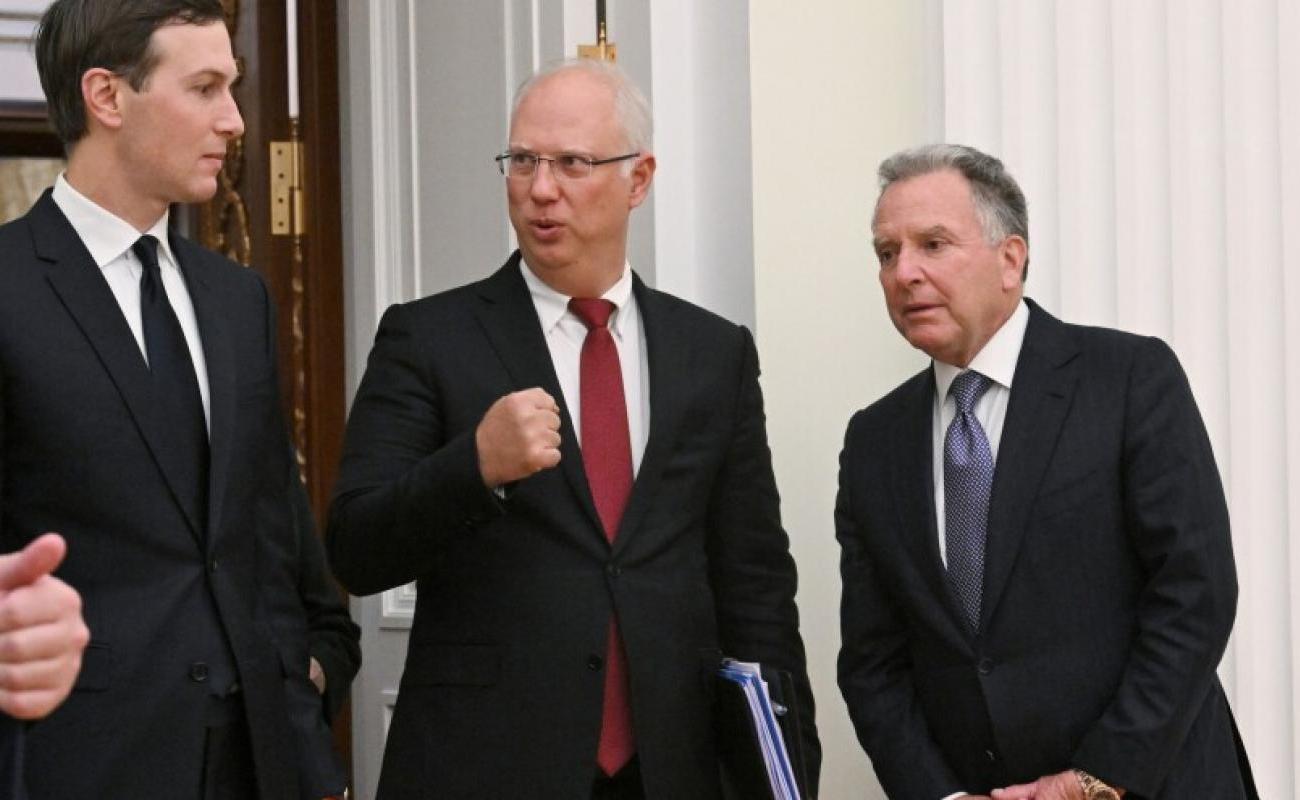
Talks were on a bilateral basis with the two US envoys, Steve Witkoff and Jared Kushner, shuttling between the Russian delegation headed by Russia’s sovereign wealth fund boss, Kirill Dmitriev, and the Ukrainian team led by Ukrainian Secretary of the National Security and Defence Council Rustem Umerov.
The talks were held behind closed doors and the delegates imposed a media blackout issuing no statements and holding no press conferences.
The talks remain stalled on the question of territorial control and security guarantees.
Ukrainian President Volodymyr Zelenskiy made a concession ahead of the meeting suggesting that the Armed Forces of Ukraine (AFU) would consider withdrawing from 15% of Donetsk it still controls, if the Armed Forces of Russia (AFR) also withdrew the same distance. This is a version of the Korean DMZ-model suggested recently by the US as a compromise solution.
While the US has already offered Article 5-like security guarantees, Zelenskiy said during the European Council (EUCO) summit on December 18 that he wants to know the details of the deal.
Bankova has been insisting that the US security guarantees are enacted by Congress, which would give them the force of an international treaty, an idea which Trump has backed, although it could be adopted as just a non-binding resolution.
The EU has not offered Ukraine a real security deal but suggested in its place that Kyiv maintain a standing army of 800,000 men – by far the largest army in Europe and three times larger than Turkey’s army, the second largest – as well as supplying a multinational force of peacekeepers.
The Kremlin is almost certain to reject both ideas out of hand. Moreover, the peacekeeper idea was already rejected in April as unworkable, however it has been revived more recently as without offering a real security guarantee the EU has few other options to deter Russia from a second invasion if a peace deal is done now.
The Qatari and Turkish diplomats are in Miami to finalise the Middle East peace process, which Witkoff and Kushner are simultaneously leading.
The Miami meeting follows on from intense talks at the Berlin meeting on December 14-15 where the US envoys pressured Zelenskiy to make some concessions on giving up Donbas, which he remains very reluctant to do. Zelenskiy said in public comments that Bankova is starting from the principle of “we stand where we stand”. A poll earlier this month by Kyiv International Institute of Sociology (KIIS) found that 75% of Ukrainians do not want Zelenskiy to concede any unoccupied territory, although 72% would accept compromises if it brought a lasting peace.
The Kremlin has always rejected the idea of peacekeepers, but The New York Times (NYT) sources expressed confidence that Russian President Vladimir Putin would agree to this if European contingents were deployed in Ukraine outside of Nato auspices. It is unclear what this optimism is based on. The only evidence for this is the fact that during his annual “meet the people” Direct Line press conference on December 19, although Putin made several belligerent statements, he failed to mention the scenario of foreign troops in Ukraine at all, reports The Bell. Putin's press secretary, Dmitry Peskov, even allowed for the possibility of discussing the issue.
While there has been extensive discussion of security guarantees for Ukraine, the security deal Russia has been pushing for, a guarantee that Nato will stop its expansion was mentioned in the original US 28-point peace plan (28PPP) but apparently was dropped later in Trump’s suggested 22-point version of the plan as too controversial and its current status is unknown.
Putin continues to be the key actor in the negotiations but has said little concrete on the talks other than to signal that the Kremlin is sticking to an uncompromising line. Deputy Foreign Minister Sergey Rybakov laid out Russia’s position in an interview last week that stuck to the maximalist version with no compromises on the land question at all.
Indeed, nearly all of Putin’s recent vitriol has been directed against Brussels. One of the few comments Putin has made was to call the Europeans “sub-piggies”, a colloquial Russian expression that is equivalent to something like “lackeys” lacking agency.
More interestingly, Putin has also countered the European talk that a Russian attack will happen sometime in the next five years. While on a trip to Central Asia Putin said Russia was willing to sign a legally binding treaty promising not to attack Europe, and Ryabkov repeated the offer on December 22.
Next steps
As the year comes to a close the next step may be a tri-lateral meeting between the US, Ukraine and Russia. US Secretary of State Marco Rubio said that, currently, only a diplomatic path exists to end the war that involves concessions from both sides.
"We are trying to understand what Russia can give and what it expects to receive, what Ukraine can give and what it expects to receive. Ultimately, the decision will be up to Ukraine and Russia. It will not depend on the US," Rubio said.
At a previous meeting in Turkey was the return of captured military and civilian personnel, which should be pursued. "Or the result of the trilateral meeting of advisers could be an agreement on a trilateral meeting of leaders, because there are complex issues that must be resolved by the leaders of the states. Therefore, I cannot be against it, we support the US proposal," Zelenskiy said.
Putin said during his annual “meet the people” Direct Line press conference that Russia is supposedly "ready and willing" to end the conflict peacefully, but Kyiv does not show real readiness because it allegedly refuses to discuss territorial issues.
Zelenskiy, in turn, is still refusing to contemplate the idea, saying Ukraine will not withdraw from the territories in the Donbas it controls, as "any withdrawal of troops is possible only in a mirror image," and key decisions, including on creating a "free economic zone," should be made solely by the Ukrainian people.
The Kremlin has ruled out a trilateral meeting for the meantime until Ukraine signals it is willing to meet the key Russian demands. Putin has repeatedly said that if the talks collapse he is happy to end the conflict “by force” and claims that the proposals Kyiv and its European partners are seeking to include in the peace plan will block the achievement of "long-term peace."
No more progress is likely this year as the West celebrates Christmas this week. Russia doesn’t celebrate Christmas at the same time, as it still uses the Georgian Calander for religious holidays, with New Year’s Eve as the major festival of the year. Russia then closes down completely for two weeks as they celebrate the Orthodox Christmas on January 7 and what is known as the “Old New Year” on January 14.