
Moldovan Trial: Wagner Soldiers Participated in Russian Camps Near Banja Luka
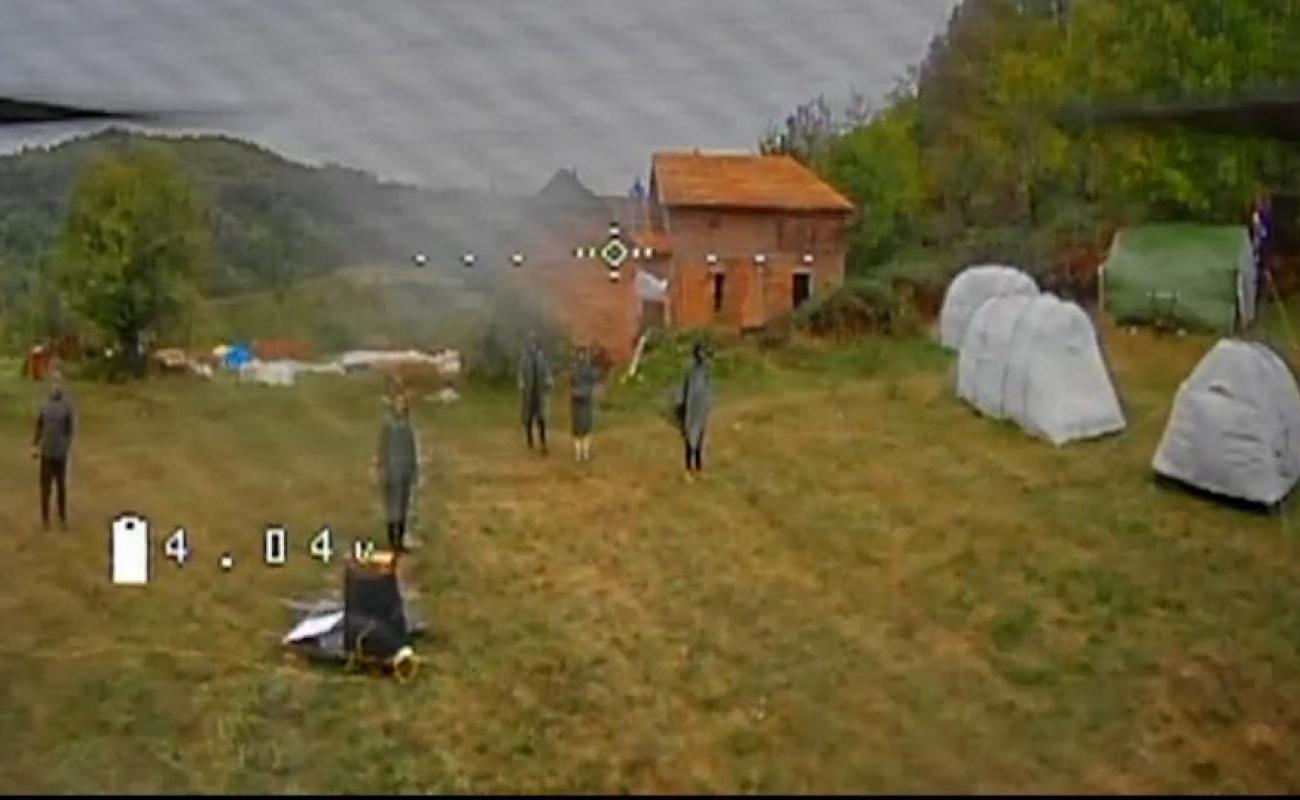
At a new hearing in the trial for the recruitment of Moldovan citizens and the organization of camps in Bosnia and Herzegovina and Serbia, a witness who participated in the trainings told how he was beaten by a “Wagner” soldier near Banja Luka.
The trial of Anatolii Prizenco, accused of participating in the recruitment of Moldovan citizens for special training in the summer of 2024, and then assisting in their transportation to Bosnia and Herzegovina and Serbia, where they were part of training led by instructors from Russia and Bulgaria, continued at the Chisinau District Court.
Maxim Rosca, who decided to cooperate with the Moldovan judiciary after participating in the camps, said that he had known Prizenco for a year. Their acquaintance was mediated by Rosca's wife, after which Prizenco offered him to "travel to Europe and learn how to be a ranger", that is, to undergo wilderness survival training that would be "well paid".
"The condition was that if we didn't like something, we could leave the camp", explained Rosca.
The witness said that, according to the agreement with Prizenco, he contacted the coordinator Vladimir Firsov, who told him that he would receive between 300 and 500 euros per week for participating in the camp.
He recalled that he arrived in Bosnia and Herzegovina by bus from Belgrade, after previously arriving in the Serbian capital with three other people on a flight from Chisinau via Istanbul. Rosca also stated that a certain Igor paid for their trip, who received the money in cryptocurrencies. Upon arrival in Banja Luka, he said, they met with a person whose nickname was “The Turk”, whom he later learned was actually a Bulgarian citizen named Mircea.
In an earlier investigation, the detector discovered that the person nicknamed “The Turk” was actually Mircho Angelov, who was sentenced to three years in prison in France with three other Bulgarian citizens for destroying the Holocaust memorial in Paris and other buildings in May 2024. The verdict was handed down in late October 2025 in Angelov's absence, who remains at large. French authorities have accused the Kremlin of this action. The Russian Embassy in France has responded to these accusations, denying the involvement of the Russian Federation in this case and calling the accusations "a new Russophobic campaign."
Mircea transported Rosca and the other camp participants to a hotel the first night, and the next morning they traveled to the forest, where their mobile phones and documents were taken from them.
"We found tents in the camp. Two Bulgarians were cleaning them, because another group was there before us," added Rosca.
In the camps, he claims, the instructors introduced themselves to them as reserve officers and members of a Russian organization, while two were from Finland and Bulgaria. When it comes to the participants, Rosca recalls that seven of them were from Moldova, three from Transnistria, and one young man from St. Petersburg. That is why all communication took place in Russian.
According to Rosca's testimony, most of the recruited Moldovans did not know the real purpose of the trip until they arrived in the vicinity of Banja Luka. When the instructors told them that their real task was training to operate military drones, make Molotov cocktails, break through police cordons, and cause chaos during the presidential elections in order to discredit the current president Maia Sandu, most of them, according to Rosca, were indignant.
Details of the training and footage of the drones that the participants used for the exercise were revealed by Detektor in a research published in early 2026.
The Russian instructors, however, insisted that they had to stay because "money was spent on them", said Rosca, stating that the resistance of the trainees was systematically crushed by violence. Rosca described how, after consuming alcohol during one evening with one of the instructors, a member of the "Wagner" group, he declared that he was not interested in politics and that he had nothing against the Moldovan government.
"The soldier punched me and then continued to beat me in the head with the tip of his titanium boot until I passed out. Half of my head was swollen, my tooth was broken, and because of that I had to stay there for 21 days, until I recovered," said Rosca, adding that he was not given medical attention.
The Wagnerian, he adds, then declared in front of the whole group that this beating was a "lesson for the others" because they refuse to learn, and money is allocated for their expenses.
After 21 days, Rosca, as he said, returned to Moldova, but then the instructors told him that he had to repay the money spent on him in the camp by working as a driver. For this, he claims, Prizenec gave him a Mercedes Vito van, which he used to transport people from Banja Luka to Serbia, as well as instructors when they were performing tasks. He added that upon arriving in Bosnia and Herzegovina, he drove Liudmila Costenco and Aliona Gotco, and that they all ended up going to Radenko, on the territory of Serbia.
Watch Detektor's latest show about camps:
www.youtube.com/watch?v=jiWc6u0momA&time_continue=0&source_ve_path=NzY3NTg&embeds_referring_euri=https://detektor.ba/
Costenco and Gotco, along with Vladimir Harcevnicov, were sentenced to a total of 13.5 years in prison, but are on the run. In addition to them, Moldovans Ion Chirita and Nikita Sirenko were sentenced in separate trials to a total of six and a half years in prison on probation, as well as Dilan Danil, who has been in prison for another crime. Iulia Ivanova was acquitted, and, like Rosca, agreed to cooperate with the Moldovan judiciary.
Rosca also said that a new camp was being prepared in Serbia to receive the next group of people. Gotco and Costenco, who took her fifteen-year-old son with her “to make him a man,” he said.
He recalled how, after the camp ended, he returned to Moldova with Harcevnica, Gotco, Costenco, and Ivanova, and that they were subsequently arrested at the Romanian-Moldovan border because they were transporting military drones and other equipment with them.
“As I understand it, we were under surveillance for a long time, almost a year, which is why we were discovered. Drones were found in the luggage of Gotco, Costenco and Ivanova, and Harcevnicov had a diary and a USB stick with all the information about the training,” Rosca added.
In cross-examination, Prizenco confirmed that he met with Rosca, that he gave him a van, but he based his defense on the claim that he never gave Rosca money, nor mentioned any overthrow of the government or politics, which the witness confirmed.
The trial of Prizenc began in August 2025, but was postponed several times due to his failure to appear and attempts to have his case joined with others in which participants and organizers of the camps are being tried. After these motions were rejected, the trial continued. Prizenc has been on the sanctions list of the European Union, Ukraine, France, Belgium and Monaco since December 2024 on charges that he coordinated the action of Moldovan citizens who painted Stars of David in Paris in exchange for financial compensation, which was supported by the Russian authorities.
The investigation into the camps is also being conducted by the Prosecutor's Office of Bosnia and Herzegovina, but no details have been revealed to date, except for the fact that the judicial institutions of Bosnia and Herzegovina have established cooperation with their colleagues from Moldova.
* The hearing in Chisinau was covered for Detektor by Irina Codrean