
Entire districts could be left without gas stations. What are the consequences of Russian attacks on gas stations?
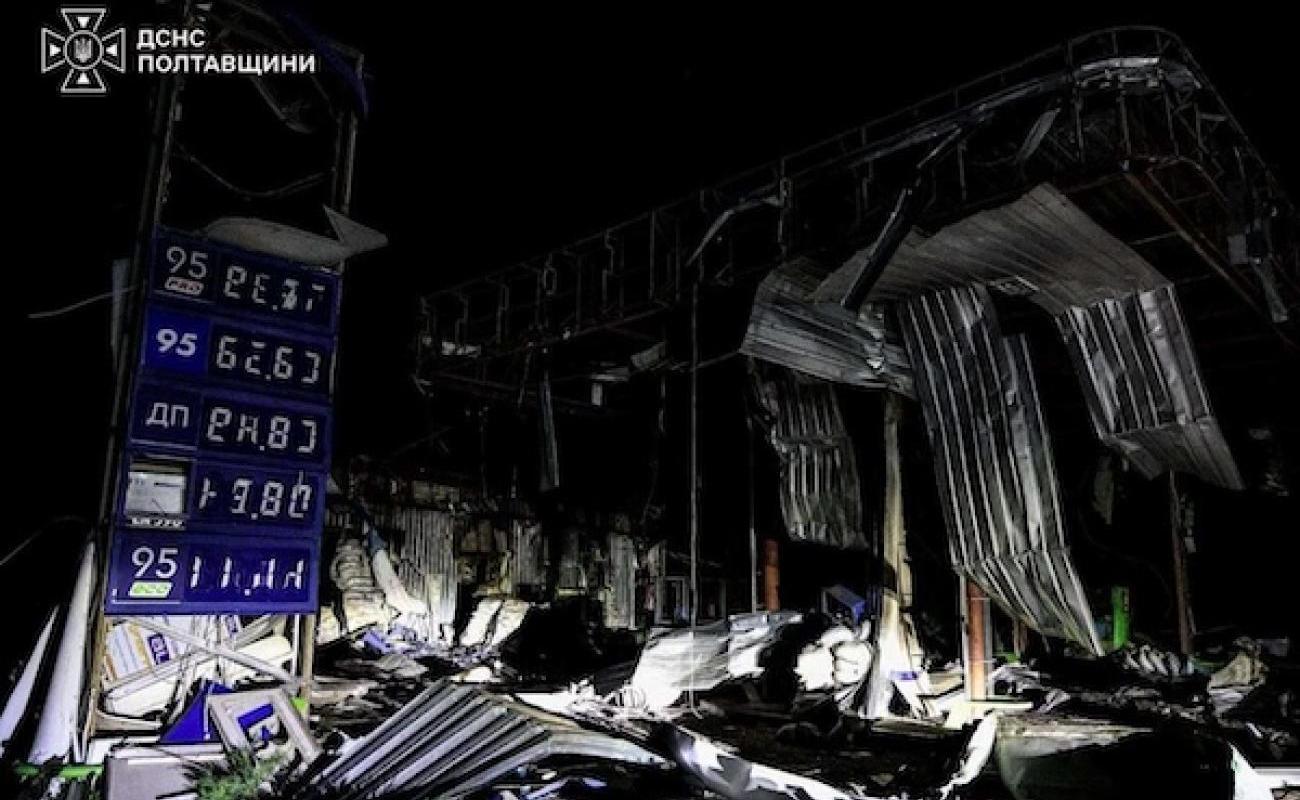
Russia is methodically destroying Ukrainian gas stations, but it cannot create a national fuel shortage. In which areas have the attacks already left entire districts without gas stations?
In July, Russian oil refineries processed the least amount of oil since 2002: Ukrainian drones are methodically disabling oil processing, and dozens of Russian regions have already restricted the sale of gasoline.
Moscow’s response is, as always, the same: it attacks gas stations. In early August, gas stations of companies in the Dnipropetrovsk, Zaporizhia, and Mykolaiv regions were hit, and on the night of August 9, dozens of drones attacked Ukrnafta’s production facilities.
The scale of the Russian campaign is visible in the data of the Center for Information Resilience (CIR), which collects geolocated confirmations of attacks on gas stations, which were already the subject of the publication’s analysis, when a record number of attacks was recorded in June – more than 60. In July, according to EP estimates, the pace was almost the same, and in August it is unlikely to decrease.
Since March 2022, 297 hits have been recorded at 236 locations. WOG estimated that the complete renovation of one gas station costs 50 to 70 million Ukrainian hryvnia.
The leader in the absolute number of attacked gas stations is Dnipropetrovsk Oblast with 60 attacks, followed by Donetsk and Kharkiv Oblasts. Most of the attacks are taking place in six regions on the front line and in regions bordering Russia.
Given that there are about 8,000 gas stations in the country, three percent of all stations have been hit so far. The National Bank, in its latest inflation report, estimated the share of damaged gas stations at four percent, adding that sales losses at locations where gas stations were destroyed would be compensated by stations in the hinterland regions.
However, for certain regions this is a rather acute problem. In the Nikopol region, according to EP calculations, attacks hit 59 percent of active gas stations, in the Sumy region - more than a quarter of the network. High shares of destroyed or damaged gas stations were also recorded in the Kramatorsk, Bogodukhov and Kherson regions.
A repeated attack on a gas station does not provide an alternative. Therefore, a certain route may run out of fuel, although national statistics do not show a shortage.
Where most gas stations were hit
The proportion of physical gas station locations with confirmed attacks compared to the estimated number of active stations in the region.
A member of the Kharkiv regional council reported that there are no operating gas stations on the Kharkiv-Poltava route and that more than 80 stations have been destroyed in the region. Since this estimate includes both destroyed and closed facilities, the numbers are slightly higher than in the CIR, which only counts confirmed geolocated attacks.
In addition to shortages, one possible outcome of Russia’s campaign against gas stations is an increase in prices. However, there has been no significant price disruption in the frontline regions so far. Since May, the price of A-95 gasoline has increased by 10 percent nationwide, and by 11.6-12 percent in Sumy and Kharkiv regions. The exception is Donetsk Oblast, where a liter of diesel costs about 100 Ukrainian hryvnias.
The price jump in recent weeks (diesel has risen by more than 15 hryvnias per liter, gasoline by more than six hryvnias) has other reasons: complications in maritime logistics, low water levels in the Danube due to drought, a shortage of diesel fuel in the European Union, and seasonal demand from farmers. The attacks on gas stations are just one of the factors contributing to the increase in fuel prices, but they do not seem to be the main reason.
In the meantime, gas station networks are restructuring their operations. WOG closes some gas stations in dangerous areas at night and stops work during the announcement of the threat of attacks. Ukrnafta is buying a hundred fuel trucks to transport oil and oil products to the regions more quickly. Naftogaz Group lost 37 gas stations in 2026.
In Trostyanka, Sumy Oblast, fuel has begun to be sold from fuel tankers: a model that industry experts suggest should be legalized along the entire front line.
The government insists there is no national deficit and is also talking to businesses about pump protection and military risk insurance mechanisms. Some of the measures have not been made public for security reasons.