
In the context of war. How demining is going on in Ukraine
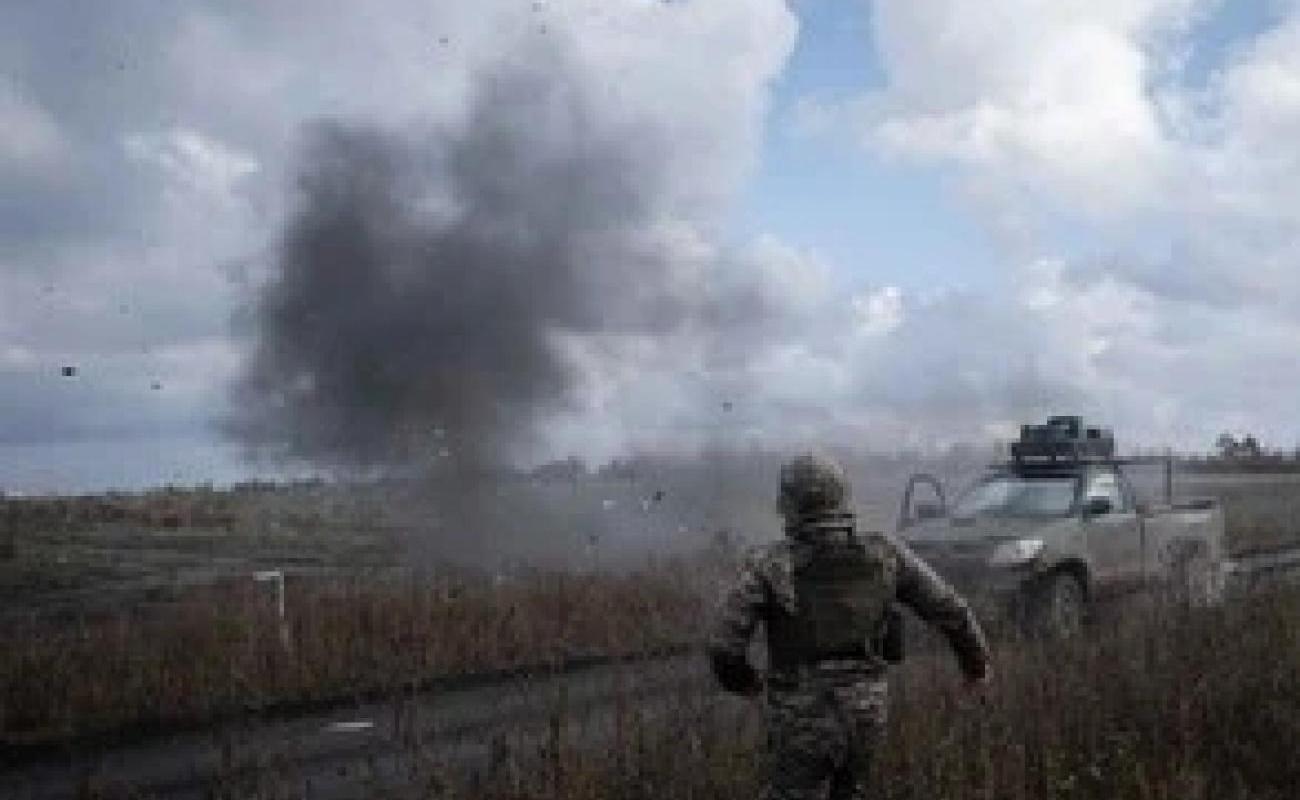
The main results of 2025 and what will change in 2026.
Today, Ukraine is the most mined country in the world, and the area of potentially dangerous territories reaches about 137,000 square kilometers. And although the war is in full swing and Ukraine has to fight for its own country, at the same time it has to bring back to life the liberated territories through the processes of demining and reconstruction.
The year 2025 has become an important phase for the mine action system. The development of the industry and production of Ukrainian equipment was seen, as well as the serious challenges associated with reduced funding and the escalation of hostilities. The year 2026 seems to bring new approaches and solutions that will determine the pace of work for the near future.
So, what were the key events this year and what will shape humanitarian demining in the next?
Results in 2025.
1. Development of the humanitarian demining industry
In 2025, mine action demonstrated systemic development. After the adoption of the ten-year National Strategy last year, its actual implementation began. The industry switched to work according to the operational plan, which envisages clearing 80 percent of the liberated territories by 2033. In parallel, the mine action market grew. If 2024 was the period of the first tenders, then in 2025 their volume increased significantly. More than a hundred tenders were announced, which concerned the demining of agricultural land.
Now the role of Ukrainian demining operators is noticeably growing.
Along with operational development, the regulatory framework has also moved, although more slowly than the sector requires. In mine action, all processes are based on standards and procedures, so long-term document approvals remain a serious challenge and sometimes lead to the document becoming less relevant, even before approval. Nevertheless, updates are still being made and open up opportunities for more flexible solutions on the ground.
One such solution that has become possible thanks to the new standards is the repeated non-technical reconnaissance of the territory (NTO). In 2025, this approach allowed the release of significant areas, and the Association of Mining Engineers of Ukraine actively participated in the process. These are cases where the initial NTO identified the area as dangerous, but over time the situation has changed, which allows for a review of this status. If, according to the results of the repeated NTO, the area is safe, it is transferred to the community without conducting a full demining. When possible, this is one of the fastest ways to return land to use and save time, resources and finances.
2. Development of Ukrainian demining equipment
2025 was a significant step forward for Ukrainian humanitarian demining technologies. Ukraine already has its own production and a diverse arsenal of technical solutions for various types of tasks. For large areas, the GART 5100 and Germina robotic complexes are used. For local work, for example, for soil preparation, a compact Zmij machine is used. There are also more mobile solutions, such as the Trembita metal detector, which manufacturers are improving in cooperation with operators.
At the same time, technology itself does not guarantee efficiency. It is necessary to precisely determine which equipment is suitable for a particular type of terrain and conditions. Therefore, in 2026, the key direction will be the improvement of technological processes. This concerns methods of working with robotic complexes, planning operations and optimizing the sequence of actions. Without this, even the best technologies do not give full effect.
3. Reduction of funding and escalation of war
The year became a test for the industry. The most significant challenge was the reduction in funding, primarily from the United States, which has traditionally been a key donor to humanitarian demining. At the beginning of the year, a number of USAID and State Department programs were temporarily suspended, causing a pause in the work of some operators. Some of them later returned to work, but not all of them resumed their previous extensive activities.
The escalation of hostilities became another critical factor. In 2025, the deterioration of the situation in certain areas of the front forced operators to postpone or completely stop work for security reasons. The Miners' Association of Ukraine, for example, was forced to leave some areas in the Donetsk region. The direct danger to humanitarian teams is also growing. The tragic attack in the Chernihiv region, which hit employees of the Danish Refugee Council, once again showed that demining in Ukraine is taking place in a high-risk environment. All of these factors affect the pace and stability of work.
Summing up the year, we can say that the industry has matured and passed serious tests. It is this foundation that determines the initial conditions for 2026.
Trends and priorities for 2026
1. Transition to Ukrainian leadership
In 2026, we can expect further strengthening of Ukrainian leadership in humanitarian demining at the national level. If earlier most of the work was carried out by international organizations, now the role of Ukrainian operators is noticeably increasing. This is a gradual process. The sector is still developing, but the trend of increasing its own capacities is already obvious.
In parallel, international recognition of the Ukrainian experience is taking shape. Countries that have been facing the problem of mine danger for many years are beginning to adopt Ukrainian approaches and practices. It is not just about innovations or technology. Ukrainian engineers work in an environment that has no analogues in the world and accumulate unique experience, which makes them extremely valuable specialists in the global community.
2. Demining of water bodies and forests
If in 2025 the main emphasis was on agricultural land, then in 2026 a more active movement towards demining water bodies, forest areas and other areas that are of critical importance to the state is expected.
This autumn, with the support of the United Nations Development Program, the first interdepartmental group of instructors for underwater demining was formed in Ukraine. This is a strategic direction for the country, as waterway security directly affects port operations, grain export logistics and critical infrastructure protection.
Forest demining will also be a difficult but important area. In such areas, machinery often cannot work, so most operations are done by hand. Secure forest areas are necessary to restore the normal life of communities and restore access to natural resources that are still insecure today.
3. Development of technology and artificial intelligence
In 2026, the role of technology in humanitarian demining will increase significantly. Drones have long been used for non-technical surveying of territories, but thanks to artificial intelligence, they are moving to a new level. Drones can not only photograph the terrain, but also immediately identify potentially dangerous objects. This increases the accuracy of risk assessment, speeds up the preparation of reports and optimizes the planning of subsequent stages of work.
Among the important digital innovations is the GRIT prioritization system, created on the basis of Palantir technologies. It combines large data sets and helps the state more precisely determine which territories need to be cleared first. Digital terrain models show where small contaminated areas block much larger areas, which allows for more efficient work planning.
Mechanical demining and the work of mine detection dogs will develop in parallel. These areas complement technological solutions and remain indispensable where technology or artificial intelligence cannot do it alone.
So, Ukraine still has a lot of work ahead of it. The scale of the mine threat remains high, and the pace of demining will depend on stable support, the development of national capacities and the introduction of new technologies. However, 2025 showed that the mine action system has become more mature and ready for more complex tasks. In 2026, it is important to maintain this pace and continue moving in a direction that makes the country safer and stronger.