
Gagauzia Between the Russian World and the Turkish World: Moldova’s “Second Transnistria”?
Gagauzia sits between Russian influence and Turkish soft power as Moldova’s EU turn raises fears of a “second Transnistria”
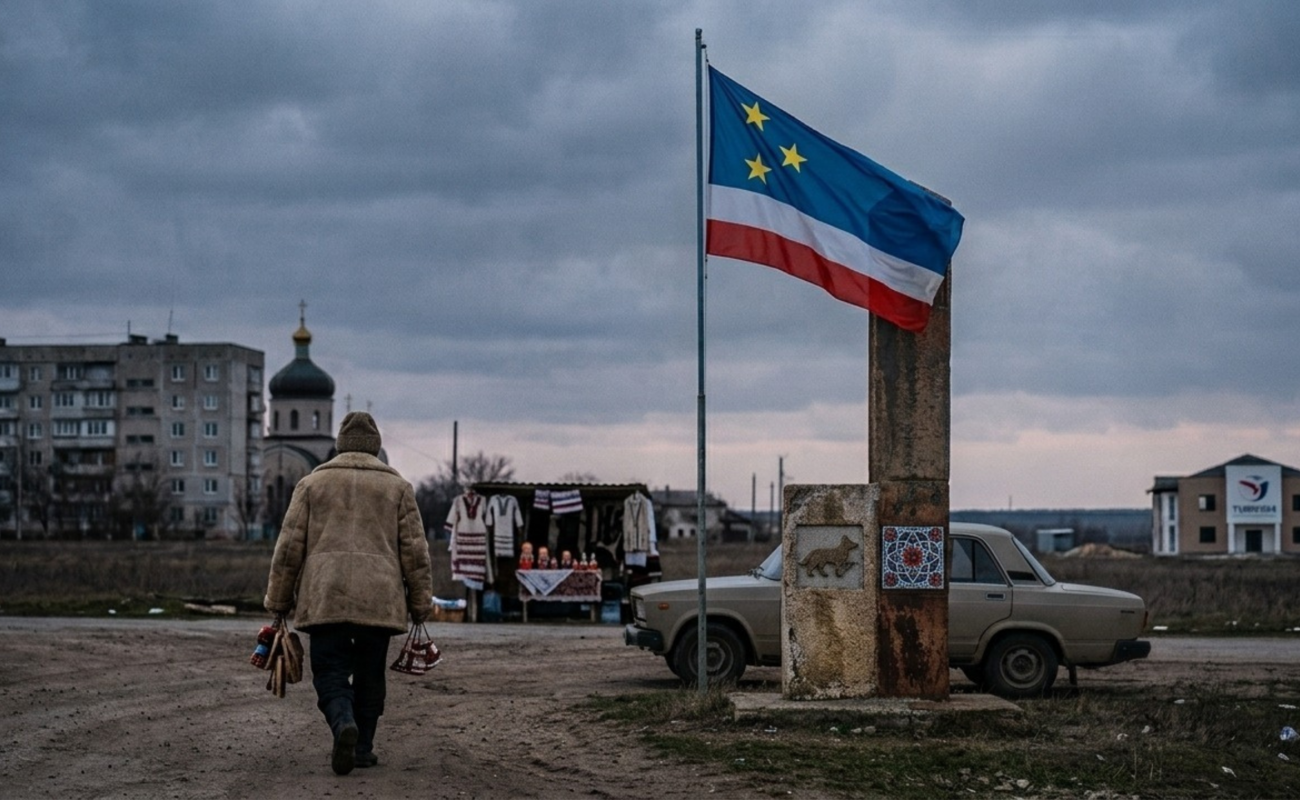
On April 22, 2026, the People’s Assembly of Gagauzia appealed to Turkish President Recep Tayyip Erdogan to intervene in what it described as Chisinau’s attempt to strip the region of its autonomy (Vershinina, 2026). At first glance, this appeal appears surprising. Gagauzia has historically been one of Moldova’s most pro-Russian regions. Its political elites have often looked to Moscow for support, and Russian sources have repeatedly portrayed the region as a loyal outpost of the “Russian World” inside Moldova. Yet in this case, Gagauzian politicians appealed to Türkiye, a state that has long cultivated cultural, economic, and educational ties with the Turkic-speaking Gagauz people. This raises an important question: does Gagauzia’s appeal to Türkiye suggest that Russia’s influence in the region is weakening, or does it instead reflect the region’s attempt to use both Moscow and Ankara as external guarantors of its autonomy?
Gagauzia is an autonomous territorial unit in southern Moldova. Its population is predominantly Gagauz, a Turkic-speaking but Orthodox Christian people. This unusual combination has made the region geopolitically important to both Russia and Türkiye. For Russia, Gagauzia matters because of its Russian-speaking population, Orthodox identity, hostility towards Romanian unification, and opposition to Moldova’s pro-European governments (Deen & Zweers, 2022, p. 34; Roonemaa & Gielewska, 2023; Zămosteanu et al., 2023). For Türkiye, Gagauzia matters because of ethnic and linguistic kinship, which has allowed Ankara to expand soft power through development aid, education, infrastructure, and cultural diplomacy (Eremeev, 2012; Gamova, 2019; Gulevich, 2011). The region is therefore not simply a peripheral Moldovan autonomy, but a contested space between the “Russian World” and the “Turkish World.” As Moldova under President Maia Sandu has moved closer to the European Union and away from Russian-led structures, Gagauzia’s importance has increased as a “second Transnistria,” another territorial pressure point that Moscow could use to limit Moldova’s Western integration (Deen & Zweers, 2022, p. 36; Roonemaa & Gielewska, 2023). Recent threats by Russian security secretary Sergei Shoigu regarding possible intervention in Transnistria over pressure from Chisinau (Andreev, 2026) raise the question of whether a similar logic could eventually be applied to Gagauzia.
Historical Background
The roots of the conflict lie in Gagauzia’s contested identity and Moldova’s unresolved post-Soviet statehood. In March 1991, as the Soviet Union was collapsing, Gagauzians voted to remain within the USSR and declared a Gagauz Republic. Unlike Transnistria, however, Gagauzia eventually reintegrated peacefully into Moldova, gaining autonomy and the right to self-determination if Moldova were to lose its sovereignty (Coffey, 2021; Deen & Zweers, 2022, p. 31). Gagauz political fears have long centered on the possibility that Moldova could reunify with Romania. Russian and pro-Russian narratives have used this fear extensively, where “Romanization” is presented as one of the central threats facing Gagauzia. These narratives argue that Moldova’s pro-European reforms are part of a broader attempt to weaken Gagauz autonomy, erase local identity, and move Moldova closer to Romania, the EU, and NATO (Rodionov, 2023; Roonemaa & Gielewska, 2023). In 2018, for example, RT highlighted fears over the stripping of parliamentary immunity from members of the People’s Assembly of Gagauzia and connected this to claims that dozens of Moldovan localities had signed declarations supporting unification with Romania (RT, 2018). Whether or not these claims are exaggerated, they are politically effective, as they speak to the real historical anxiety among Gagauzians that Moldovan nationalism could undermine their autonomy,
Russian Influence and Gagauzia’s Structural Vulnerability
Gagauzia’s vulnerability to Russian influence is also structural. In 2022, Gagauzia’s population was officially around 121,700, though sources estimate that the real number may be closer to 75,000 because of emigration (Deen & Zweers, 2022, p. 30). The geographically small region is poor and heavily dependent on external economic links. Russian-language media are highly influential, as 73 percent of Gagauzians consume media from the Russian Federation (Deen & Zweers, 2022, p. 34). A majority of Gagauzians are Russian-speaking and have limited knowledge of Romanian, making Romanian-language state messaging less effective and Russian-language narratives more accessible (Coffey, 2021; Deen & Zweers, 2022, p. 34), creating fertile ground for narratives that portray Russia as Gagauzia’s natural protector.
Moscow’s interest in Gagauzia is part of a wider strategy toward Moldova. A leaked 2021 Russian strategy document outlined plans to turn Moldova into a satellite state by 2030. This included supporting pro-Russian political forces, countering Moldova’s ties with Romania, and opposing the influence of external actors, including Türkiye, which it saw as affecting Moldova’s NATO and Russia trajectory (Roonemaa & Gielewska, 2023). While the document notes that Russia aimed to open a consulate in Gagauzia’s capital by 2022, this never happened, while Türkiye was successful in opening its own in 2020 (Daily Sabah, 2020).
Türkiye’s Soft Power and the “Turkish World”
Türkiye’s role in Gagauzia is different from Russia’s, focusing more on soft power. In Russian sources, Türkiye is described as treating Gagauzia almost as a separate political and economic entity within Moldova, using development aid, infrastructure, and cultural projects to strengthen its influence (Gulevich, 2011). Türkiye’s use of scholarships, through providing free education at Turkish universities for Gagauz youth, as well as its defence of Gagauz rights in international forums (Gamova, 2019), is noted with anxiety. Rodionov, citing Bukarsky, frames Türkiye as the main source of investment in Gagauzia and criticizes Russia for lagging behind, arguing that Moldovan authorities tolerated Turkish penetration into Gagauzia as a counterweight to Russian influence (Rodionov, 2022). Others criticized Türkiye as openly encroaching on Russia’s sphere of influence through the ideology of the “Turkish World.” Türkiye’s promotion of a broader Turkic cultural, economic, and political community is seen as exactly the kind of successful civilizational project that the “Russian World” failed to become (Kukhmirov, 2020). Similarly, Turkish involvement in the region undermines the Russian monopoly on education by creating new elite and diaspora networks connected to Türkiye, Azerbaijan, and Central Asia (Alekseev, 2021). This matters because these links are not limited to education alone. By 2021, as many as 50,000 Moldovans, mostly Gagauz, were estimated to reside in Türkiye (Alekseev, 2021), suggesting that Ankara’s influence may increasingly operate through socially-embedded diaspora ties.
However, Türkiye’s presence does not necessarily mean that Gagauzia is moving away from Russia. The region’s layered identity, connected to Türkiye through Turkic language and heritage, but connected to Russia through Orthodoxy and the Russian language, explains why pro-Russian sources acknowledge Gagauzia’s Turkic identity while still presenting the region as belonging politically to the Russian World.
Gagauzia and the Transnistria Parallel
The comparison with Transnistria is central to the Gagauzia issue. Transnistria is a de facto state with Russian military presence, while Gagauzia remains legally inside Moldova. Yet both regions are useful to Moscow because they complicate Moldova’s Western alignment. While some describe Gagauzia as a regional security risk in both conventional and hybrid warfare dimensions (Deen & Zweers, 2022, p. 36), others see a more aggressive scenario where Russia could use both Gagauzia and Transnistria as part of a broader land bridge strategy toward southern Ukraine and Crimea (Coffey, 2021). Shoigu’s later threat of intervention over Transnistria’s blockade, therefore, matters because it shows how pressure from Chisinau can be reframed by Moscow as justification for military or political escalation (Andreev, 2026). Even if Gagauzia lacks the military infrastructure of Transnistria, it can still function as a political destabilization tool.
The April 2026 appeal to Erdogan should be understood within this context. It does not necessarily prove that Russia’s influence is waning. Instead, it shows that Gagauzian actors are trying to activate every available external patron. Türkiye is useful because it can claim ethnic and cultural responsibility for the Gagauz without openly challenging Moldova’s territorial integrity the same way Russia does. Russia is useful because it provides political backing and an anti-Western geopolitical narrative. The difference is that Türkiye’s support is primarily developmental and cultural, while Russia’s is confrontational and strategic. As Deen and Zweers note, Türkiye’s strategy focuses on soft power and development aid, while Russia focuses more on funding local politics against Sandu and shaping Gagauzia’s geopolitical orientation (Deen & Zweers, 2022, p. 48).
Conclusion
Gagauzia is not simply “Russia’s second Transnistria,” but the comparison is useful. Like Transnistria, it gives Moscow leverage over Moldova’s European integration. Like Transnistria, it is vulnerable to narratives of blockade, persecution, and external protection. Unlike Transnistria, however, Gagauzia is not solely dependent on Russia. Its Turkic identity gives Türkiye a legitimate role, which it has used through scholarships, infrastructure, and cultural diplomacy, making Gagauzia a more complex geopolitical space than Transnistria.
Türkiye’s growing role does worry some Russian voices, especially those who see the “Turkish World” as a more successful soft-power project than the “Russian World.” At the same time, Türkiye does not simply replace Russia. Gagauzia’s Russian-language media environment, Orthodox identity, and anti-Romanian fears continue to make Russia highly influential.
Therefore, the April 2026 appeal to Erdogan should be interpreted less as evidence of Russian decline and more as evidence of Gagauzia’s multi-vector patronage strategy. Gagauzian elites appeal to Türkiye because Türkiye has cultural legitimacy, but continue to rely on Russia because Russia remains the stronger geopolitical patron. The risk for Moldova is that both relationships can be used against Chisinau: Türkiye through claims of kin-state protection and Russia through narratives of persecution and anti-Western resistance. As Moldova grows closer to the EU, Gagauzia will remain a sensitive pressure point where local autonomy, Russian hybrid warfare, Turkish soft power, and the unresolved legacy of Transnistria overlap.