
"Druzhba", weapons and reforms. Under what conditions will the EU give Ukraine €90 billion and where will the money go?
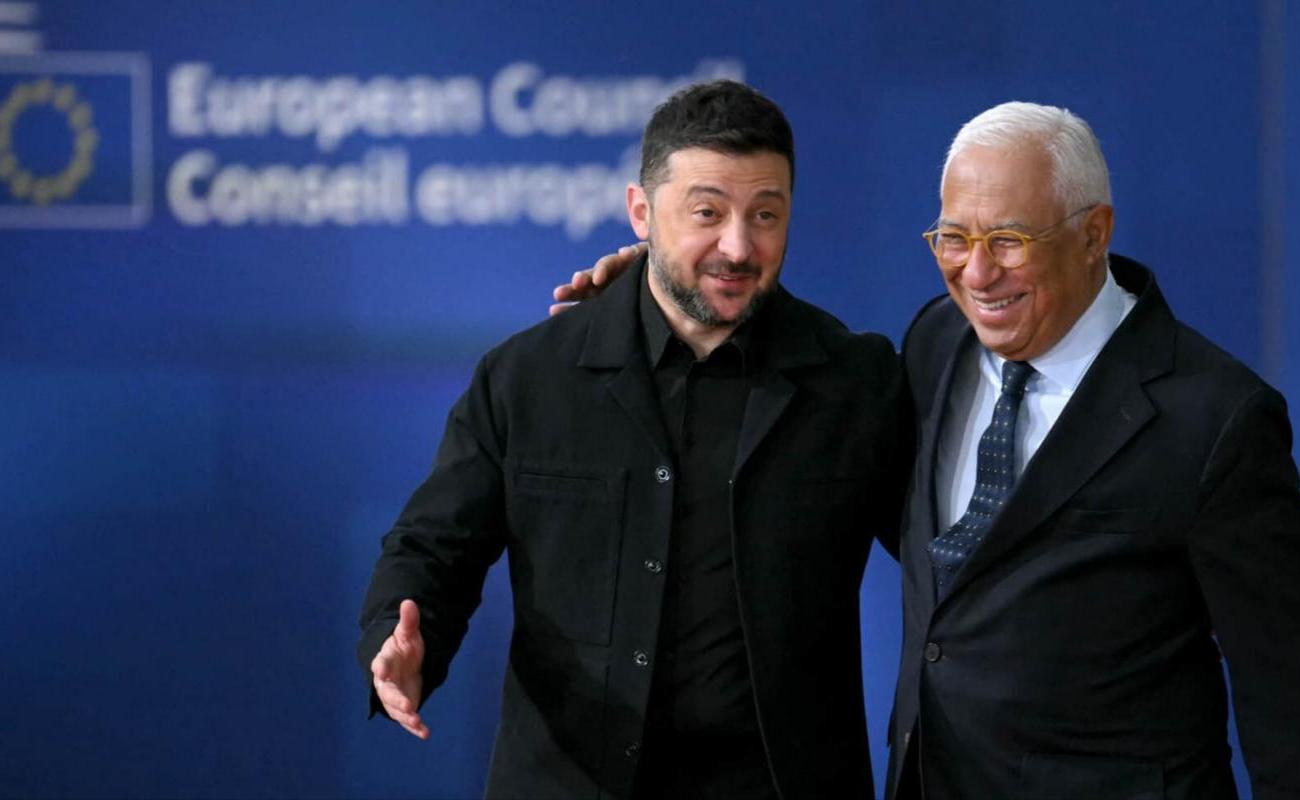
On Thursday, April 23, the EU Council finally approved amendments to the EU's long-term budget, which will allow the finalization of the EU loan guarantee for Ukraine in the amount of €90 billion for the period 2026-27.
The resumption of Russian oil transit to Hungary via the "Druzhba" oil pipeline, which Ukraine eventually repaired after the Russian missile attack, forced Hungarian Prime Minister Viktor Orbán to fulfill his promise and lift his veto on the Ukrainian loan.
Now there is no longer a procedure in which one or more of the EU's "Ukraine-skeptical countries" could block the launch of the two-year aid package worth €90 billion for Ukraine.
But it is impossible to say that the procedure is over yet. A series of agreements from both the EU and Kiev lie ahead.
Yes, Brussels is still not ready to provide the money either technically or legally. Three important documents that will contain the details of the loan are in the process of being drafted. In addition, the conditions under which Ukraine will receive the funds are not fully agreed. The EU has proposals, but they have not yet been finalized and agreed upon by the Ukrainian side.
But we can say with certainty - Kiev will receive budget support only in exchange for reforms.
However, money for weapons was excluded from this "condition" so as not to jeopardize Ukraine's resistance to Russian aggression.
But while discussions continue in the offices of European institutions and European capitals about the scope and ambition of the demands on Kiev, it is safe to say that the conditions will (entirely or mainly) relate to the rule of law and the fight against corruption. And the financing will be an incentive for Ukraine to fulfill what the EU has already promised.
"European Justice" learned the details from European officials who are directly involved in the development of the technical and political details of the loan, as well as from European diplomats who influence this process. In this article, we explain the non-public details, and also tell everything you need to know about the 90 billion euros from the EU for Ukraine.
Money in exchange for "Družba"
It is worth briefly recalling the history of the issue.
The 90 billion euro financial aid package was unanimously approved by EU countries at their summit in December, and it became a compromise - however, one that fully met Kiev's demands. However, at the beginning of the year, Hungarian Prime Minister Viktor Orbán suddenly blocked the procedure himself. Hungary refused to vote for the last procedural decision, which required unanimity.
According to the Hungarian version, the veto referred to the fact that Russian oil stopped flowing to Hungary in January 2026 due to damage to the pumping station of the "Druzhba" oil pipeline in the Lviv region by Russian drones.
"No oil - no money," Orban has repeatedly stated.
It is worth adding that Slovakia also received oil through this pipeline, but its Prime Minister Fico did not support Orban in blackmailing Ukraine by blocking a 90 billion euro loan. Instead, he linked the unblocking of "Družba" with the adoption of the 20th package of sanctions against the Russian Federation.
But the main thing was that unblocking "Družba" in order to obtain a loan seemed like an unalternative option. Brussels did not even look for ways to circumvent it.
However, in Ukraine there was no hurry to fulfill Orban's request. Kiev explained that the repair would take a long time and promised that the oil transit would resume in late spring. So, given Orban's defeat in the Hungarian elections, a large part of the Ukrainian and European political elite was confident that the new Hungarian Prime Minister, Peter Magyar, would unblock 90 billion euros for Ukraine and that he would be "the one who returned the oil to Hungary." Ukraine could also bargain with him for certain conditions.
The elections in Bulgaria have complicated everything.
Several sources of "EuroPravda" confirmed that it was Ukraine, foreseeing a possible victory of forces with a pro-Russian image, that decided not to take risks. Kiev gave in to the principle and reported through Brussels that the repairs were completed.
"Družba" resumed operations on April 22, which forced the Hungarian government to give the green light for a loan to Ukraine under emergency procedure.
Orban kept his word. Although he dragged out the time until the last moment. As if to emphasize the distrust of everyone in the EU, even the friendly Slovaks, the Hungarians literally waited for the Russian oil to physically cross the Slovak-Hungarian border.
That is why on Thursday the pause with the adoption of the Ukrainian decision was strangely prolonged, which made many nervous.
As “EuroPravda” reported, the written procedure for approving the loan, which began on April 22 with the launch of “Družba”, was supposed to last 24 hours, but time was running out, and the Hungarian response never arrived... By agreement with Budapest, the deadline was extended by several hours. There were no public explanations, everyone only assured that it was a technical delay.
As a “EuroPravda” correspondent found out, Hungarian officials really waited these few hours for the oil to flow through Slovakia and physically appear in the Hungarian section of the pipe. And as soon as they received confirmation of that, they sent an email to the EU Council Secretariat with the word "YES." That was the moment the Ukrainian loan was approved.
Money in exchange for reforms
So, as of April 23, the main legislative framework for securing an EU loan to support Ukraine for 2026-2027 in the amount of 90 billion euros was approved. But why then does even Zelensky say that the expected time for receiving the first tranche is May-June?
In fact, there are still several weeks, or perhaps even months of agreements and a series of legal decisions that both sides must make. The most important stage is the negotiations between the European Commission and Kiev on the conditions for receiving the money.
This is the list of reforms that Ukraine will undertake in exchange for new tranches.
We emphasize that this list will not require a unanimous vote in the EU, a majority will suffice. But the decision to have such a list is irreversible, the EU Council has publicly noted it, emphasizing that these will be reforms related to the rule of law and the fight against corruption.
And a preliminary list is already available - it seems that it was discussed this week during the visit to Brussels of Deputy Prime Minister for European Integration Taras Kachka. According to one of the sources, we can expect that the conditions, the fulfillment of which will unblock billions of financial aid for Ukraine, will include elements of the plan, which is known unofficially as the "10 points of Kachka-Kosa".
These are the reforms that the European Commission and the capitals consider the most urgent, which are being monitored and in which, unfortunately, Ukraine does not show sufficient progress.
In addition, the European Union and Ukraine must adopt a number of legal decisions that will trigger the loan.
This is a loan agreement for the entire amount of 90 billion euros, which is currently being discussed with Ukraine (the draft was submitted to Ukraine by the European Commission last week) and will require the signature of both parties. This is a Memorandum of Understanding on Macro-Financial Assistance, which will determine the conditions of one part of the package. And these are amendments to the loan agreement under the Ukraine Facility, which concern the second part.
Yes, these 90 billion euros will be divided into parts with completely different transfer rules and conditions that Ukraine must meet. And this is logical, because the total amount includes both assistance for arming the Armed Forces of Ukraine and financial assistance.
It is worth emphasizing: Ukraine will receive "military" funds without any conditions.
But budgetary assistance - only in exchange for implementing reforms.
Moreover, we are not talking about any new demands on Ukraine, all EU interlocutors emphasize. These are only those reforms for which Kiev has already undertaken obligations, including those within the framework of the EU accession process.
What you need to know about the loan and why it should not be repaid
First of all, let us recall that this credit line from the EU in the total amount of 90 billion euros is intended for 2026-2027. years, and it is planned to divide this amount in half over these two years.
This is a huge amount of money for such a short period, and the fact that we will get to the actual transfer of money almost six months from the beginning of the year does not extend the deadline. By the end of 2027 (if the conditions are met), Ukraine will receive the full amount of funding - 90 billion euros.
From January 1, 2028, the EU intends to approve a new assistance program, but this is a matter of the future. Especially due to the fact that then a new budget period will begin in the EU, and there is currently a debate about how exactly (and in what status) Ukraine will be registered in it. Currently, in the next budget, which will be discussed next week in the European Parliament’s chamber, the European Commission is proposing to allocate €100 billion to Ukraine, but this will certainly not be the full amount of EU funding over seven years.
The Instrument for Enhanced Cooperation is currently being used to provide Ukraine with €90 billion, and although there are reasons to call it EU aid, in fact 24 of the 27 EU member states are participating in the loan provision (all except Hungary, Slovakia and the Czech Republic).
For this €90 billion, a targeted distribution of payments has been agreed: €30 billion for budget support and €60 billion for military support.
These funds are expected to cover approximately two-thirds of Ukraine’s needs for the next two years. The remaining third (around €45 billion over two years) will be covered by Ukraine’s bilateral agreements with EU countries, as well as non-EU partners.
But it is particularly important for us that the Ukrainians will definitely not repay these funds.
Legally, this is a “limited recourse loan”. Simply put, this means that Ukraine will be obliged to repay the loan only if it receives reparations from Russia.
In the event that Russia does not pay reparations, the responsibility for payments will be transferred to the EU – or rather, to the 24 member states participating in the loan insurance. And in such a case, the Europeans can take money from the frozen assets of the Russian Central Bank.
“The EU reserves the right to use frozen Russian assets,” the loan creation documents directly state.
But in serious conversations between European politicians and officials, this topic is currently being touched upon more ritually than with real grounds or intentions.
Even the interest payments on the loan will not fall on the Ukrainian budget.
The European Union will cover the interest rates on the 90 billion loan from its budget instead of Ukraine, and this is legally fixed. And these are significant funds, given the size of the loan: servicing costs will amount to approximately one billion euros in 2027, and then three billion euros per year.
Where will the funds from the "Ukrainian package" go?
The EU plans to start providing credit funds to Ukraine - both budgetary and military support - in the second quarter of 2026. The latest information, according to EuroPravda's interlocutors, is in mid-June. But now the European side is doing everything possible so that the money can arrive as early as May 2026 (although this is a rather ambitious goal).
On April 23, the EU Council approved the financing strategy for Ukraine until the end of 2026, which foresees that Kiev will receive 45 billion euros this year, although, according to sources from the European Commission, this amount may be revised upwards if Ukraine's needs change due to the unpredictability of the war.
Of this, 16.7 billion euros should go to budgetary support, and 28.3 billion euros to defense support.
"EuroPravda" has learned that the first defense tranche will amount to six billion euros and will be aimed at the purchase of drones manufactured in Ukraine. But, let us note, the use of Chinese parts. It is for the Chinese component that an exception to the rules for securing credit funds, which give priority to European and Ukrainian production, was agreed.
As already mentioned, there are no conditions for defense funds, but a number of procedures are still pending, due to which the exact date of securing funds is not yet known. Yes, Ukraine must open a special bank account in the EU (it is already known that it will be the German federal bank Deutsche Bundesbank). This in itself could require several months of bureaucratic efforts under normal conditions, but Brussels and Berlin plan to carry out the procedure as quickly as possible.
Kiev will also have to give the EU direct rights to monitor the spending of funds from this account.
The first defense payment is expected to be made no later than June 2026. Given Ukraine's defense needs, it is really too late. But Brussels emphasizes: the Ukrainian side can already conclude contracts or even accelerate the implementation of already concluded ones. The terms of the loan allow for financing contracts and orders concluded from January 2026. And when the money arrives (and now we can say that this will happen 100 percent) – this money will be able to pay for drones that have already been manufactured and even transferred to the Armed Forces of Ukraine.
The next payments can be made quickly, but their schedule has not yet been approved. The next tranche will probably cover ammunition, additional drones and air defense systems.
The budget support in the amount of 16.7 billion euros in 2026 is divided into two equal parts: 8.35 billion euros will be provided to Kiev through the Instrument for Ukraine, aimed at reforms necessary for Ukraine's accession to the EU, and the remaining 8.35 billion euros - through the Macro-Financial Assistance (MFA) instrument.
It is these "civilian" funds that will be provided under the terms of "money for reforms".
The difference between the components of the Instrument for Ukraine and the MFA is that there will be no requirements for implementing complex reforms to obtain macro-financial assistance, but it will be primarily focused on the topic of financial management - so it will be easier and, most importantly, faster for Kiev to receive it.
Therefore, Ukraine will receive the first budget payment from the 90 billion loan precisely through the macro-financial assistance instrument.
So, the EU plans to pay out 8.35 billion euros planned for MFA in 2026 in three installments, and "EuroPravda" has learned the schedule of these payments.
The first tranche of macro-financial assistance will amount to 3.2 billion euros and will be paid no later than June 2026, the second tranche of 3.7 billion euros - approximately during the summer or immediately after the summer, the third tranche of 1.45 billion euros - closer to late autumn.
Many readers have probably heard the name of the Ukraine Facility - under which Ukraine is lagging behind schedule and even came close to losing funding for some time. However, Brussels considers the facility to be effective. After all, it truly embodies the principle of "money for reforms".
Ukraine implements reforms - it has funds. It does not implement them - it does not get money.
But since the amount of funds available under this program will increase sharply, the list of reforms will also change.
There is currently no updated payment schedule under the Facility for Ukraine - both it and the lists of reforms related to each tranche are still being agreed. As already mentioned, it is safe to say that new elements of reforms related to the rule of law and the fight against corruption will be added to the list.
And in the near future (according to various sources - in May or early June), Ukraine will receive a tranche of 2.7 billion euros based on old obligations. And if Kiev implements additional laws in the coming weeks, it may receive another tranche.
"This will be the last payment under the old Instrument for Ukraine. A new list of reforms will follow," explained the EuroPravda interlocutor.
Without exception, all European interlocutors - both unofficially and officially - say that financing for Ukraine will ultimately depend on whether official Kiev shows a willingness to reform the country and bring it closer to European norms.