
US-Israeli War on Iran: What are the consequences for Ukraine?
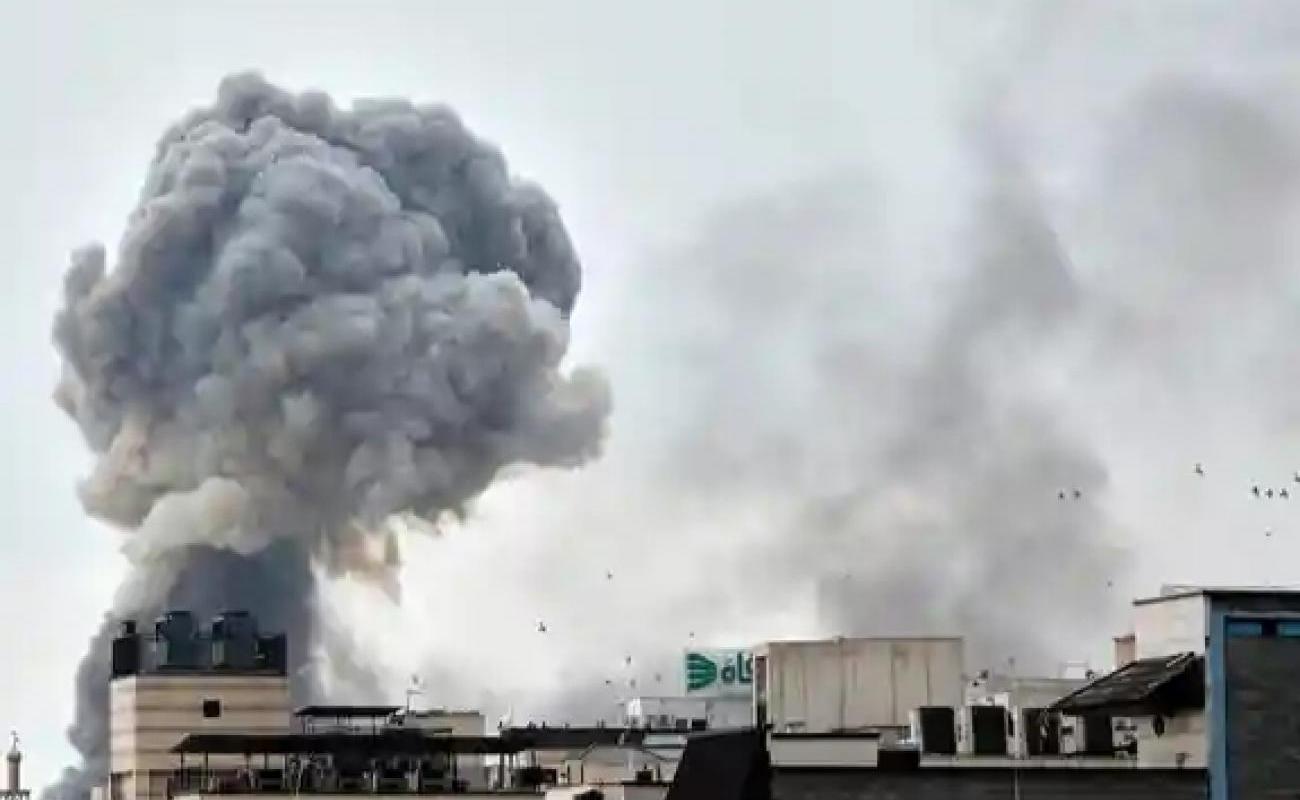
The US-Israeli military operation against Iran and Iranian retaliatory strikes have affected almost the entire Middle East and oil prices. How will this confrontation affect Russia's war against Ukraine?
The Israeli-American war against Iran has dominated the political and media agenda for the fourth day in a row. The further development and specific consequences of the conflict, which has already affected a significant part of the Middle East, remain unknown. However, it is already clear that these consequences, whatever they may be, will be felt far beyond the borders of the region. And Ukraine, which has been actively resisting Russia in its aggressive war for more than four years, is unlikely to be an exception.
Fewer weapons for Ukraine?
"A strategic gift for Russia and China," says Markus Reisner, an Austrian military historian and professor at the Vienna Military Academy. According to him, Russia can use the fact that the West's attention is focused on the new conflict to its advantage. "Ukraine could be transferred to a secondary front. In the worst case, this would mean even fewer resources (for Kiev from the West. - Office.), In particular, for example, missiles for Patriot air defense systems," the expert said in response to a question from DW, emphasizing that the United States now needs weapons for a new war.
Igor Semivolos, director of the Center for Middle East Studies in Kiev, also sees the danger of depleting the military resources needed by Ukraine. Therefore, according to him, it is in Ukraine's interest for the war in Iran to last as short as possible.
"There are two important options for Ukraine. The first option is for this conflict to be short. And the second option is for the regime (in Iran) to fall. - Office. These are two options that will satisfy us 100 percent," he told DW.
On the other hand, prolonging the war, according to experts, could make the West "more lenient in its efforts to end the war" in Ukraine, which would mean strengthening Russia's positions.
"For Ukraine, any quick end to the war is better than its continuation," agrees Ukrainian publicist Vitaly Portnikov. Moreover, the ideal option, in his opinion, would be the success of the US and Israel and the collapse of the current Iranian regime. After all, as soon as Iran becomes predictable and stops threatening its neighbors, this will mean "stability in the Middle East and a reduction in the capabilities of China and Russia in this area - both political and economic," Portnikov said in an interview with DW.
Expensive oil and gas - a plus for Russia
One of the biggest global consequences of the protracted war in Iran can already be predicted - a long-term increase in oil and gas prices.
“This is in Moscow’s interests. It quite seriously increases its ability to continue this war (in Ukraine. - Ed.),” Portnikov notes. In this case, Russia, according to him, will specifically try to offer Europe cheap energy resources in exchange for concessions in support of Ukraine.
The new war in the Middle East has already had a significant impact on world oil prices. The price of a barrel of Brent crude oil on Tuesday, March 3, crossed the US$80 mark, while in the middle of last week this price was around $71. The reason is the de facto closure of the Strait of Hormuz by Iran for tankers. This is the route by which oil from the Persian Gulf enters the Indian Ocean, and then to other regions of the world.
However, it is not yet clear how long the rise in oil prices will last and how much Russia will benefit from it. Wilfried Jilge, a Russia and Ukraine expert at the German Society for Foreign Policy (DGAP), is not sure that the impact of high oil prices will be able to offset the losses Russia has suffered in the long term due to the heavy sanctions imposed by the West over the war in Ukraine.
"Although Russia will not collapse under the sanctions and economic crisis this year, we are seeing a gradual decline (in economic growth. - Ed.) and a crisis in the Russian economy that can no longer be denied," he told DW.
Another loss of reputation for Russia
In addition, the war in Iran, despite all the possible advantages for Russia, clearly demonstrates one major drawback - the loss of Moscow's reputation due to the inability to provide support to Iran, one of its main allies. And this, according to Wilfried Jilge, is beneficial for Ukraine.
"Because of the war in Ukraine, Russia can no longer maintain dominance in other regions," the expert believes. Therefore, in his opinion, it is quite possible that those around Putin will increasingly ask themselves the question: "What is the point of attrition in Ukraine if this means a general deterioration in Russia's position."
In this context, one can also recall the overthrow of the regime of Russian ally Bashar al-Assad in Syria at the end of 2024 and the American arrest of Venezuelan ruler Nicolas Maduro in early January. Both of these events remained without a response from Moscow.
Ukraine’s experience in the Middle East
Ukraine’s position can potentially be strengthened by its experience in shooting down Iranian drones, which Russia actively used especially at the beginning of the war and on the basis of which it eventually began to produce its own drones. In recent days, Iran has been attacking US military facilities in the Persian Gulf countries with its drones, as well as other facilities in the region. Ukrainian President Volodymyr Zelensky said that Kiev could send its experts to the Middle East to intercept drones, as well as share its capabilities and experience in shooting them down. In return, the leaders of the countries of the region, according to him, should convince Russia to agree to a ceasefire in the war against Ukraine.
“The Persian Gulf countries could benefit from the skills of the Ukrainian military, and in turn this will increase the willingness in the region to support Ukraine,” comments Austrian expert Markus Reisner. In his opinion, such support can be expressed both in the introduction of sanctions against Russia and in financial support for Ukraine.
Europe should strengthen its support for Ukraine now, without waiting for the end of the war in Iran, is convinced by Wilfried Jilge of DGAP.
“We should use the time right now, while the US is busy there, to independently expand our assistance to Ukraine,” the expert believes.
In particular, he advises Europe to step up the fight against Russia’s shadow fleet, which it uses both for illegal oil exports and for military purposes.
“And we also need to move forward now on the issue of arming Ukraine and take new initiatives,” says Jilge.