
Why the Russian offensive in Ukraine has slowed down sharply
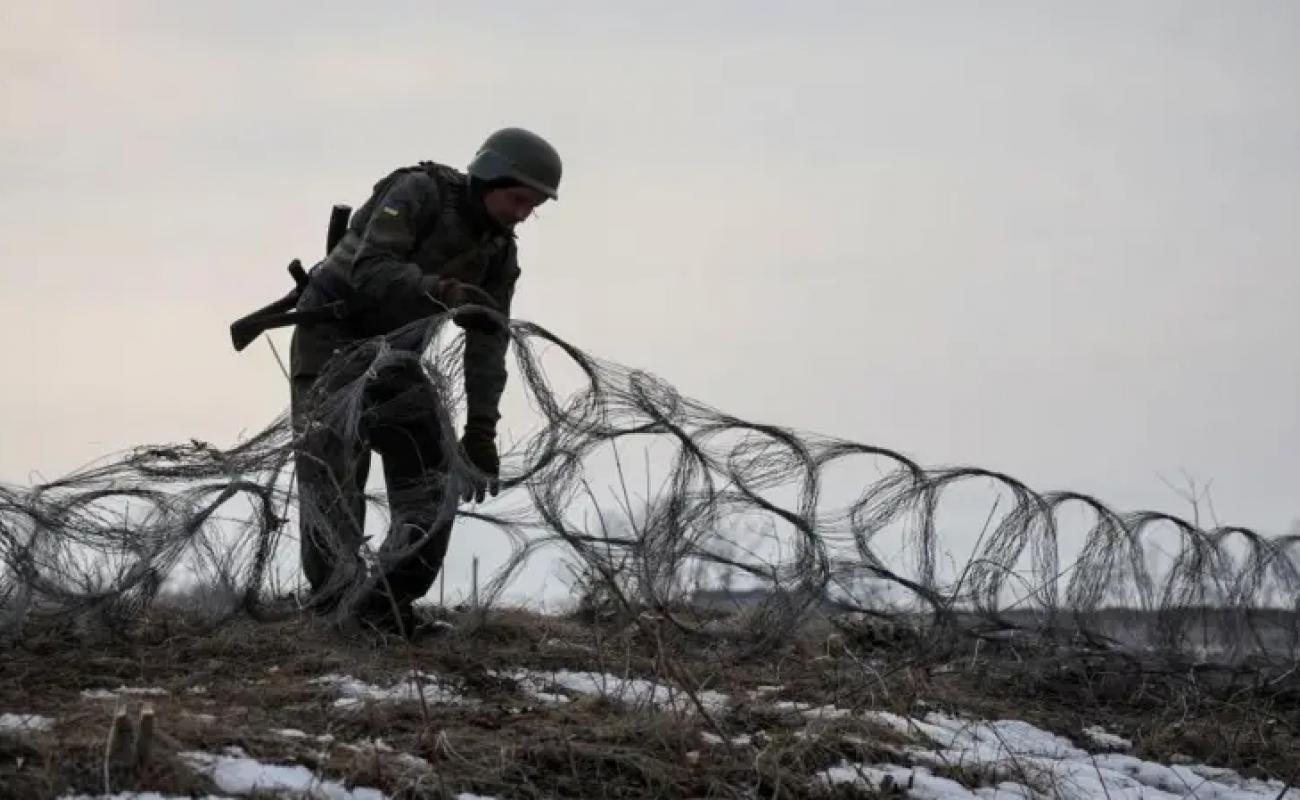
The pace of advance of Russian troops by mid-March has fallen several times compared to last year, when they were capturing an average of about 400 square kilometers of Ukrainian territory per month.
According to OSINT projects, in January 2026, the Russian army captured about 240 square kilometers, in February - 120 square kilometers, and in the first half of March - only about 50 square kilometers.
For comparison: during the same period, Ukrainian forces liberated over 400 square kilometers as part of two separate counter-operations in the Aleksandrivka and Khuljaipol directions. Therefore, the real territorial gains of Russian troops since the beginning of the year are practically zero.
At the same time, the activity of attacks on many sections of the front is not decreasing: the statistics of human losses remain at the same average monthly level.
A winter with a lot of snow and ice, the spring thaw, the need to regroup and replenish forces after last year's phase of hostilities - all this, undoubtedly, affects the course of the fighting.
But does this fully explain the slowdown in the actions of Russian troops?
Briefly about the situation
Despite a certain decrease in the overall number of attacks by Russian troops, which is typical for the second half of winter and the beginning of spring, their activity in key areas remains high.
The Russian army continues the tactic of infiltrating the defenses of the Armed Forces of Ukraine with small infantry groups, sometimes carrying out limited mechanized and motorcycle attacks.
There are several sections of the front where the Russians are particularly active.
Pokrovsk and Mirnograd. Russia almost completely controlled these cities by the end of 2025, but Ukrainian units hold the outskirts and can fire at any objects in the city, so one cannot yet speak of complete control of the Russians. The main efforts of the Russian forces are aimed at pushing the Armed Forces of Ukraine away from the cities, especially north and northwest of the agglomeration, in the direction of the villages of Hrishine and Rodinska.
Huljajpolje. According to the assessment of the Ukrainian military observer Konstantin Mashovac, the number of attacks here already exceeds the activity in the Pokrovsky direction, and the situation is of a twofold nature.
After the capture of Khuljaipol, the 5th Combined Arms Army of the Russian Federation is advancing westward, threatening to cut off Ukrainian units covering the approaches to the Orikhivskyi district. At the same time, successful counterattacks and breakthroughs of the Armed Forces of Ukraine north and northeast of Khuljaipol pose a threat to the right flank and the main forces of the 5th Army itself.
Kostiantynivka. The city is of great strategic importance: it covers Druzhkivka, Kramatorsk and Slavyansk, which experts call key targets of future Russian operations. Russian units are trying to approach the city from several sides, but are not achieving significant success. During the latest counterattacks, the Armed Forces of Ukraine have advanced south of Kostiantynivka, which is making it difficult for Russian forces to penetrate the city.
Slavyansk direction. The Russians plan to advance towards the Slavyansk-Kramatorsk agglomeration from the north, where they can simultaneously attack in several areas. The main directions of the attack are Liman, Drobyshevo and Svyatohirsk in the northwest, Dibrova and Kriva Luka in the southeast, as well as a very dangerous route for the Armed Forces to Rai–Oleksandrivka along the Slavyansk-Bakhmut highway. The fighting continues with Russian success, then significant Ukrainian counterattacks.
Southeast of Zaporozhye - in the areas of Primorsk, Stepnohirsk, Stepovoye and Maly Shcherbaki, as well as southeast of Orekhovo - in the areas of Maly Tokmachka and Bilogirya. Here, attempts to infiltrate and consolidate small infantry groups prevail without significant results.
In other areas - in the Kharkov, Sumy and Kherson regions - the fighting is of a local nature, no significant changes in the front line have been recorded.
Separately, it is worth paying attention to the situation on the Aleksandrivka direction, where Russian troops were forced to go over to the defensive. During the counteroffensive of the Armed Forces of Ukraine, which began in January, Ukrainian units managed to almost completely recover the occupied territories of the Dnipropetrovsk region - several hundred square kilometers.
Although territorial gains in war are not always crucial, the advance of Ukrainian troops forces the Russian command to shift forces and resources in a dangerous direction from other areas and from operational reserves.
"Continuous Ukrainian counterattacks in the Dnipropetrovsk region may disrupt the expected Russian offensive in the spring and summer of 2026," analysts of the American Institute for the Study of War note.
The slowdown in the pace of Russian troops’ advance may be due to seasonal factors and weather conditions. At the end of last winter, the Russian command took an operational pause to regroup and replenish reserves.
But this is hardly the only reason. Other signs point to a change in the course of events on the front.
The Russian army is finding it increasingly difficult to make up for its losses
For two years now, it has been conducting active offensive operations on almost the entire front. The calculation was probably that due to constant pressure, Ukraine would not have enough forces to repel all attacks, and its defenses would collapse in at least one direction. But this did not happen: the results of the Russian attacks turned out to be modest, and the losses were high.
According to the British Ministry of Defense, in 2024 the Russian army lost 430,000 people, who were killed or wounded, in 2025 – 415,000. Similar data is provided by other Western and independent sources, but Moscow does not publish statistics on its own losses.
In December 2025, Russian Defense Minister Andrei Belousov said that almost 410,000 citizens had joined the army on contract service in a year.
A comparison of these figures suggests that the losses of Russian troops on the battlefield exceed the number of fresh forces, although these figures do not give a complete picture.
On the one hand, some of the wounded return to the front after treatment.
On the other hand, the army needs constant replenishment not only because of combat losses. Some soldiers are discharged due to age, illness and other reasons, for example, after the expiration of the contract - some still have this opportunity. Someone deserts. Suicides, deliberate self-harm, accidents, arrests for criminal offenses are also non-combat losses.
In addition, the number of complaints about the quality of replenishment is growing, which is often spoken and written about by participants in hostilities on the Russian side.
Judging by the activity of the recruitment campaign in Russia, the army's need for new soldiers remains great.
Whether they will be able to continue to maintain the pace of bloody infantry attacks in many directions is a question.
The Armed Forces of Ukraine have changed their drone tactics
Until recently, most of Ukraine's unmanned systems were aimed at destroying the Russian army's personnel. Currently, their use is increasingly shifting to strikes in the rear - both in close and distant areas.
The main targets of attacks by Ukrainian drones are increasingly becoming means of supply, communications, air defense and electronic warfare, control systems for other drones, and the operators themselves.
To gain an advantage in the "near sky", Ukraine is increasing the production of drones, especially interceptor drones that hunt reconnaissance and strike drones. Ukrainian drones are increasingly using non-standard frequencies, which complicates the operation of Russian electronic warfare systems designed for other ranges.
The so-called "dead zone" is being filled deeper and deeper - the territory along the front line, where any equipment or troops immediately become a target.
Safe movement in the front zone has become impossible.
The tactics of infiltration of the Russian army no longer have the expected effect. Assault groups that penetrate the Ukrainian rear without support are more concerned about their own survival than about disorganizing the defense.
Instead, the Armed Forces of Ukraine are using new methods not only in defense, but also during counterattacks.
According to the Russian military, at the junction of the Zaporizhia and Dnipropetrovsk regions, the Ukrainians are creating a kind of "air fist": hundreds of drones simultaneously rise on a narrow front, covering an area of 20 kilometers and performing the role of a powerful training.
After that, mobile assault groups enter, and drone operators consolidate the result.
Then the scheme repeats itself again.
Problems with communication and air defense
Having blocked Starlink terminals not registered in Ukraine, the Russian military is facing serious communication problems. Its own satellite systems are expensive, slow, and often unsuitable for field operations. Analog radio stations have limited functionality and are unreliable.
Ukraine, on the contrary, is expanding the use of Starlink. In particular, these systems are increasingly being installed on medium-range drones, which allow for high-precision strikes on targets up to 200 kilometers deep. Most often, these are radars, air defense launchers and tactical missile systems, as well as ammunition depots in Crimea and the Donetsk region. All this looks like a targeted systemic campaign.
The losses of radar and anti-aircraft missile systems are becoming increasingly noticeable for the Russians. Drones and long-range missiles penetrate the rear through "air corridors" and hit important industrial facilities deep inside Russia.
Such strikes are becoming more and more massive, and Russia is forced to spend more resources on repelling them.
An example is the missile attack on the Kremniy El radio factory in Bryansk. Seven missiles passed through air defenses, and radars apparently did not even notice the drone, which was calmly circling above the facility and recording the results of the strike.
Everything that is happening now on the Russian-Ukrainian front corresponds to the nature of a protracted war. The sides are gradually adapting to the successes of the enemy and are looking for ways to neutralize his advantage.
Russia is also trying to weaken Ukrainian air defenses, increasing the number, power and variety of its unmanned systems.
In this technological race, the balance of power and capabilities is constantly changing. With the arrival of spring and the intensification of hostilities, the front line may shift, but there is still no way out of the resulting impasse.