
The “Crimean” Architecture of Enforced Disappearances. Who and How Are Abducting Residents of the Occupied Territories of Ukraine?
Abductions have become a systematic and coordinated practice, as a tool of Russian control over the occupied territory of Ukraine. These conclusions were reached by representatives of several human rights organizations based on the results of a comprehensive study dedicated to enforced disappearances in the annexed Crimea and the occupied parts of the Kherson and Zaporizhia regions. Read about typical scenarios of abductions, the role of Russian security forces in these processes, two levels of “covering up” information about victims of disappearances, as well as what happens to people after abduction.
The report was prepared by experts from two Ukrainian Human Rights Houses and the NGO “Crimean Process” based on documented testimonies of victims of enforced disappearances, as well as their relatives. In addition, the list of sources for the study included expert interviews with representatives of organizations specializing in enforced disappearances, analysis of information from open sources, video materials, and official responses from the occupation authorities.
Taken to the Unknown
“The perpetrators of kidnappings, as a rule, operate in groups, use vehicles without identification marks, as well as other elements of camouflage. Video materials from surveillance cameras, especially in the cases of Irina Danilovich and Ervin Ibragimov, show a high level of coordination, speed of action and minimal time spent at the scene of the incident,” the authors of the report note.
And they conclude that such signs exclude coincidence and indicate the professional nature of the operations.
The reporters note that the characteristic features of the perpetrators are black or camouflage uniforms without chevrons, balaclavas, automatic weapons, frequent and categorical refusal to identify themselves and state the reasons for their detention.
At the same time, the most typical scenario is kidnapping from a house after a search and seizure of all digital media, as well as documents. As a rule, the person conducting the search does not leave any papers describing the reasons. Persons being detained are not allowed to call a lawyer. The victim of disappearance is taken for “checking” without specifying where they are being taken and in what procedural status. After that, the person disappears, and law enforcement agencies and correctional facilities deny their involvement in the abduction.
Among other common methods of enforced disappearance, experts have identified kidnapping at checkpoints, on the street, or from cars. Very often, car owners are abducted with the participation of police officers who control traffic, by stopping the transport.
“After stopping, a minibus with masked people arrives and transports the victim. A bag is placed on the head, taped, and physical violence is applied during the transport,” the study authors describe this practice.
Who is behind this?
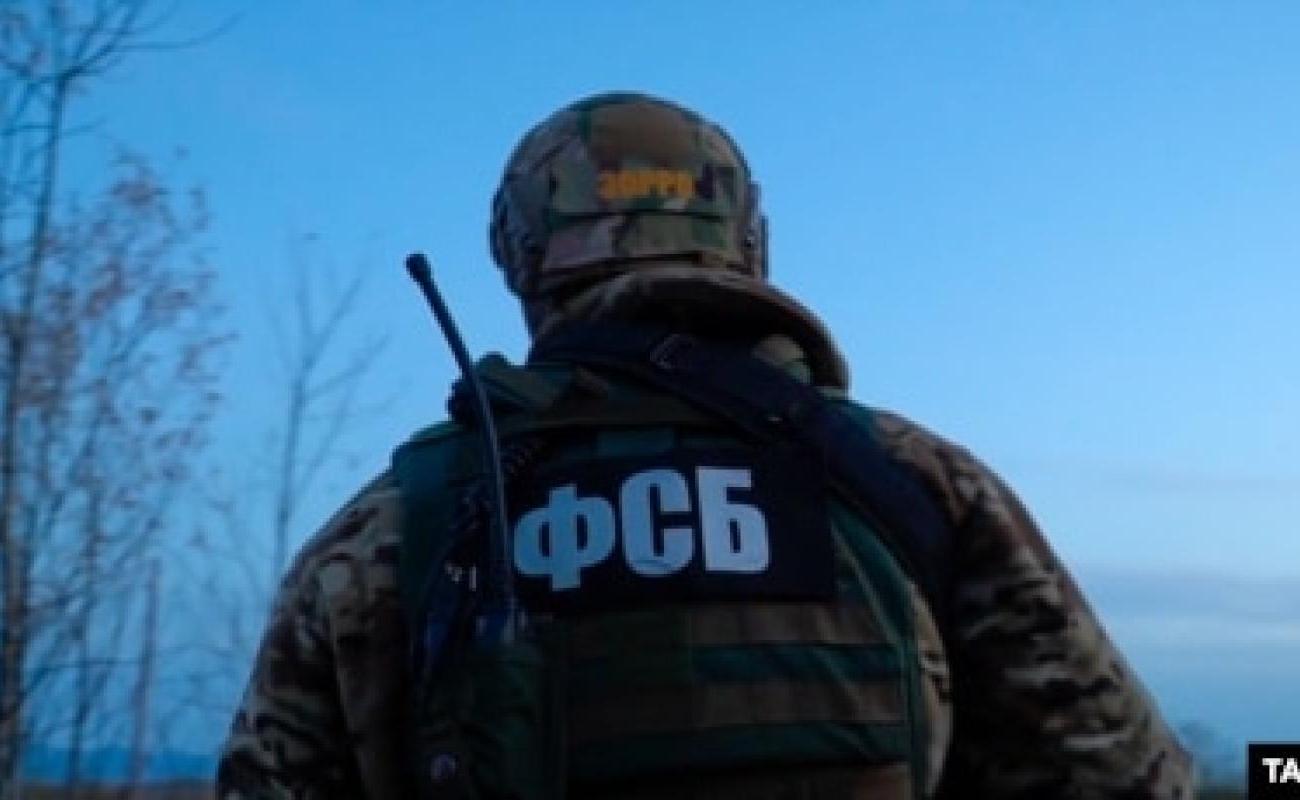
It is worth noting that all sources unanimously indicate that the key perpetrator of the disappearance operations is the Federal Security Service of the Russian Federation. An analysis of the official responses of the occupation authorities showed that “all known cases were carried out by representatives of the FSB of the Russian Federation – mainly employees of the FSB Directorate for the Republic of Crimea and the city of Sevastopol, in some cases – representatives of the FSB Border Directorate and unidentified units of the FSB of Russia”. Experts have noted the connection of some abductions with the appearance of FSB operational groups from Moscow in the occupied regions.
A map of key places where abductees are being held in the occupied territories of southern Ukraine, compiled by human rights activists, is another confirmation of the FSB’s leading role in the processes of enforced disappearances. Among the identified places where abductees are being taken are the basement prison in the building of the FSB Crimean Directorate, detention center No. 2 in Simferopol, which the report defines as being completely under the control of the FSB, and the basements of the Zaporizhzhia nuclear power plant, which is under the control of Rosatom and the FSB.
Consistent Silence
The fact that enforced disappearances are not random "excesses on the ground" but a single coordinated policy is evidenced by the consistency of different agencies at all levels in providing information about the abductees.
"One of the most convincing evidence of the systematic nature of enforced disappearances is the consistency with which all organs of the occupation authorities conceal information from the relatives of the missing," the researchers state.
At the same time, they established that there are two levels of concealment. At the first level, law enforcement agencies in the occupied territory ignore complaints from relatives about the abduction. Instead of a full investigation, police officers refuse to initiate criminal proceedings. And employees of military investigative departments, who receive some materials, mostly ignore the requests of relatives - during the entire period of the study, not a single meaningful response from military investigators was recorded.
At the second level of concealment - the FSB - the Russian special service denies its involvement in the abductions. The agency either refers to the protection of personal data or simply claims that the detention of the abductees was not carried out in accordance with the procedure established by law. At the same time, the FSB never responds to requests for detention in an “illegal manner”. Representatives of the Russian special service always respond to each appeal with the same template text. For example, in one of the cases, 10 identical responses from the agency were recorded during the eight months of the kidnapping.
Torture, confessions and legalization
The authors of the report note that at least 90 percent of abductees were subjected to torture. In most documented cases, torture is used in the early stages after the abduction, often in the first hours or days of the person's stay in isolation. Thus, the use of violence is a pre-planned element of the system, and not a reaction to the behavior of the detainee, the report summarizes.
"Torture is used to quickly psychologically and physically break the personality, create a state of complete control and eliminate any resistance. Torture methods are standardized and repeated regardless of the identity of the detainee or the region, which is additional evidence of the institutional nature of this practice," the study states.
Human rights activists also note a common approach, in which a person is first abducted and held without any legal basis, and after obtaining the necessary "confessions" - officially detained and charged. Of particular concern is the practice of forcing victims to name five people with a pro-Ukrainian stance in order to stop the torture. Such methods, according to experts, have a colossal destructive effect on trust in local communities, which is one of the goals of the occupying forces.