
Putin's May Truce: A Pause for the Parade or a Game of Negotiations - What Will Ukraine Get?
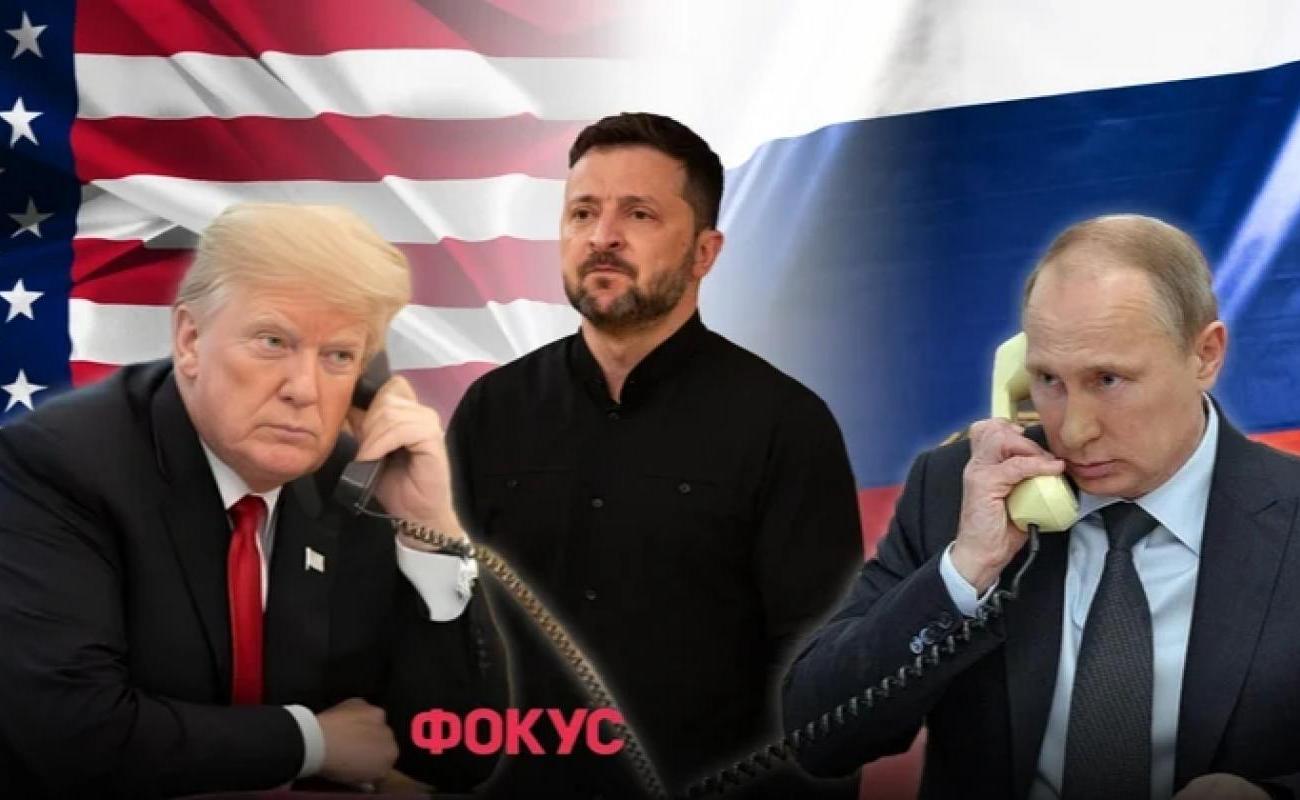
Russia is once again offering a short truce - this time until May 9. Behind the diplomatic formulations and calls to Washington, there is a familiar tactic: an attempt to buy time, ensure the safety of the parade and impose its own conditions. Focus tried to figure out what is really behind the "May silence" and whether it has a chance of developing into real negotiations.
Less than three weeks after the so-called "Easter truce", the Kremlin's master has again started talking about something new - already until May 9. The formal reason seemed almost impeccable: a personal call to Washington with congratulations to Melania Trump, words of support after another assassination attempt on the US president and a discussion of tensions in the Strait of Hormuz. But behind this diplomatic cover is another attempt to impose an agenda favorable to Russia.
Kremlin spokesman Dmitry Peskov said that the truce that Putin proposed to Trump should begin on May 9, on Victory Day. According to him, the specific terms of its validity have not yet been determined: the final decision on the start and end dates will be made by the Russian president personally.
At the same time, the Kremlin emphasizes that Moscow does not need Kiev's consent to declare a ceasefire. This, as Peskov noted, is a unilateral initiative of Putin, which "will be implemented" regardless of Ukraine's reaction.
In turn, Volodymyr Zelensky responded that he had instructed Ukrainian representatives to contact the US president's team and find out the details of the Russian proposal for a short-term "truce". He emphasized that Ukraine strives for peace and is providing the necessary diplomatic work for a real end to the war.
"Let's find out what exactly is at stake: a few hours of securing a parade in Moscow or something more. Our proposal is a long-term ceasefire, ensuring reliable security for the people and long-term peace. Ukraine is ready to work on this in any decent and effective format," Zelensky noted.
At the same time, as Zelensky stated, Russia may demand the lifting of sanctions in exchange for a ceasefire, and said that this is a "big risk" for Ukraine.
"I think Russia could raise the issue of a ceasefire in exchange for lifting sanctions on certain companies. I know that they are raising the issue of lifting sanctions on SWIFT so that their banks can operate. For Ukraine, all this is a big risk," the Ukrainian president said.
Zelensky also said that Ukraine always responds positively to sincere proposals for a ceasefire, but does not want the pause to become a tactical deception for Russia, which wants to hold a parade peacefully and then continue the attacks. In addition, it is not clear what exactly the ceasefire period Putin is proposing, especially since Ukraine and many other countries commemorate those who died in World War II on May 8.
Another "truce": Putin went too far
On the one hand, there is nothing unexpected in the fact that Moscow again spoke of a ceasefire during the parade on Red Square. Last year - also until May 9 - the situation developed according to a similar scenario. This year was no exception, and such a move was completely predictable, according to political scientist Volodimir Fesenko.
"I think Trump and Putin put on a little show for the general public, where they both seemed to take advantage of the opportunity. Trump could have asked the question: we need at least a short pause in the war so that people don't die, let's at least stop hostilities for a while. To which Putin could have replied: 'Sure, dear Donald Trump, I'm ready. We have a big holiday in the coming days - May 9. Last year there was a truce, let's make a truce for the 9th. "Putin said that they agreed perfectly. That's all - both sides are satisfied. Therefore, everything is banal and expected," says Fesenko.
A similar scenario was being prepared for the so-called "Easter truce". However, that's when Zelensky took the initiative, proposing a pause in hostilities before Moscow - thereby disrupting the logic built by the Kremlin.
As a result, Putin was forced to react and actually support the idea, but in his characteristic way - not directly, but on his own initiative. As the expert emphasizes, it is fundamentally important that the Kremlin retains the right of the last word and presents each decision as its own step.
"Russia always plays this way. Therefore, it is not worth expecting any serious significant consequences. This is a purely formal truce - for one or two days, it does not matter. It does not matter at all, because, as was the case with Easter, there will be violations, there will not be a complete ceasefire. And this is only a temporary situation that does not bring us any closer to peace," Fesenko believes.
Truce - a reason to sit down at the negotiating table?
It is obvious that the Kremlin is trying to provide additional security for the May 9 celebration in this way, says political scientist Ruslan Bortnik. According to him, this is an attempt to achieve a tacit pause in attacks - primarily from the Ukrainian side. Moscow, in fact, is counting on a mirror step and assumes that Kiev will refrain from attacks, including the use of drones, on events in the Russian capital during this period.
At the same time, the expert emphasizes, the Kremlin does not have full confidence in its ability to guarantee the security of such events, which is what pushes it to such initiatives.
The second task is political and diplomatic. According to Bortnik, Putin also used the topic of the truce in a conversation with Trump to show himself as a supporter of de-escalation. In this way, Moscow is trying to balance Zelensky's initiatives regarding possible negotiations - especially on sites in Turkey or Azerbaijan, which the Ukrainian side has been promoting in recent weeks.
At the same time, the political scientist notes, less obvious processes may also be hidden behind the public logic.
“There are at least two obvious technological tricks. But it is possible that there is an additional, non-public path - related to the reaction of the Ukrainian side and consultations with the United States. I assume that negotiations on a longer ceasefire as the basis for a new round of dialogue could now be underway. I do not exclude possible visits of mediators - for example, Jared Kushner - to both Ukraine and Russia. In this case, an extended ceasefire could become the backdrop for the resumption of the negotiation process,” Bortnik tells Focus.
Vododimitr Fesenko also noted that Russia wants to appear as a peacemaker by announcing a “May ceasefire”. And he believes that in this situation Ukraine can take advantage of it.
“As Volodymyr Zelensky noted, it is necessary to literally explain to our partners in the US: ceasefires for one or two days do not give results. They should be used as a tool of pressure to achieve a longer ceasefire. This is a return to the formula that the Americans previously proposed: a basic ceasefire for 30 days with the possibility of extension. It is this approach that is worth fighting for,” believes Fesenko.
As the political scientist notes, Ukraine’s task is not simply to respond to such initiatives, but to use them as a tool to put pressure on the Kremlin. If Moscow insists on a ceasefire until May 9, Kiev can support it, but with a principled condition - a further extension.
At the same time, the expert emphasizes, it is necessary to agree on mechanisms for checking and controlling compliance with the silence regime. The point is that the ceasefire should not remain a formality or imitation, but should turn into a real, managed procedure, where any violation is promptly recorded and stopped.
Will Ukraine agree to a "May truce"?
It is obvious that Moscow is seeking a ceasefire primarily in order to hold the May celebrations without risk. At the same time, as experts note, the situation is being built in such a way that in any scenario Russia gains an information advantage.
If Ukraine does not support the initiative, it may be accused of disrupting the ceasefire. If Kiev proposes an alternative format or does not adhere to it, Moscow will likely present this as a rejection of the agreement - despite the fact that it was originally a unilateral statement without agreed conditions.
Thus, the initiative with a ceasefire becomes not only a military one, but also an instrument of informational pressure on the international stage.
“Ukraine has a choice - to agree or refuse. However, judging by the reaction of Volodymyr Zelensky, the probability that Kiev will support a similar format remains high. We did not immediately reject this idea - and this is indicative, given that this is a unilateral initiative, useful primarily for Russia. What does this ceasefire give Ukraine? In essence - nothing: there is no negotiation process behind it,” Bortnik believes.
However, according to Fesenko, this opportunity should not be missed - the situation should be used to adjust the American approach to the negotiation process. According to him, there is already a similar experience: the initial version of the American peace plan did not suit Ukraine, but during its finalization it was possible to partially change it and make it more compromise. At the same time, the document retained controversial provisions, in particular, the idea of \u200b\u200bwithdrawal of Ukrainian troops from Donbass.
"Last year, in March, through the mediation of the American side, a common approach was agreed: the first step towards ending the war should be a ceasefire — a 30-day ceasefire with the possibility of further extension. Then the option of a sectoral ceasefire was also considered. It is precisely this logic that is worth returning to. There are other examples — for example, the negotiations on Iran: despite pauses and contradictions, their starting point was also a ceasefire," says Fesenko.
And during the visit of King Charles, the American president whispered to him before tea and said that "Putin wants war".