
Russia and Euroscepticism: Disinformation campaigns about the 'crisis of the West' and their impact on the countries of the Western Balkans
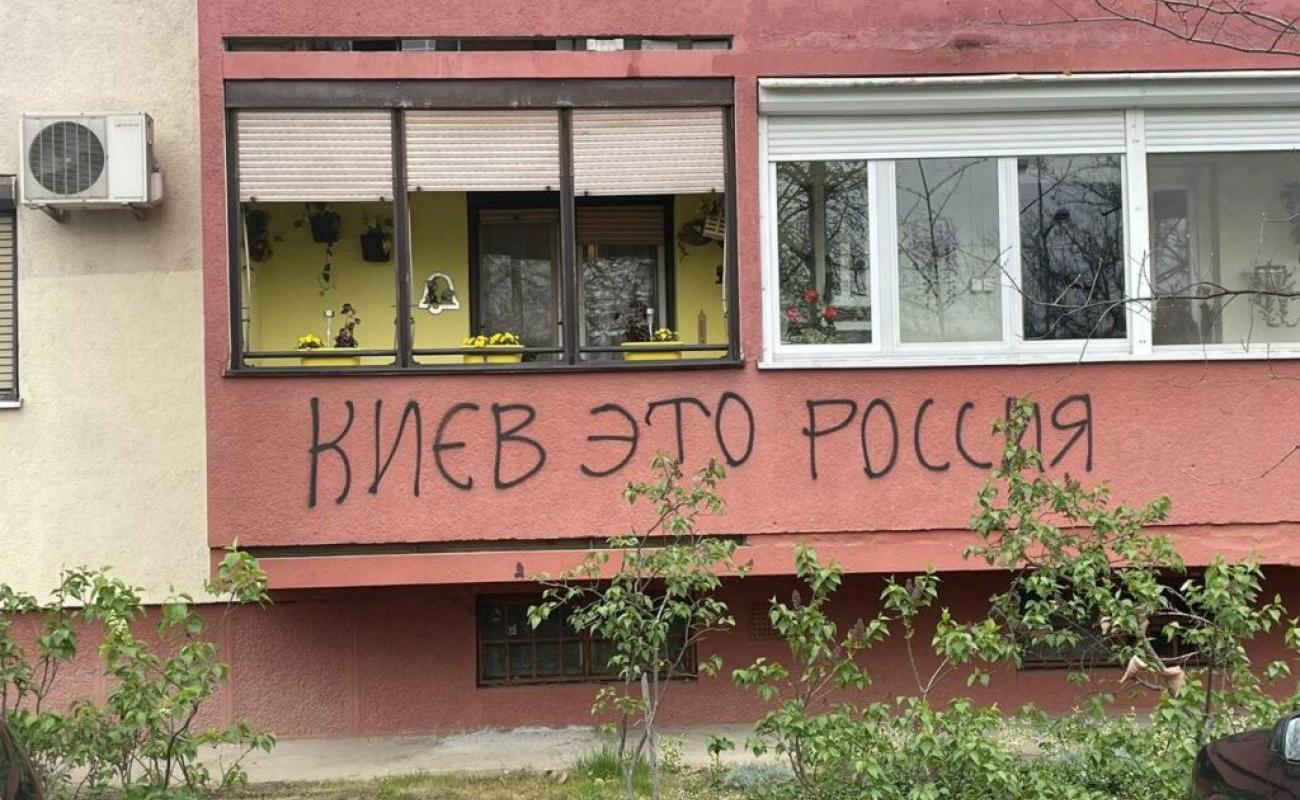
"The consequences of such campaigns are profound. In Bosnia and Herzegovina, Serbia and Montenegro, there is a decline in trust in the EU, especially among young people." Mi
In recent years, Russia has developed an extremely sophisticated disinformation apparatus aimed at undermining trust in the European Union, NATO, and liberal democratic institutions. One of the key narratives in these campaigns is to portray Germany and other leading EU states as societies in deep economic, political, and moral crisis.
This narrative is then targeted in EU candidate countries, particularly in the Western Balkans, to generate Euroscepticism, strengthen pro-Russian political options, and slow down integration processes.
Germany has been a major target of Russian disinformation operations for years. According to an analysis by Deutsche Welle, Russian campaigns have intensified in the run-up to the German elections, with the aim of discrediting the political center parties and strengthening radical options. Experts from CeMAS say that most of the fake news is directed against the Greens, CDU and SPD, while the AfD, a party that advocates a softer approach to Russia, is mentioned almost exclusively in a positive context.
Examples include fabricated stories about the mental breakdown of CDU candidate Friedrich Merz, which have been viewed more than 5.4 million times on the X platform, and false accusations of corruption scandals involving senior Green officials such as Robert Habeck and Claudia Roth. Such campaigns have a dual function: to destabilize the political center in Germany and to create the perception that the EU is in deep crisis, unable to cope with internal challenges.
Russia’s information manipulation strategy is based on several key goals: weakening the EU as a geopolitical actor, strengthening pro-Russian political forces in the Union’s neighborhood, and preventing further NATO expansion. If the EU is portrayed as dysfunctional, divided, and economically unstable, candidate countries lose motivation to reform and align with European standards. In such an environment, pro-Russian parties more easily promote narratives of “alternative partnerships,” “neutrality,” or “balanced politics.”
The Balkans as a training ground for propaganda
The Western Balkans are particularly vulnerable to such narratives due to unresolved ethnic and political tensions, weak institutions, low media literacy, the presence of pro-Russian political and religious structures, and the slow process of EU integration.
At the Sarajevo Security Conference in 2024, experts warned that the Western Balkans were Vladimir Putin's next front and that the Kremlin was using the region as a training ground for information warfare, including the spread of disinformation and the instrumentalization of ethnic and religious divisions.
Dr. Azeem Ibrahim of the NewLines Institute for Strategy and Policy stressed that Russian influence in the region is “a consequence of the West’s retreat” and that Moscow is skillfully exploiting the vacuum created by the lack of a clear European perspective. Conference director Hikmet Karčić pointed out that the Kremlin has used the Western Balkans for years as a training ground for information operations, including the spread of disinformation and the exploitation of ethnic tensions.
Regional analysts also warn of the growing intensity of Russian operations. Montenegrin analyst Miloš Vukanović of the CDT states that “the Russian narrative of a decadent West and a failed Europe is deeply rooted in a part of Montenegrin society, especially through religious structures and media connected to pro-Serbian political actors”. Serbian security expert Zoran Dragišić warns that “Russian influence in Serbia is the strongest in the region precisely because it relies on emotions, identity and historical myths, rather than rational arguments”.
An analysis by the magazine European Security & Defence highlights that the Western Balkans have become “a key indicator of the changing security order in Europe”, shaped by growing external influence, especially Russian. The region, according to this analysis, has become an area of strategic competition, where “age-old fault lines are being reactivated”, and the stability of the Balkans is becoming crucial for the wider Euro-Atlantic environment.
Russian disinformation campaigns in the region most often rely on several recognizable narratives. The first is the exaggeration of economic problems in the EU, especially in Germany. Local pro-Russian portals and social networks often convey sensationalist stories about the "collapse of German industry", alleged mass protests against governments and fabricated social crises. The goal is to create the impression that the EU is not a stable destination and that "it has nothing to offer".
The second narrative is the emphasis on the "double standards" of the EU towards the Balkans. This narrative suggests that the EU favors some countries, deliberately slows down the integration of BiH, Serbia, North Macedonia and Kosovo, and "humiliates" local politicians.
The third narrative is the promotion of Russia as a “protector of traditional values”, especially in Serbia, the Bosnian entity Republika Srpska and parts of Montenegro. Russia presents itself as a defender of Orthodoxy, an opponent of the “decadent West” and an ally in the fight against “Western imperialism”.
Profound consequences for society
When looking specifically at the countries, the narratives become even clearer. In Serbia, the dominant narrative is that the EU is “hostile to Serbian interests”, while Russia is “the only sincere ally”. In Republika Srpska, the narrative of a “failed Europe” is used to justify a political distancing from the EU and a rapprochement with Moscow. In Montenegro, Russian campaigns target divisions between the pro-Western and pro-Serbian blocs, using church structures and the media to spread messages of “spiritual endangerment” and “Western decadence”. In North Macedonia, Russian narratives focus on dissatisfaction with the Prespa Agreement and the claim that the EU has “deceived Macedonians”. In Bosnia and Herzegovina, the narratives are fragmented: among the Bosniak public, the story of “EU hypocrisy” is spread, while among the Serbian corpus, the idea that the EU is “anti-Serbian” and that Russia is the “protector of Serbian interests” is promoted.
Additional insight into the narratives is provided by the regional project Fact Content Lab, which analyzed the most common disinformation about the EU in the Balkans. Narratives about the imposition of LGBTQ values, economic destruction, resource exploitation, and nostalgia for Yugoslavia as “better times” were identified.
The consequences of such campaigns are profound. In BiH, Serbia and Montenegro, trust in the EU is declining, especially among young people. Disinformation about a “failed Europe” contributes to the feeling that integration is not worth the effort. Parties that advocate neutrality, balancing or openly pro-Russian positions are gaining popularity. Disinformation deepens existing ethnic and political divisions, which hinders reforms and slows down progress towards the EU. At the same time, the region is becoming increasingly vulnerable to hybrid threats, including cyberattacks, information manipulation, political infiltration and the instrumentalization of religious institutions.
The response to Russian disinformation must be multifaceted: strengthening media literacy, transparency of digital platforms, support for independent media and more active EU engagement. The slow pace of EU integration creates space for Russian influence, while faster and clearer processes would reduce the region’s vulnerability.
Haris Ljevo (Autonomija)
This article was published in collaboration with Res Publica, the digital citizenship platform of the Institute for Communication Studies in Skopje, North Macedonia.