
Cold Peace In The Shadow Of Ukraine – OpEd
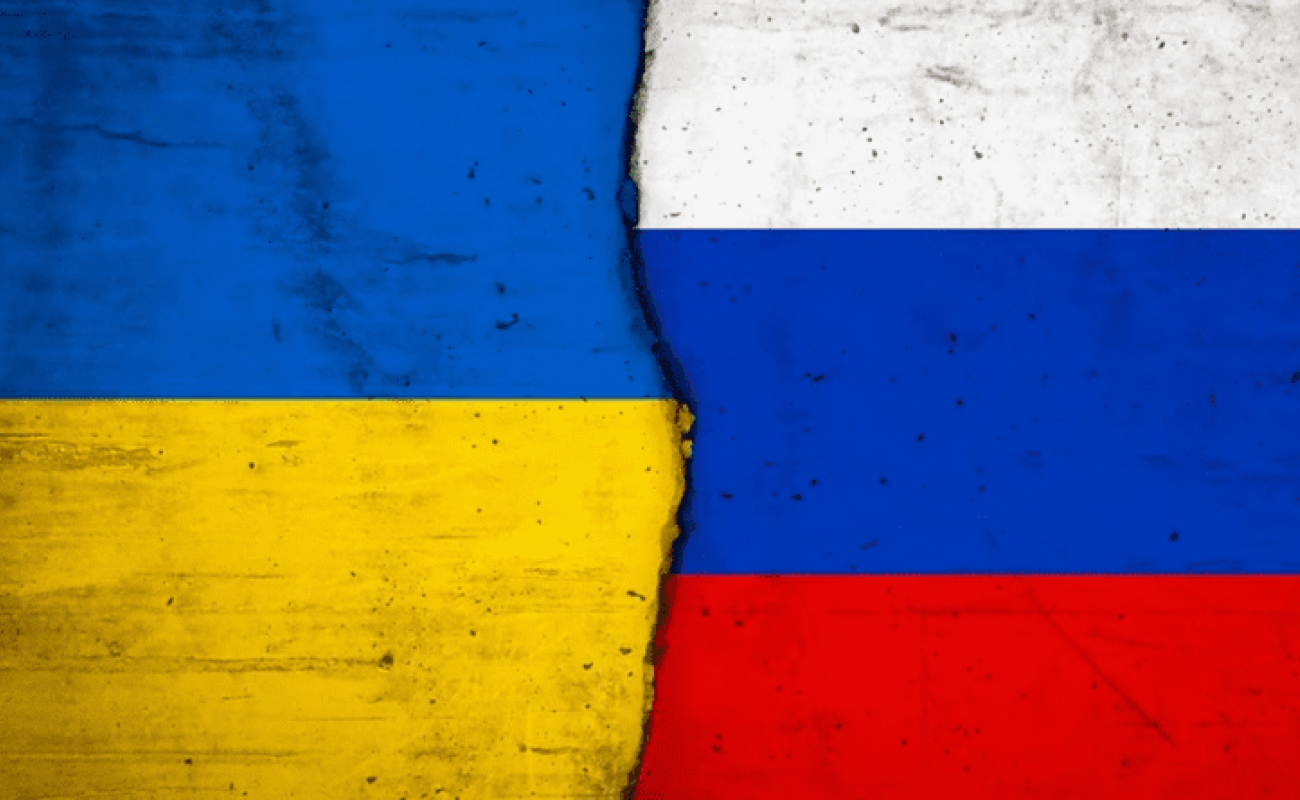
The Russo-Ukrainian War is entering its fifth year as a test of the Westphalian principle of state sovereignty. Despite immense losses, the conflict has remained relatively static, locked in a set of front lines. Although the fighting is a “mutually hurting stalemate” in which both parties recognise that victory is unlikely, a stalemate is not automatically the same as peace. Russian President Vladimir Putin recently observed that “the war is coming to an end,” but words carry little weight in turning a conflict into a lasting ceasefire. Yet even without any guarantees of non-use, there would still be a security dilemma and a commitment problem. In a political sense, therefore, “peace” means a relaxation of tension and a strategic shift on the part of Moscow toward the Euro-Atlantic community.
The main obstacle to bringing the war to an end is what International Relations scholars call a security dilemma, where actions taken to enhance one’s security are perceived by others as posing a threat. Ukraine’s quest for NATO membership is seen by the Ukrainians as insurance against future Russian aggression, while the Russians perceive it as encirclement. Conflict between Russia and Ukraine is likely to continue to be driven by deep mutual suspicion and turn to force by 2026, with each side viewing the other’s efforts to shape the other’s decisions as a threat. The causes of the conflict are complex and multifaceted, and the bargaining model of war is only one of the perspectives that can be usefully applied to the current Russian–Ukrainian impasse. Importantly, even fully rational parties can fail to reach agreement if one side possesses greater information about the terms of the conflict, or if the conflict is indivisible, in the sense that one side is unwilling to make concessions on core issues, such as Ukraine’s sovereignty and territorial integrity. For the Kremlin, maintaining influence in the sphere commonly referred to as “Greater Russia” is crucial to the continued legitimacy and identity of the regime.
Even after achieving their territorial goals, belligerents are generally more interested in violating the terms of a ceasefire than in upholding them. Ukraine will not place much trust in the promises made in the Budapest Memorandum. Failure to honour the agreement will have already occurred because the Minsk process has failed. From the Russian perspective, every territorial agreement is contingent on the West’s willingness to respect its obligations, a quality that has been in short supply in the past, above all with respect to NATO’s eastward expansion. From this vantage point, every promise can always be undone. The root cause of this dilemma is the so-called commitment problem. The worst result of war, neither side believes the other is bound by their promises, is likely to prevail. Future battles will be fought on the streets of Britain, and high-tech drones will unleash weapons that outgun the military by 2026. But instead of a victor emerging, a technological stalemate could leave the West frozen in a permanent “battleline” until it all explodes in a political catastrophe no one sees coming.
Getting a workable settlement to the Ukrainian conflict will require a shift from a war-fighting model to a security model. One such configuration could be gradual integration into enforceable neutrality. Ukraine would first get robust, NATO-level security guarantees for the status quo on the territories it currently controls. The control of the front line would be “frozen” in the sense that it would not be recognised as the border between Ukraine and “Russian” (formerly Ukrainian) annexation, but would serve as a sort of “no loss” buffer zone for Moscow. This arrangement would not resolve the war from a legal perspective, but it would help remove the driving force behind the conflict’s persistence: the security dilemma that has heretofore favoured escalation. Yet any guarantees provided to Ukraine would have to be cast strictly in a defensive framework, without provision for a permanent offensive strike capability. A monitored demilitarised zone, possibly supervised by neutral and Western parties, could serve to prevent any unintended escalation and could possibly lead to a reduction in hostilities.
Once negotiations have begun, economic tools could be used to structure an agreement that removes sanctions in stages as Russian forces are withdrawn, with frozen Russian assets used to rebuild Ukraine. However, the politics of the various factions within each side may prove an insurmountable obstacle to an agreement. In Ukraine, any agreement with Russia will be seen as a betrayal by many. In Russia, the huge domestic political cost of the war will be substantial and difficult to explain to the Russian public. The war has become an all-or-nothing proposition for Russia: the country is invested in the conflict to the point where there are high sunk costs, and the return on investment must be retrieved at all costs. So international mediators may have to resort to offering side payments or political incentives to leaders to reach a compromise at home.
The blood-soaked Russo-Ukrainian War is unlikely to be settled by a single, dramatic peace accord. Rather, it will be a prolonged struggle of strategic patience, of calculated entry and retreat, of incremental institutional innovation. The war in Ukraine has relentlessly exposed the cracks in the fragile security arrangements that emerged from the Cold War, and forced us to imagine a far more practical and robust security order in an increasingly multipolar world. Any lasting peace will respect the internationally recognised borders of Ukraine, even as it addresses Russia’s legitimate security concerns. But first and foremost, the conflict must be transformed from a violent struggle over identities and interests to a legitimate political contest. The human cost of the war cannot be repaired by political ideas. Yet the political costs can be redeemed by thoughtful political thought. Such thought may yet solve the commitment problem and mitigate the security dilemma, in order to establish a cold peace, durable and secure for the future of Europe.