
OPINION: Russia’s Big Lie: ‘Protecting’ Russian Speakers by Erasing Ukrainians
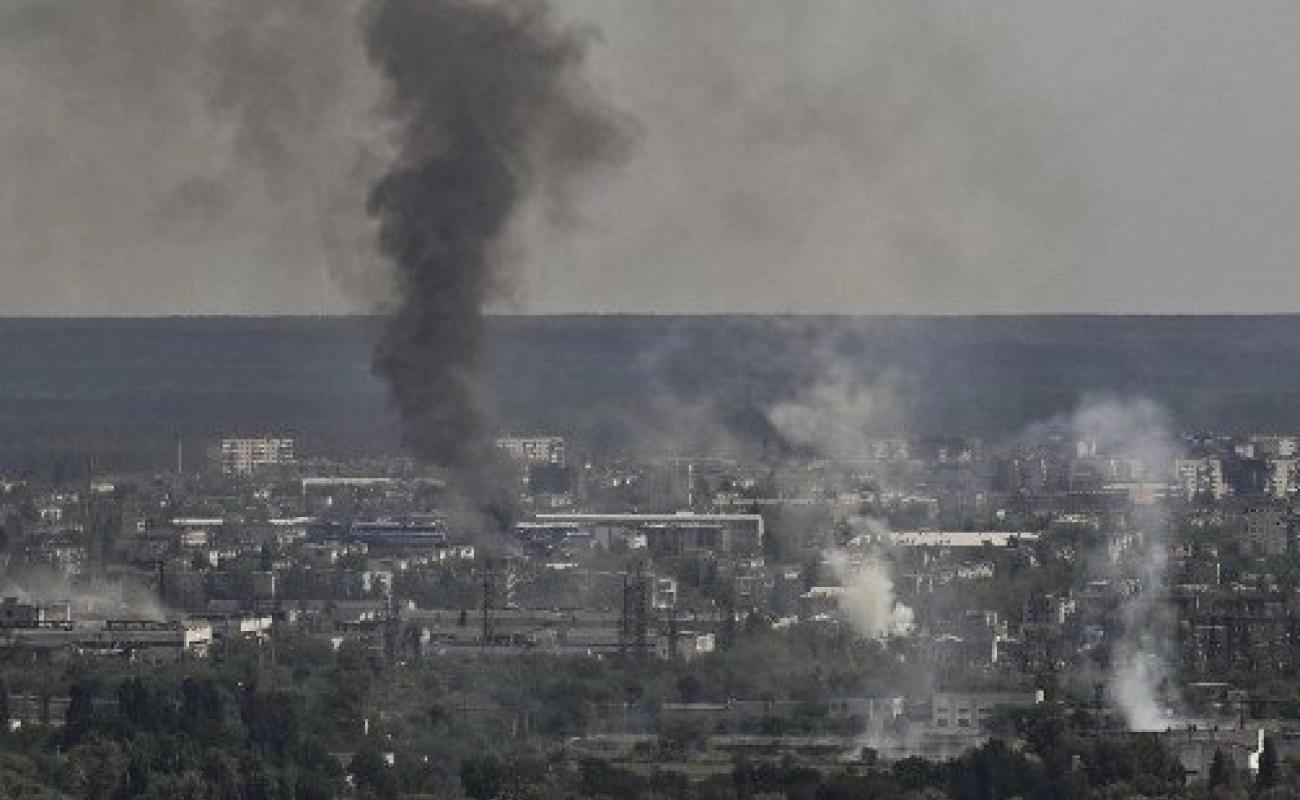
When Russian President Vladimir Putin launched his full-scale invasion of Ukraine in February 2022, he claimed to protect Russian speakers from persecution by nationalist extremists in Kyiv. It was a humanitarian mission, a “special operation,” he insisted.
But Ukraine’s Russian speakers didn’t cooperate. They fought back. In Ukraine’s Russian-speaking cities – Kharkiv, Mariupol, Severodonetsk, Lysychansk – residents built tank traps and barricades. Ukrainian soldiers, many native Russian speakers, and even ethnic Russians, gave orders in Russian as they battled the invasion.
And today, the Ukrainian military itself is filled with Russian speakers who chose to defend their country rather than submit to Moscow’s “protection.”
Russian speakers in Ukraine have turned decisively away from Russia, repelled not by “Ukrainian nationalism” but by Russia’s brutal imperialist campaign of cultural and physical genocide – a project of empire that recognizes no limit to its destructive reach. The supposed protector revealed as a destroyer.
But if we’re examining Russia’s treatment of Russian speakers and ethnic Russians, we must ask a more fundamental question – one that exposes the true nature of Russian imperialism:
What has happened to the millions of Ukrainians who have lived within Russia’s borders?
The vanishing
The numbers tell a story of systematic erasure. In 1926, the Soviet census counted 7.8 million Ukrainians living in the Russian Soviet Federative Socialist Republic (RSFSR) – a substantial minority comprising roughly 7% of the RSFSR’s population.
The vanishing
The numbers tell a story of systematic erasure. In 1926, the Soviet census counted 7.8 million Ukrainians living in the Russian Soviet Federative Socialist Republic (RSFSR) – a substantial minority comprising roughly 7% of the RSFSR’s population.
These were not recent migrants but established communities, some dating back centuries, living primarily in regions bordering Ukraine: the Kuban, the Don, the Volga region, and scattered throughout Siberia and the Far East.
By the 2021 Russian census, only 1.3 million people in the Russian Federation identified as Ukrainian – an 83