
Malign Russian influence in Bosnia and Herzegovina: Between political blockade, disinformation and geopolitical rivalry
Haris Ljevo
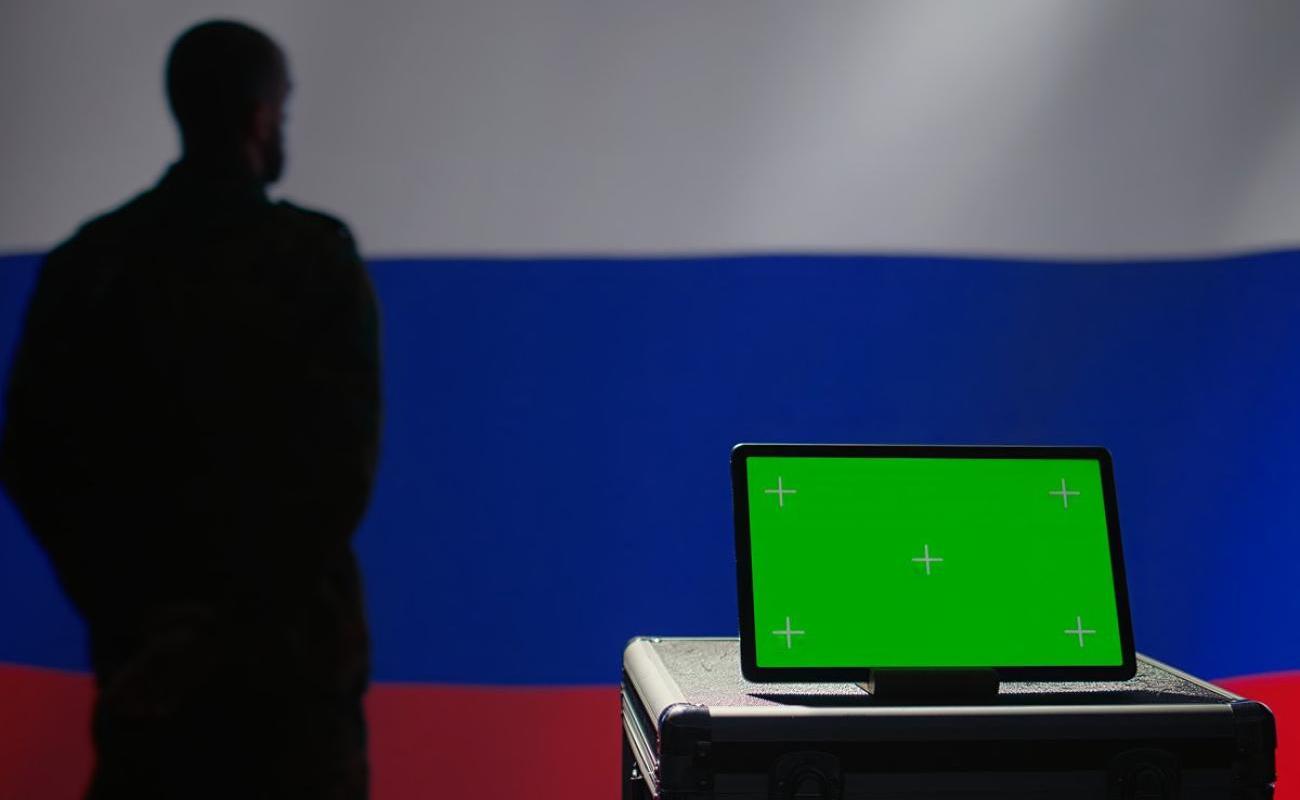
Research conducted in recent years shows that the information space is the single most important arena of Russian activity in Bosnia and Herzegovina.
For years, Bosnia and Herzegovina has been one of the key geopolitical arenas where the interests of the European Union, the NATO alliance and the Russian Federation intersect. Although Moscow has neither the economic strength nor the political capacity to offer Bosnia and Herzegovina a serious alternative to European integration, numerous studies and analyses show that Russian influence remains significant because of its ability to exploit existing political, institutional and ethnic divisions.
Unlike classical diplomacy or so-called “soft power”, Russia’s strategy in the Western Balkans has in recent years increasingly relied on hybrid activity. The goal is not necessarily to take control of the countries of the region, but to keep them in a permanent state of instability, political paralysis and geopolitical uncertainty.
It is precisely because of its complex constitutional structure, deep ethnic divisions and slow progress towards the European Union that Bosnia and Herzegovina is one of the most fertile environments for this kind of activity.
Moscow’s strategy: Destabilisation instead of dominance
According to a study by researcher Malwina Cymanowska on foreign influence in the Western Balkans, Russia largely refrains from using traditional instruments of attraction in the region, such as economic development, cultural exchange or institutional cooperation. Instead, its strategy rests on intimidation, strategic ambiguity, sowing mistrust and exploiting local crises.
The Carnegie Endowment for International Peace reaches a similar conclusion. In the analysis “Between the EU and Moscow: How Russia Exploits Divisions in Bosnia”, Dimitar Bechev argues that it is precisely the institutional dysfunctionality of Bosnia and Herzegovina that has enabled Russia to become an important factor in regional politics, even though its actual economic presence remains limited. Moscow is not trying to build a functional alternative to the European project; rather, it uses existing weaknesses to hinder the country’s integration into NATO and the European Union.
In this sense, Russia’s approach to Bosnia and Herzegovina follows a broader pattern of activity visible across the Western Balkans. The goal is not a Russian victory, but preventing the West from succeeding.
A key ally: Milorad Dodik and the authorities of Republika Srpska
For years, Russia’s most important political foothold in Bosnia and Herzegovina has been the leadership of Republika Srpska, an entity of Bosnia and Herzegovina, headed by Milorad Dodik.
According to a study prepared for the European Parliament’s Committee on Foreign Affairs, Moscow consistently supports Dodik in challenging the institution of the High Representative, opposing European Union sanctions against Russia and constantly threatening the secession of Republika Srpska.
Christian Schmidt, the former High Representative of the international community in Bosnia and Herzegovina, recently stated that Dodik largely represents Russia’s interests in the Western Balkans and that he has held a series of meetings with Vladimir Putin since the start of Russia’s aggression against Ukraine. Schmidt warns that such relations are not merely a matter of bilateral cooperation, but part of a broader strategy of contesting Western influence in Bosnia and Herzegovina.
Russian support is, for the most part, neither material nor military. It takes the form of diplomatic protection, political legitimisation and the international promotion of a narrative according to which the institutions of Bosnia and Herzegovina have been imposed, while pressure from the European Union and the United States of America is portrayed as an attack on the interests of Bosnian Serbs.
Such rhetoric intensified particularly after the start of the war in Ukraine, when the Kremlin began to use identity-based and historical narratives far more aggressively in the countries it considers part of its sphere of political influence.
Disinformation as the main weapon
Research conducted in recent years shows that the information space is the single most important arena of Russian activity in Bosnia and Herzegovina.
The European Parliament study states that Russian narratives are spread primarily through media from Serbia and Republika Srpska, as well as through local portals that republish content from Sputnik, RT and other pro-Russian sources without clearly indicating where the information comes from.
These narratives are mostly built on a handful of recurring messages. NATO is portrayed as a factor that allegedly threatens regional stability, while the European Union is presented as a weakened and failing project with no clear future. At the same time, Russia’s aggression against Ukraine is relativised or justified, often through claims that it is a legitimate response to Western policy. Messages about the alleged endangerment of Serbs in the region hold a special place; they are tied to a broader narrative in which Russia acts as the protector of traditional, conservative and Orthodox values.
According to an analysis by the Dutch institute Clingendael, Russia uses politicians, the media, parts of the Serbian Orthodox Church and various informal networks to spread the same political messages in Serbia, Montenegro and Bosnia and Herzegovina.
Particularly worrying is the fact that such content intensifies during election campaigns and political crises, when citizens are most susceptible to manipulation.
The “Rybar” case: A new generation of propaganda
In recent years, researchers’ attention has been drawn to the Russian media network “Rybar”, which European security experts no longer regard as an ordinary propaganda channel.
According to a report by the Spanish company Alto Intelligence, Rybar is what the authors call an “advanced persistent manipulator”. Its aim is not merely to plant individual pieces of disinformation, but to shape, over the long term, the way audiences interpret events.
Rybar operates via a Telegram network, and through its regional channel Balkanar it actively follows political developments in Bosnia and Herzegovina. Detektor’s analyses have shown that this channel has repeatedly spread narratives about alleged preparations for conflict, pressure on Republika Srpska and threats to the Serb people.
In an interview with Detektor.ba, Atlantic Initiative researcher Nejra Veljan warns that contemporary propaganda does not necessarily rely on lies.
“It is enough to take real facts out of context, link them to broader geopolitical narratives and then repeat them through various communication channels until a particular interpretation becomes dominant.”
This poses a particular challenge for Bosnia and Herzegovina, as the country still has neither a developed strategy for responding to hybrid threats nor a coordinated system for monitoring foreign information influence.
Hybrid activity below the threshold of conflict
A European study on Russian hybrid activity shows that Russian influence does not rely on a single instrument, but on a combination of different, mutually reinforcing methods. These include covert political financing and support for individual actors, widespread information operations and propaganda, as well as the use of local political and legal mechanisms to block or slow down institutional processes. Economic and energy levers also play an important role, as do cyber operations aimed at gathering data or spreading influence, and links with various security and paramilitary structures that can serve as an instrument of political pressure.
What all these activities have in common is that they take place below the threshold of open conflict. Their aim is not to provoke war, but to weaken institutions, trust in democracy and support for European integration.
According to Levan Kakhishvili, the author of the study, Russia seeks to heighten fear, political cynicism and mistrust among citizens, because such a social environment makes it harder to carry out reforms and accelerates political radicalisation.
In other words, the more divided and institutionally weak Bosnia and Herzegovina is, the more effective Russian influence becomes.
The security dimension and paramilitary networks
One of the most sensitive aspects of Russian activity concerns contacts with various nationalist and paramilitary groups.
Several international reports mention organisations such as the Night Wolves, Serbian Honour and the People’s Patrol. Their function is not to pose a serious military threat, but to demonstrate presence, generate political pressure and strengthen a sense of connection with Russia.
Further concern was raised by an investigation that uncovered training camps for Moldovan citizens in Bosnia and Herzegovina and Serbia during 2024. According to later findings by the European Parliament, individuals linked to Russian networks underwent training in inciting unrest during the Moldovan elections and the referendum on the European Union.
Participants were allegedly taught techniques for breaking through police cordons, operating drones and organising mass protests.
Although the Prosecutor’s Office of Bosnia and Herzegovina is conducting an investigation, the case itself shows that the Western Balkans remains fertile ground for the activities of various networks linked to Russian interests.
Economic influence smaller than often portrayed
Unlike its political and media activity, Russia’s economic influence is often overestimated.
Malwina Cymanowska’s research shows that the European Union is by far Bosnia and Herzegovina’s most important economic partner. While more than half of the country’s foreign trade is conducted with EU member states, Russia’s share of total imports stands at around one per cent.
One of the best-known examples of Russia’s economic presence is the Brod Refinery, which has been owned by the Russian company Neftegazinkor since 2007.
However, instead of development and modernisation, the refinery accumulated losses and debts for years. The number of employees was significantly reduced, and after a fire in 2018, production practically came to a halt.
For this reason, many analysts believe that Moscow views energy investments primarily as a geopolitical tool rather than as a serious economic project.
Similar assessments can also be found in reports by the European Parliament and the Council on Foreign Relations (CFR), which conclude that Russia’s political influence far exceeds its actual economic significance in the region.
Why is Bosnia and Herzegovina particularly vulnerable?
Russian influence would not be so pronounced without Bosnia and Herzegovina’s internal weaknesses.
According to the conclusions of European researchers, Bosnia and Herzegovina’s vulnerability stems from a combination of long-standing structural problems. Chief among them are marked ethnic polarisation, dysfunctional institutions and widespread corruption, but also political fragmentation that makes it difficult to adopt and implement decisions. Additional problems are poor media literacy and citizens’ low level of trust in institutions, while slow progress towards the European Union creates room for growing frustration and the spread of alternative political narratives.
Russia does not create these problems. It exploits them.
This is also confirmed by the Carnegie analysis, which concludes that Moscow in fact profits from the prolonged political limbo in which Bosnia and Herzegovina has found itself for years. The slower the process of European integration, the more room there is for actors who offer alternative narratives and deepen citizens’ frustrations.
How to respond to malign influence?
Almost all relevant research reaches a similar conclusion: the answer to Russian influence is neither censorship nor security repression, but the strengthening of democratic institutions.
The European Parliament considers that the response must be comprehensive and focused on strengthening the resilience of the democratic system. This entails greater transparency in political financing and stronger mechanisms to protect electoral integrity, as well as continued support for independent media and for the development of citizens’ media literacy. In addition, it stresses the need to improve cybersecurity, better protect critical infrastructure and establish a system for monitoring and early detection of hybrid threats.
Christian Schmidt also stresses that the European Union must offer a more credible membership perspective, as the political vacuum has proved to be an ideal environment for the activities of external actors.
Exploiting the weaknesses of the state
Today, Russian influence in Bosnia and Herzegovina is not primarily military or economic. Its strength stems from its ability to exploit the existing weaknesses of the state, foster mistrust between communities, support political actors prone to blockades and shape public perception through media networks.
Bosnia and Herzegovina is not facing a classic threat of occupation or open aggression. It faces a far more sophisticated challenge: the long-term erosion of trust in institutions, democracy and the country’s European future.
The question of Russian influence is not primarily a foreign policy issue. It is, above all, a test of Bosnia and Herzegovina’s ability to develop more resilient institutions, more accountable political elites and better-informed citizens. In this struggle, what will be decisive is not how strong Russia is, but how ready Bosnia and Herzegovina is to remove its own weaknesses that make such influence possible.