
From Prison to Prison: How Information About Ukrainian Detainees Gets Lost in Russia
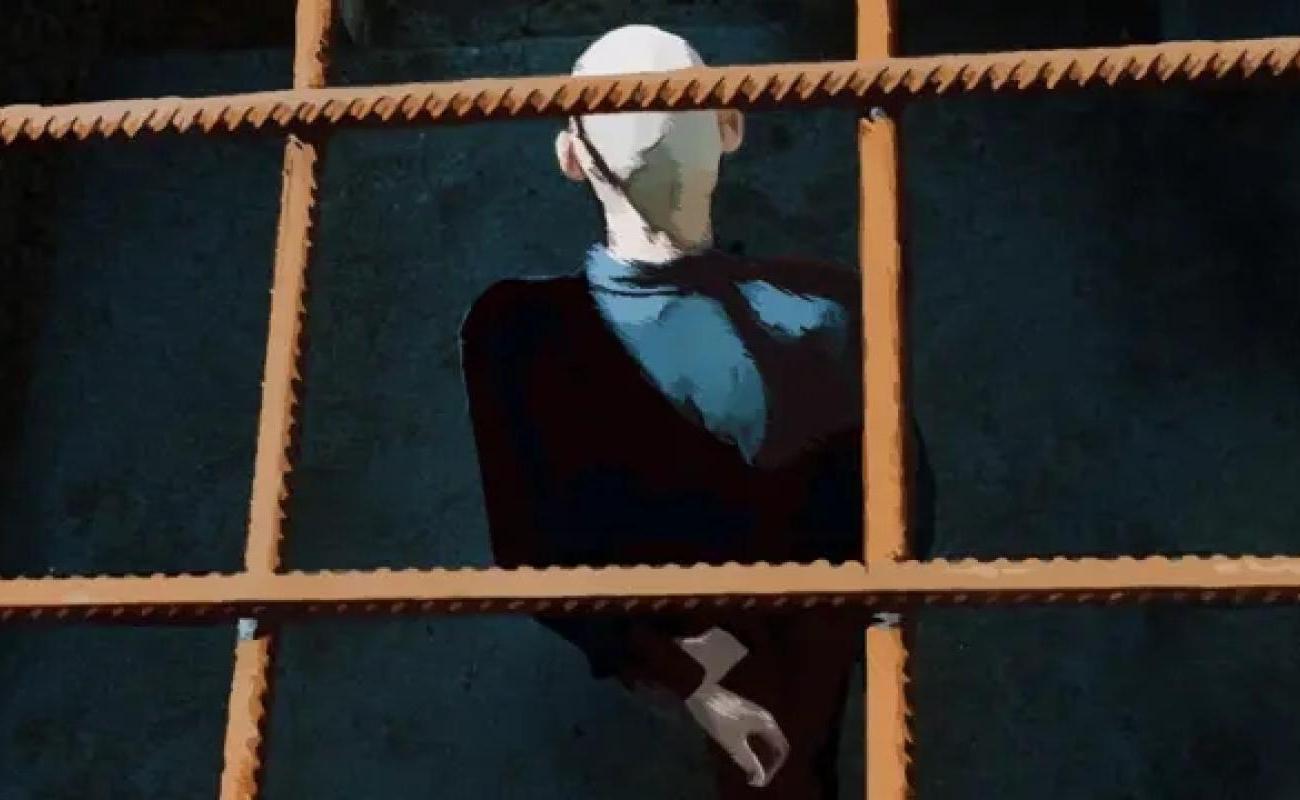
Since August 2026, "Donbas News" has been investigating the history of Penal Colony No. 32 in Makiivka, located in the temporarily occupied Donetsk region. We are interested not only in who was held at this facility and the charges upon which individuals were convicted by occupation courts, but, above all, in determining what happens to Ukrainian prisoners of war and civilian detainees after they are transferred to Russia—specifically, where they are taken and how their families can learn about the fate of their loved ones.
Penal Colony No. 32 housed various categories of detainees. Among them were Ukrainian soldiers captured before the full-scale invasion, defenders of Mariupol taken prisoner in 2022, and civilians from the occupied territories.
Some Ukrainians have been sentenced by the occupation authorities to long prison terms on charges of "terrorism," "espionage," "high treason," and other crimes against the security of the Russian Federation. These charges and the verdicts handed down by occupation courts do not, in themselves, constitute proof of guilt. Some of these individuals have been held in Russian captivity for seven, eight, or even nine years.
At the end of the summer, we learned that Ukrainians held at the Makiivka facility had been transported to penal institutions within Russia. For their families, this meant not only a greater physical distance from their loved ones but also the risk of losing all information regarding their whereabouts. Therefore, the editorial team decided not to limit itself to merely reporting on the start of the transfers, but to follow the subsequent fate of these individuals.
Journalist Olena Smirnova received the initial reports regarding the transfer of Ukrainian prisoners of war and civilian detainees from the Makiivka prison (No. 32). This information was relayed by relatives and sources within the occupied territory. Initially, we reported on the transfer of six people, but further investigation revealed that the group was significantly larger.
In September, we learned that plans were in place to transfer more than 30 Ukrainians to prisons in Russia. Among them were soldiers captured prior to the full-scale invasion, as well as civilians unlawfully convicted by the occupation authorities. These individuals have already spent a substantial portion of their lives in captivity, and now they face a new ordeal: being moved to prisons located hundreds or even thousands of kilometers away from Ukraine—with no clear information provided to their families regarding the routes taken or their final destinations.
We later found out that some of the prisoners were transferred to prisons in Tambov, Moršanska and Kizil. However, confirming the whereabouts of individual persons does not provide a complete picture of what is happening with the entire group. We have information about the possible further transfer of other prisoners, but we cannot claim to know the fate of each of them.
One of the concrete results of this work was the story of soldier Vitali Čmi. At the end of October, his family received confirmation of a new place of detention after being transferred from Makijevka. Vitaly, who was sentenced to 17 years in prison by Russia, managed to deliver a letter to his mother from the maximum security prison in Kizil, the capital of the Republic of Tuva. For relatives, it was an opportunity to finally find out where the person is, and for journalists, it was confirmation of one of the routes of movement of Ukrainian prisoners to Russia.
This case illustrates well why monitoring transfers requires constant attention. When a person is transported from one prison to another, the family can lose even the limited contact they had a long time ago. Letters stop arriving, the new place of detention remains unknown, and obtaining reliable information from Russian institutions is extremely difficult. For families who have been waiting years for the return of their loved ones, each such transfer means a new period of uncertainty.
It is also not easy for journalists to determine the circumstances of the transfer. Information comes in fragments, often through relatives, correspondence or testimonies of people who have already returned from captivity. Every report should be verified, because a mistake about a person's whereabouts can create false expectations among loved ones. At the same time, the lack of confirmation does not mean that the search can be stopped. On the contrary, it is necessary to continue collecting testimonies, comparing information and returning to stories about which the newsroom has already written.
In three months, "Donbas News" published five interconnected materials about Makejevo Prison No. 32. We started with news about the first cases of transfer, later investigated the scale of transfers, determined new places of detention and told the stories of specific people.
In parallel, we are working on other stories involving Ukrainians who have been illegally imprisoned by Russia. Specifically, we have addressed the case of a civilian prisoner, Vitalii Ilyin—originally from the Donetsk region—who was sentenced to 12 years in prison by the occupation authorities. He is seeking to re-establish contact with his loved ones and draw the attention of Ukrainian state authorities to his plight. Such stories help provide a broader perspective on the issue, as we are discussing not only prisoners of war but also Ukrainian civilians who have been held in Russian detention facilities for years.
The situation is particularly difficult regarding civilians. While they are protected under international humanitarian law—most notably the Fourth Geneva Convention—the legal mechanisms for their release and return differ from those applicable to prisoners of war. Russia systematically violates international standards concerning the treatment of detained Ukrainians, often framing the persecution of civilians as criminal cases.
The Russian side frequently accuses Ukrainians in temporarily occupied territories of "terrorism," "treason," and "espionage." Other charges include sabotage, illegal arms trafficking, participation in terrorist organizations, and various other crimes against the security of the Russian Federation.
These charges result in long prison sentences, and individuals are frequently transferred between different penal institutions. As a result, a detainee may spend years in detention facilities in occupied territory or in Russia, while their family has no clear way to determine their whereabouts or seek their release.
Ukrainian civilians do return home as part of detainee release agreements; however, there is no mechanism for their inclusion in such agreements that is clearly understood by the public. Unlike prisoners of war—for whom specific international legal mechanisms for repatriation exist—the return of civilians requires separate decisions and agreements. At the same time, families are often left in the dark regarding what factors influence the possibility of release, how priorities are determined, and whether their own actions might make a difference.
This gives rise to the assumption that the actions of relatives or public attention might influence the fate of a specific prisoner. We do not have sufficient information to confirm or refute such assumptions. Negotiations regarding the release of individuals depend on many circumstances—most notably Russia’s stance—and, by their very nature, parts of the negotiation process remain non-transparent.
However, a lack of clear communication with families creates room for distrust and manipulation. Relatives of military personnel and civilians transferred from the Makiivka prison ask why their loved ones have remained in captivity for seven to nine years, and whether any steps can be taken to hasten their return. These are natural questions for people who have lived for years in a state of uncertainty. At the very least, they should know whom to contact, how to verify information, and what mechanisms the state employs to determine the fate of Ukrainians held in Russian captivity.
Ukrainians who were captured prior to February 24, 2022, require special attention. Some have been in Russian captivity for over eight years, yet their stories are gradually fading into the background amidst new cases involving the abduction of military personnel and civilians. This does not mean that state authorities have forgotten them; rather, society often lacks information regarding what is happening to these individuals and what the prospects are for their return.
On October 23, two Ukrainians who had been held at Makiivka Prison No. 32 returned from Russian captivity as part of an exchange. One of them was Serhiy Heremes, who spent eight years in captivity. After his release, he gave an interview to Novini Donbas, speaking about the conditions of detention and the people who remained behind bars.
This interview served as an important continuation of our research. Testimonies from an individual who has returned from captivity help verify information regarding detention conditions and reconstruct circumstances that cannot be determined from official reports. At the same time, they remind us that behind aggregate figures and reports on prisoner exchanges lie real people—many of whom have been awaiting their release for nearly a decade.
For regional news outlets, covering such stories is of particular significance. We are familiar with the communities from which these prisoners hail, maintain contact with their families, and have spent years documenting events in the occupied territories—even from the period preceding the full-scale invasion. This enables us not only to report on individual cases but also to track the fates of these individuals over an extended period, even when new information emerges months after an initial report.
Furthermore, this type of journalistic work is vital for the families themselves. Such coverage not only helps preserve information about the prisoners but also gives their loved ones a chance to be heard. Journalists engage with them; their stories are read, discussed, and shared. For those who have spent years trying to draw attention to the plight of their relatives, this serves as a significant form of public support.
This impact becomes especially pronounced when material produced by regional outlets is picked up by national media. For instance, *Ukrainska Pravda* disseminated information—originally reported by *Novyny Donbasu*—regarding the transfer of Ukrainians from the Makiivka prison. Thanks to this, the story, which began with the reports of relatives and the work of a regional journalist, received much wider coverage. Families see these publications and understand that information about their loved ones does not stay within the confines of one medium. This shows the value of Ukrainian journalism as a system where regional newsrooms can find and document important stories, and national newsrooms help bring them to the attention of a wider audience.
Of course, there is no reason to claim that the release of material automatically brings a particular person closer to release. However, systematic journalistic work helps document prisoner movements, preserve testimonies, identify gaps in information, and maintain public attention to the problem.
The story of the Makiivka prison (Facility No. 32) highlights the critical importance of systematically tracking the fate of Ukrainians held by Russia in detention centers. Particular attention must be paid to military and civilian detainees captured before February 24, 2022, as well as to civilian detainees in general. For many of these individuals, their imprisonment has lasted more than four years—and for some, nearly a decade. Each new development makes it increasingly difficult to determine their whereabouts or maintain contact with their families.
This requires not only consistent documentation and verification of information regarding the movement of these individuals, but also accessible channels of communication between state institutions and their families. Families need to know how to report new developments, whom to contact for information, and what options exist for determining the fate of their loved ones and securing their return.
We are currently aware that some Ukrainians have been transferred from the Makiivka prison to Russia; we have managed to identify the detention locations for some of them and have spoken with one of the released soldiers. At the same time, the fate of others remains unclear, and our editorial team continues to work on this issue.