
Ahead of Taiwan’s Local Elections, China’s Interference Looms Large
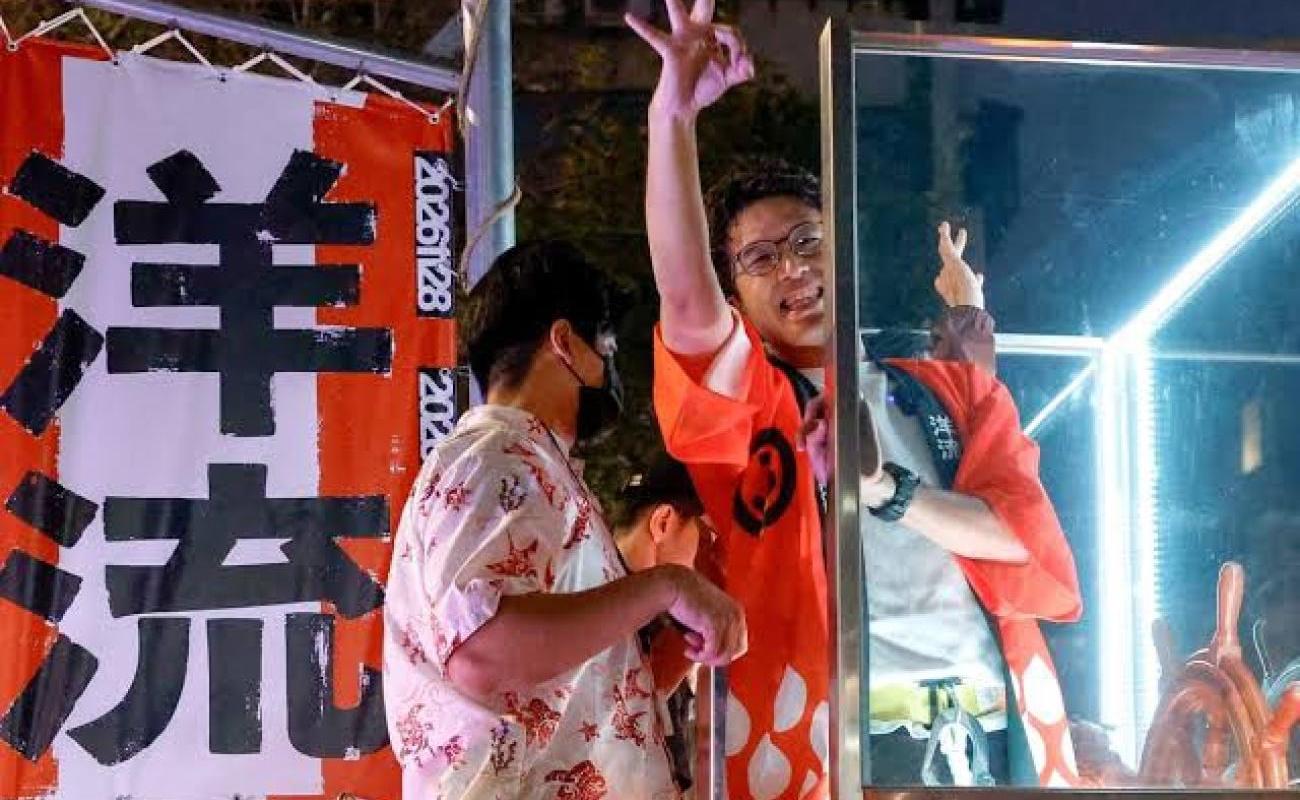
Taiwan is scheduled to hold local elections, also called the “nine-in-one” elections, on Saturday, November 28. Voters will select city mayors and county magistrates throughout all of Taiwan’s 22 cities and counties. Campaigns focus on local issues, such as housing, welfare, transport, and the environment, rather than Taiwan’s contentious ties with China.
Beijing, nevertheless, has become the elephant in the room due to the increasing threat posed by its attempts to interfere in Taiwan’s elections.
China’s attempts to subvert Taiwan’s local elections and control the island’s domestic politics are not new. Beijing’s strategy to undermine Taiwan’s November elections relies on both intimidation and inducements – delegitimizing Taiwan’s national government by framing its governance as “unstable,” holding military exercises around Taiwan to manipulate public perception, offering campaign financing for candidates supporting unification with China, and subsidizing airfare for Taiwanese businesspeople based in China to return to Taiwan to vote for pro-China candidates.
But Chinese Communist Party (CCP) interference activities in Taiwan’s local elections have become more complex as technology advances. Ahead of the November 28 vote, Taiwanese officials flagged nearly 2,700 China-linked accounts to Meta as part of an information warfare campaign orchestrated by the CCP to sow distrust, discourage voting, and incite public anger against the governing party, the Democratic Progressive Party (DPP). These accounts initially posed as ordinary Taiwanese users sharing snippets of daily life to gain trust, before shifting tactics to launch political attacks and urge voters to “abstain from voting.”
Beijing’s advances in artificial intelligence (AI) and AI-generated deepfakes make “methods of infiltration increasingly sophisticated,” warned Shen Yu-chung, deputy head of Taiwan’s Mainland Affairs Council (MAC). AI has now become a tool for election manipulation, making it “easier to produce misleading content” and conduct influence operations.
Shen said investigations into China’s election interference show that China has utilized AI to operate “massive facial recognition systems,” which could help Beijing collect data on Taiwanese people’s daily lives. This data, specifically facial images, could be combined with AI-generated content to dodge detection systems used by social media platforms to identify and remove fake accounts. Experts have warned that, by gathering detailed personal background information, the CCP could precisely target specific individuals, such as those with ties to the military or those who lean toward a particular party, for the dissemination of disinformation and the execution of cognitive warfare operations.
The CCP’s online infiltration tactics have been steadily changing. Online operations have gradually shifted from the use of crude, fraudulent identities that can be easily detected to the cultivation of accounts that appear to have legitimate personas. When these personas infiltrate online communities, the artificially generated “buzz” can be mistaken for real public sentiment. This can sway how people think about political issues.
For instance, the deliberate spread of messages like “voting is pointless” or “all candidates are the same” can discourage the electorate’s eagerness to participate. Such tactics will eventually erode public trust in the government and democratic institutions, thus diminishing the credibility of Taiwan’s democratic electoral system.
AI-generated social media campaigns rely primarily on non-political content, such as food, animals, celebrities, or sexually suggestive “clickbait” videos, while interspersing these with political messages that are pro-China or support unification. This technique of using messages anchored in “unrelated, celebrity-focused feeds” but aimed at political purposes was also observed during the U.S. midterm elections.
Certain fake accounts directly attack Taiwan’s ruling party, accusing it of corruption and belittling its governance. Others pose as DPP supporters, “liking” and sharing content from pro-China accounts that otherwise struggle to gain traction, thereby helping to amplify Beijing’s messaging.
To establish credibility, the CCP has also co-opted prominent public figures and influencers to adopt a nuanced strategy of “minor criticism, major backing” – offering minor, superficial critiques of China while advancing narratives that align with CCP policies and interests.
Beyond social media posts, Beijing also hires private investigators and uses public “wanted” lists as a form of cognitive warfare. The China & Taiwan Update, co-published by the Institute for the Study of War (ISW) and the American Enterprise Institute (AEI), revealed that officials from the Shanghai Public Security Bureau recruited a Taiwanese private investigator to surveil two prominent Taiwanese YouTubers and political commentators, “Ba Jiong” (八炯, Wen Tzu-yu) and “Min Nan Lang” (閩南狼, Chen Po-yuan) – both famous for exposing CCP United Front (the CCP department tasked with advancing Chinese influence abroad) tactics targeting Taiwan – while also gathering their personal information.
Furthermore, by subjecting individuals – such as Puma Shen, the DPP’s mayoral candidate for Taipei, online influencers, pro-Taiwan figures, and military personnel – to public “wanted” lists, doxxing, and surveillance, Chinese authorities and affiliated entities have conducted cognitive warfare in Taiwan. This campaign aims to instill a sense of defeatism among the public, fostering the perception that Beijing can infiltrate Taipei and monitor or punish opponents at any time. This “punishment and intimidation” tactic allows Beijing to “create a chilling effect in Taiwan, making voters afraid to openly support particular candidates or parties.”
Taiwan’s media environment is among the freest in Asia, with a diverse and vigorous press, ranking 28th out of 180 countries and territories in Reporters Without Borders’ 2026 World Press Freedom Index. Yet, it remains susceptible to prevalent disinformation campaigns, which usually get more intense during election seasons and evolve in tandem with social media developments. As AI has expanded rapidly and the threat of AI-generated manipulative content targeting candidates is rising, experts in Taiwan have advised the public to “stop, look, and listen” before consuming any information.
To navigate the hazard of influence and interference from China, Taiwan treats foreign information manipulation and interference (FIMI) as a national threat, shares experience and knowledge with counterparts in the United States, and strikes a balance between respecting civil liberties and strengthening its media ecosystem. In February, Taiwan’s National Security Bureau (NSB) launched its “9-in-1” Election Security Project – a dedicated security taskforce aimed at bolstering Taiwan’s democratic system and ensuring the November electoral process remains free from external interference. The Taiwanese government, legislators, and news outlets have also stepped up efforts to raise public awareness by warning against election disinformation and keeping citizens informed about tactics aimed at disseminating inaccurate information and provoking a societal backlash.
At the same time, Taiwan-based digital investigation and media literacy organizations, such as MyGoPen (麥擱騙), Taiwan FactCheck Center (台灣事實查核中心), Doublethink Lab (台灣民主實驗室), and FactLink (數位素養實驗室), have invested tech expertise and resources to pre-bunk, debunk, track information flows, and expose Chinese AI-generated propaganda and disinformation operations. Additionally, they have provided practical advice that could be used for fact-checking accounts, videos, images, stories, posters, and rumors across multiple platforms, including Threads, TikTok, and Facebook.
Ultimately, bolstering Taiwan’s resilience requires exposing Chinese malign tactics. Cultivating a transparent environment regarding Taiwan’s local elections is a crucial step toward safeguarding a democratic society. Encouraging people to discuss conspiracies they see online is another helpful way to counter information manipulation. Denunciations can help expose Beijing’s pre-election interference and bring greater attention to its influence operations.
On top of that, Taiwan must demonstrate resolve to push back against any forces that use political pressure to sway voters’ decisions. It is only with the unwavering determination to stand “resolute at the ballot box” that the Taiwanese people can sustain their morale in making independent judgments and defending Taiwan’s democracy.