
Four years of full-scale war in Ukraine
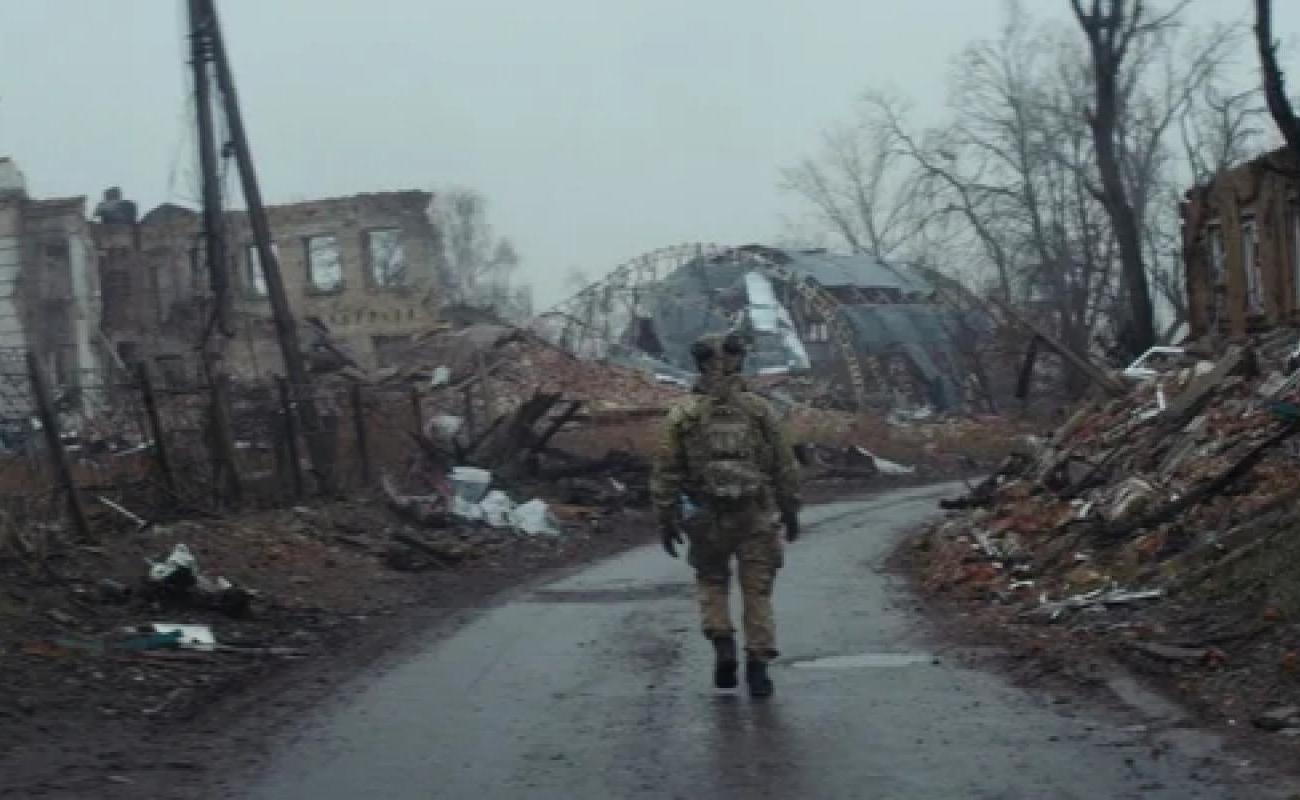
On the fourth anniversary of Russia’s full-scale invasion, we look back at the numbers that defined the fourth year of the carnage.
4,256 sq km of Ukrainian land occupied by Russia
According to the DeepState monitoring group, Russia seized 4,256 square kilometers of Ukrainian territory from February 2025 through January 2026.
At the same time, January marked a slowdown. According to DeepState’s figures, Russian troops seized 245 square kilometers that month — the lowest monthly figure since April.
By contrast, Russian forces advanced at nearly double that pace during the summer months and in November–December, seizing 450–550 square kilometers per month.
33% of Russian assaults in January focused on Pokrovsk
As Moscow intensified diplomatic pressure at the end of the fourth year of the full-scale invasion, insisting that Ukraine withdraw its Defense Forces from Donbas as a precondition for U.S.-mediated negotiations, Russian troops escalated their efforts on the battlefield to fully seize Donetsk Oblast.
According to DeepState data, 33% of all Russian assaults in January 2026 were concentrated in the Pokrovsk sector, currently the main axis of pressure and relentless enemy assaults.
Other key hotspots in Donetsk Oblast that month included the Kostyantynivka and Lyman sectors, which accounted for 12% and 8% of Russian assaults, respectively.
The second most intense frontline sector in January 2026 was Hulyaipole in Zaporizhzhya Oblast, where the number of assaults nearly doubled and accounted for 21% of all attacks.
Another 8% of Russian attacks were concentrated around Oleksandrivka, which is situated at the administrative intersection of Donetsk, Dnipropetrovsk, and Zaporizhzhya oblasts.
By late February 2026, this frontline sector had seen a series of successful Ukrainian counteroffensive operations. Ukraine’s Airborne Assault Forces, together with adjacent units, restored control over more than 400 square kilometers and eight settlements in the area.
80% of enemy air targets are now intercepted by unmanned aerial vehicles (UAVs)
Four years into Russia’s full-scale invasion, drones have become the dominant force on the battlefield.
In January, President Volodymyr Zelenskyy announced that drones now intercept 80% of enemy air targets. Over the past year alone, Ukrainian drones have hit nearly 820,000 Russian targets. This marks a dramatic shift from the early phase of the war when artillery and infantry played a decisive role.
"Artillery is still important, but in a different way. Personnel, and above all our infantry, are performing fundamental tasks. But the war itself is undergoing such an evolution that everything is becoming dependent on one crucial element: who can apply, change, and verify technology on the battlefield the fastest and strongest,” Zelenskyy said.
The overwhelming majority of drones striking Russian targets are Ukrainian-made.
On Feb. 12, a new long-range record was set when Ukraine’s Security Service (SBU) in coordination with other Defense Forces, set a new long-range record by targeting an oil refinery in Ukhta with drones. The facility lies 1,750 kilometers from Ukraine’s border, marking the longest confirmed range of a Ukrainian drone strike to date.
719 targets were hit deep inside Russia over the past year
In January, Oleksandr Syrskyi, the Commander-in-Chief of the Ukrainian Armed Forces, cited statistics showing that the Ukrainian Defense Forces had struck at least 719 targets in Russia over the past year. As a result, Russia suffered approximately $15 billion in military and economic losses.
Last December, Vasyl Maliuk, the former head of Ukraine’s Security Service (SBU), stated that Ukraine had carried out at least 160 successful strikes on Russian oil refineries and other oil production and refining facilities in less than a year. These attacks resulted in a deficit of over 20% in Russia’s domestic oil products market, 37% idle capacity at its oil refineries, fuel shortages in 57 Russian regions, and a ban on gasoline exports.
Thus, in the fourth year of the war, Ukraine has significantly intensified its attacks on Russia’s oil industry. According to estimates by the Russian outlet Verstka, there have been slightly more than 90 such attacks in 2024, highlighting the sharp increase in operations compared to the previous year.
740 hours of air raid alerts in Kyiv in 2025
Cumulatively, Kyiv spent more than 30 full days under declared air raid alerts during the fourth year of the invasion. According to summary statistics for the year, air raid warnings in the capital lasted a total of 740 hours.
Across Ukraine, 19,000 air raid sirens sounded in response to the threat of Russian air assaults in 2025. The longest continuous alert was recorded in Chernihiv Oblast on Oct. 8, lasting 49 hours and 34 minutes.
1,418 days lasted the Soviet-German war, and Russia's invasion of Ukraine has already surpassed that duration
On Jan. 11, Russia's full-scale invasion of Ukraine surpassed the duration of the Soviet-German war during World War II. Despite enormous losses and harsh tactics, the Red Army liberated the USSR territories occupied by Nazi Germany, advanced into several European countries, and ultimately reached Berlin.
In contrast, since February 2022, Russian forces have not fully captured Donbas or any other Ukrainian region. Even Luhansk Oblast remains only partially occupied at 99%.
Feb. 24 marks the 1,462nd day of Russia's full-scale invasion of Ukraine.
31% increase in civilian casualties in Ukraine
In January 2026, the United Nations Human Rights Monitoring Mission in Ukraine reported that at least 2,514 civilians were killed and 12,142 were wounded in 2025 alone. This is the highest annual number of civilian casualties since the Russian invasion began.
This is a 31% increase from 2024, when 2,088 civilians were killed and 9,138 were wounded, and a 70% increase from 2023, when 1,974 civilians were killed and 6,651 were wounded.
Ukrainian human rights activist Oleksandra Matviychuk, head of the Center for Civil Liberties (Nobel Peace Prize laureate), highlighted the tragic scale of these casualties amid ongoing U.S.-led negotiations with Russia. She questioned why the fourth year of the invasion coincided with the deadliest period for civilians.
"Why has Trump's year of negotiations been the deadliest for Ukraine's civilian population since the full-scale invasion? Why didn't Putin allow such brutal strikes on civilian infrastructure during Biden's time, whom Trump calls 'weak,' yet completely destroys peaceful cities and ignores the 'strong Trump'?" Matviychuk stressed in her Facebook post, illustrating it with a photo of Trump and Putin that was recently displayed in the White House.
810 drones were launched by Russia in the largest drone attack of the year
On the night of Sept. 7, 2025, Russian forces carried out a record-breaking combined attack on Ukraine, deploying 810 drones and 13 missiles, including nine Iskander-K cruise missiles and four Iskander-M/KN-23 ballistic missiles. The assault targeted multiple regions, with Kyiv as the primary objective.
For the first time since the full-scale invasion, the Cabinet of Ministers building in Kyiv was hit, along with direct strikes on residential high-rise apartment buildings. The barrage killed four people, including a 32-year-old woman and her two-month-old son, as well as a 24-year-old pregnant woman. Her baby survived thanks to an emergency C-section.
The fourth year of the invasion has seen the most brutal Russian attacks in terms of their scale, frequency, and consequences. According to Commander-in-Chief of the Armed Forces of Ukraine Oleksandr Syrskyi, Russia carried out over 620 missile and air strikes in 2025, 52 of which were large-scale. Last year, Russian forces launched over 10,000 drones, 60,000 guided aerial bombs, and around 2,400 missiles, according to United24
Zero power plants in Ukraine avoided Russian strikes
By January 2026, every power plant in Ukraine had been hit by Russian attacks, according to First Deputy Prime Minister and Minister of Energy Denys Shmyhal. Russia carried out 612 targeted combined strikes on Ukraine's power grid in 2025 alone, making the winter of 2025/26 the most difficult since the start of the full-scale invasion.
"Not a single power plant in Ukraine has been left untouched by the enemy during the war. Thousands of megawatts of generation capacity have been knocked out. No one in the world has ever faced such a challenge," said Shmyhal.
The unprecedented scale of the attacks was confirmed by Naftogaz and DTEK. Since February 2022, Russian forces have attacked Naftogaz facilities over 400 times, resulting in substantial losses in gas production. Last year alone, about 230 attacks were recorded—more than in the previous three years combined. DTEK reported that its facilities were hit over 220 times in four years. The strikes on thermal and combined heat-and-power plants during the 2025/26 winter were considered among Russia’s gravest war crimes.
Amid the attacks, Ukraine imported a record 894,000 MWh of electricity in January 2026—the highest monthly figure since the invasion began. Prolonged power outages and heating disruptions affected Kyiv and other major Ukrainian cities.
Energy experts note that the Ukrainian power system remains intact and controllable. The only total blackout occurred on November 23, 2022, when Russian strikes caused all nuclear power plants—Rivne, South Ukraine, Khmelnytskyi, and the occupied Zaporizhzhya NPP—to automatically disconnect from the grid and stop generating electricity.
1,260,500 Russian soldiers have been killed or wounded in four years of full-scale invasion
As of Feb. 23, the General Staff of the Ukrainian Armed Forces estimated that Russian casualties had reached 1,260,500 personnel since the start of the full-scale invasion.
According to Ukrainian President Volodymyr Zelenskyy, Russia loses approximately 170 soldiers for every additional square kilometer of Ukrainian territory it occupies.
Commander-in-Chief of the Ukrainian Armed Forces Oleksandr Syrskyi said that the Russian army's losses exceeded its recruitment rate for the first time at the end of 2025. Russia recruited approximately 406,000 troops in 2025, while its total losses of killed and wounded soldiers reached about 418,000.
For context, Russia initially launched its invasion with 190,000–200,000 troops under the assumption that the war would be over in a few weeks, as Russian dictator Vladimir Putin told then-Pakistani Prime Minister Imran Khan on February 24, 2022. The Guardian highlighted this statement in a report marking the fourth anniversary of Russia’s full-scale invasion.