
Where and in what conditions are Ukrainian prisoners held in Russian custody (and brutally tortured): Highlights of the Memorial Center report
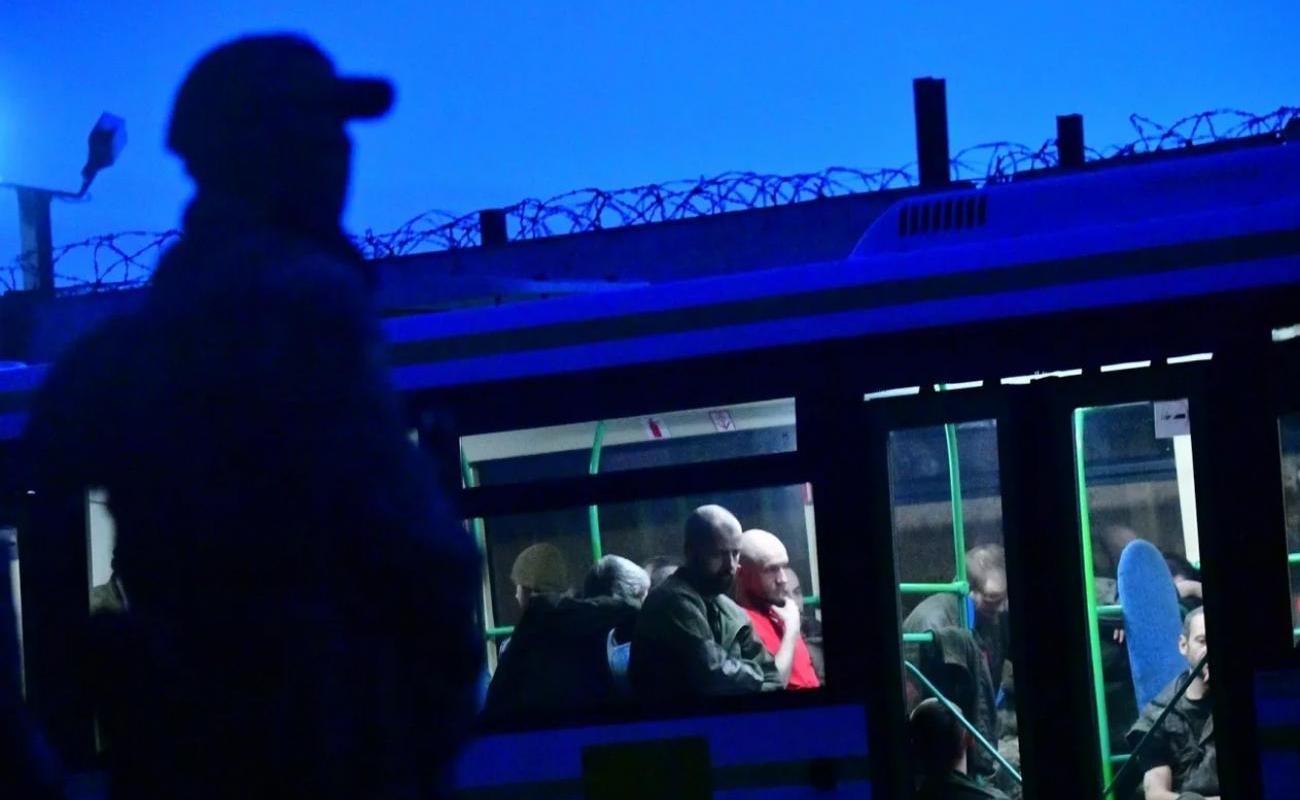
In January 2025, Russian human rights activists visited Ukraine for the first time since the start of the Russo-Ukrainian war as part of an observation mission. After the visit, the Memorial Center published a major report entitled "Ukraine: War Crimes of Russian Aggressors". It consists of three parts, the last of which is dedicated to the conditions of detention of Ukrainian prisoners in 10 Russian penal colonies, detention centers and prisons. According to the global initiative "Tribunal for Putin", there are 280 such prisons, 196 in Russia and 84 in the occupied parts of Ukraine. Former Ukrainian prisoners told human rights activists exactly where and under what conditions they were held in Russia. Meduza reports on the most terrible places where prisoners are held.
Former Penal Colony No. 120 in Elenovka, Donetsk Oblast, Ukraine
Two Ukrainian soldiers from the 36th Special Marine Brigade were captured in Mariupol in the spring of 2022. The junior sergeant from the AA defended the Ilyich factory and surrendered with his unit in April. The contract soldier from the Internal Troops participated in the battle for the Azovstal steel plant and surrendered in May. Both were released in a prisoner exchange: the AA returned to Ukraine in September 2024, and the Internal Troops soldier in February 2023.
Immediately after the surrender, the soldiers were transported by bus to Penal Colony No. 120 in Elenovka. In total, about 200 people were detained at this location in the spring of 2022. The previously abandoned colony was hastily reopened, without proper preparation for the reception of prisoners: windows without glass were covered with plastic films, and toilets were pulled out of the floor. According to the prisoners, the colony had no running water or heating. The first few days they slept on the concrete floor, later they got mattresses. But there was not enough room for everyone - they slept in shifts, sometimes in the corridors.
The AA reported that after getting off the bus, the prisoners were led through a "machine of honor" - guards were lined up on either side and beat anyone who ran between them. Another witness stated that if the prisoners fell from the blows, the beating would continue, and when the guards got tired, the beaten were dragged to the wall, placed in the "star" position and beaten again.
Prisoners in Elenovka were fed as follows: in the morning they were given tea or boiling water and a piece of bread, for lunch they were given tea, a quarter of bread and half a bowl of barley or sauerkraut, for dinner tea and a piece of bread. Two or three minutes were allotted for eating. Carrying food with you or finishing onroka on the go was forbidden. Those who tried to break the ban were forced to squat for a long time, beaten and forced to sing Russian songs. The biggest problem was drinking water - water that smelled like swamp was brought in by fire trucks in limited quantities, and there was not enough for everyone.
During interrogation, prisoners were forced to stand hunched over and keep their heads down so as not to see the interrogator. They were asked where they had fought, what their call signs were, what orders they had received, and whether they had been wounded. According to prisoners, the Russian interrogators were particularly interested in the Azov battalion. If the interrogator was not satisfied with their answers, the prisoner was beaten. If there was even the slightest trace that could lead to an indictment against a Ukrainian soldier, the prisoner was beaten even more severely, tortured, had his fingers broken, and was forced to confess.
The barracks where BB was housed was approximately 50 meters away from the barracks where the Azov soldiers were housed, which was destroyed under unclear circumstances. According to BB, during the night there was an explosion and fire in the barracks. He heard the screams of the prisoners from the burning barracks, but no one came to their aid. Another witness said that the barracks were isolated, among industrial buildings, and that people from different barracks were specially selected to be there.
In April 2022, the group in which AA was a member was transferred to Detention Center no. 2 in Rjažska in the Ryazan region, and group VV was transferred to Detention Center no. 2 in Stari Oskol in Belgorod Region. According to the prisoners, the conditions under which they were transferred to new detention units were different. Group AA was transported by bus to the airport in Taganrog, while group VV was transported to the plane in the back of a KamAZ truck, where they were thrown "with their hands tied and blindfolded, like sacks." On the plane, the bound prisoners were either laid on the metal floor or sat - there were no seats. They were occasionally beaten throughout the journey.
Detention Center No. 2 in Ryazhsk, Ryazan Oblast
Upon arrival at the detention center, doctors examined the prisoners, and then guards beat some of them. After the examination, the group including AA was taken down a "special forces corridor," where he was kicked and beaten with batons.
Immediately upon arrival, the interrogation of the prisoners began. There were special rooms on each floor of the detention center for this purpose.
"In these rooms, they kept 'gentleman's paraphernalia' on a table: PVC pipes used for beatings, two types of electric shock devices, a box of needles used for stabbing under the nails, and bags that were placed over the interrogated person's head and suffocated them. Next to them was a container of water and ice to revive those who had fainted. Sometimes they would lower the interrogated person's head into the same container and drown it there as a form of torture," AA recalled.
Over the course of two and a half months, he was interrogated 35 times.
The tests lasted from 30 minutes to an hour and a half. Those who could not stand it and "confessed" to the crimes were taken to the penal colony in Makejevka, in the self-proclaimed Donetsk People's Republic.
In addition, prisoners were regularly beaten during the morning roll call. Witnesses claim that members of the FSIN and special forces beat the prisoners for fun. AA was beaten four times. In February 2023, he was taken to Penal and Correctional Colony no. 10 in Mordovia.
According to AA, the "welcome" of prisoners transferred to Correctional Colony No. 10 was very cruel: they were forced to quickly take off the clothes they were wearing and put on prison clothes, all the while being beaten with plastic pipes. Many were forced to lie on the floor where they would be beaten further. This lasted about 40 minutes.
AA found himself in a cell with 10 people. In total, about 300 prisoners from Ukraine were locked up in the same barracks. Prisoners were allowed to go to the toilet and drink tap water only on command. Each cell had three minutes to shower.
For most of the day, prisoners were forced to stand still. For the slightest infraction, they were beaten and abused, and dogs were let loose on them. The punishment could be directed not only at the "offender", but also at everyone in the cell.
“One morning we ran out into the corridor. There was a German shepherd there and at the command of the handler, the shepherd started biting the prisoners. He bit me twice, first on the legs and then on the arms. But it turned out that the dog is much kinder than people. Once the dog simply bit me and let me go, and another time its handler gave the orders: grab, tear, bite and the dog started biting me hard. The dog bit off a piece of skin near my cellmate’s elbow, and the wound became infected afterwards. They also used electric shocks all over our bodies, genitals and anus. Sometimes they made us squat and march in place. Once the special forces entered the cell and told us to squat 700 times. One policeman came up with the following idea: we had to run out of the cell, stand in one line, grab each other’s shoulders and do a hundred squats at the same time as fast as we could. For example, if we got confused on "55, we would start over. After three minutes of these exercises, we couldn't feel our legs," says AA.
This regime and attitude towards prisoners lasted for the first six months of AA's stay in the colony. After that, conditions for prisoners began to improve slightly. However, by then, according to him, many already had pronounced veins on their legs, and some even had festering wounds on their legs. Despite the fact that three doctors worked in the colony, not all of them provided assistance to the prisoners. One doctor, according to AA, did what he could, at least somehow reacted, and tried to prevent beatings and abuse during medical examinations. The prisoners nicknamed the other "Dr. Evil"
"He treated all health problems with electric shocks," AA recalls.
Ukrainian prisoners - both military and civilian - began arriving at Detention Center No. 2 in Taganrog around the spring of 2022. Upon arrival, the tied prisoners were thrown out of trucks and beaten. The prisoners were forced to move through the corridors hunched over, with their eyes lowered or closed.
According to the Memorial, members of the special forces served as guards at the Taganrog Detention Center. Their affiliation is unknown. They either used "violence for the sake of violence" or were aggressive towards individuals because of their affiliation with certain military units or because of their tattoos.
FSB officers were also constantly present at Detention Center No. 2 in Taganrog, torturing prisoners into giving false confessions and extorting false testimonies, as well as forcing them to forgo the services of lawyers.
Prisoners were forced to learn the Russian anthem, "Katyusha" and "Smuglyanka". If anyone made a mistake, everyone in the cell would be beaten. They were also forced to do physical exercises. If one of the prisoners in a cell could not do these exercises, the others had to do push-ups for them.
According to one of Memorial's sources, in May 2022, a Polish citizen was detained at the Taganrog Detention Center. He claimed that he "went to Ukraine to see what was happening, but took a wrong turn and ended up at a Russian military checkpoint". He was regularly beaten for not learning Russian and for Poland's assistance to Ukraine. One of the guards at the checkpoint beat him so badly during the roll call that his legs turned blue and began to fail, and he died in mid-June 2022.
"Even the term 'concentration camp' would be too mild." Mediazona reported that the detention center for minors and women in Taganrog was turned into a torture center for Ukrainian prisoners.
Detention center no. 2 in Galič, Kostroma region
The "reception" of Ukrainian prisoners in Galich was carried out in almost the same way as in other prisons: the prisoners were forced to pass between the guards, who beat them.
Interrogations of prisoners lasted from 8:00 a.m. to 11:00 p.m., seven days a week, with beatings and electric shocks. Initial interrogations were conducted by military personnel, followed by investigators and members of the security forces in uniforms with "Specnaz" markings.
In the Detention Center no. 2 in Galič, prisoners were tortured with electric shocks, beaten with wooden sticks, hammers and rubber batons, suffocated with plastic bags, suffocated in containers of water, and their ears were burned with lighters. The prisoners were forced to use knives or wire to cut out tattoos with pro-Ukrainian inscriptions and symbols. They were also exposed to sexual violence.
Detention center no. 3 in Kizel, Perm Region
Around September 2024, several dozen Ukrainian prisoners were transferred to the Kizel detention center. The memorial calls this detention center "the second Taganrog" because of the brutal torture.
"The reception in Perm was rougher than in Taganrog. They put a bag on my head and beat me with all their might. They broke my right arm from the elbow to the wrist. Upon arrival in my cell, I fainted," one of the prisoners told human rights activists.
The Ukrainian publication Slidstvo.Info reported that Yevhen Matveyev, the mayor of Dneprorudnoye in the Zaporizhia Oblast, died after such a beating in Kyzel. His body was returned to his family in December 2024.
Prisoners at the Kyzel detention center said they were forced to stand all day, were forbidden to talk to each other, were constantly beaten, were allowed to drink and go to the toilet only on command, and were forced to exercise. Furthermore, the windows of the cells were left open during the day, even in winter, and the prisoners were not given warm clothes.
According to Slidstvo.Info, Ukrainian journalist Viktorija Roshchina, who was detained and disappeared in August 2023 in the territories of Ukraine occupied by Russia, died on September 19, 2024 in Detention Center No. 3 in Kizel.