
WARNING AHEAD OF BIH ELECTIONS: Russia drastically increases number of observers; Putin’s trusted ally sends her people to our country
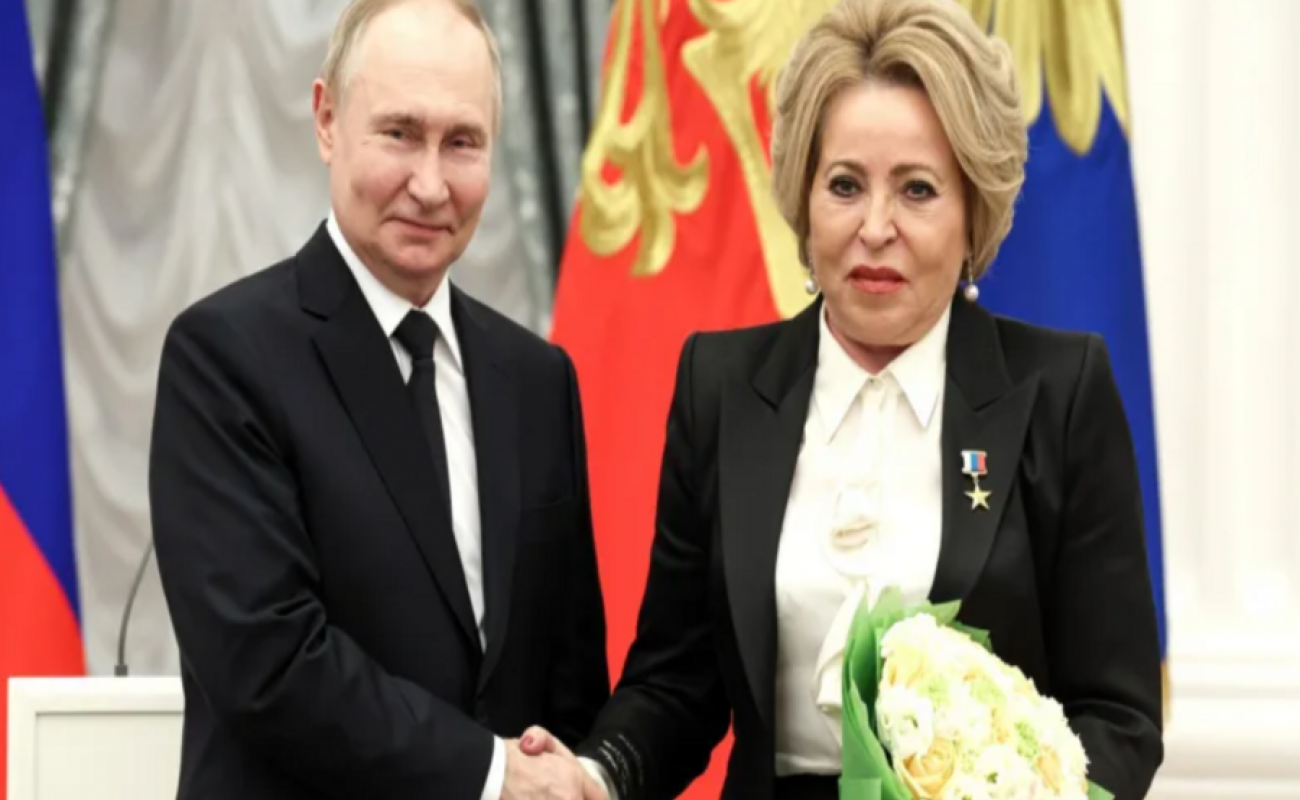
For the first time, Valentina Matviyenko, Speaker of the Russian Federation Council, is sending her own observers to BiH—likely with the aim of supporting and legitimizing Dodik’s election narrative after October 4.
Ahead of every election in Bosnia and Herzegovina, the Central Election Commission (CEC BiH) routinely approves requests for the accreditation of foreign observers of the electoral process. This is a long-standing, standard practice, and independent, professional observers are, of course, highly desirable to ensure transparency and safeguard the integrity of the vote, reports Raport.
However, what draws particular attention ahead of the general elections scheduled for October 4 is the fact that, compared to previous election cycles in BiH, there is evident heightened interest from the Russian Federation in the elections in our country.
According to official information from previous sessions of the Central Election Commission (CEC), the Embassy of the Russian Federation in BiH has so far been granted 15 accreditations to observe the operations of the Main Counting Centre and to oversee the work of municipal and city election commissions; it is possible that additional requests of this nature have been or will be made.
However, even the figure of 15 observers is significantly higher than the number the Russian Embassy had during previous elections in BiH.
For instance, the Russian Embassy in BiH had only four observers during the 2018 elections, while there were six in 2022.
To make this increase even more telling, five additional accreditations were granted to Russian nationals today—this time at the direct and unusual request of the Federation Council of the Federal Assembly of the Russian Federation.
It is worth recalling that this body has been led for fifteen years by Valentina Matviyenko, a woman considered the third most powerful person in the Russian state hierarchy and one of Putin’s most trusted confidants.
The public in BiH well remembers her 2018 visit, during which she sparked a diplomatic scandal while addressing the House of Peoples of the Parliamentary Assembly of BiH; right in the heart of Sarajevo, she labeled the war in BiH a "civil war," demanded the immediate abolition of the OHR and the departure of foreign judges, and fiercely attacked the OHR and NATO integration. A day later, in Banja Luka, Milorad Dodik welcomed her with the highest honors and awarded her an Order of Republika Srpska.
With the benefit of hindsight, and considering the events and actions of Dodik and the SNSD, it is clear that this coordination between the RS regime and the Russian Federation has been in play for years, aimed at strengthening Russian influence in BiH and destabilizing the country.
Therefore, the fact that the institution led by Matviyenko is currently insisting on sending its own personnel to observe the elections in BiH cannot be viewed in isolation from the interests of the SNSD.
At the same time, official Moscow’s heightened interest in the BiH elections indicates that the SNSD desires as many international observers sympathetic to its cause as possible—observers who, should Dodik lose the election, would be the first to challenge the process and dispute the results.
This sudden interest in election observation in BiH is accompanied by the profound hypocrisy of official Moscow. For while Russia is ramping up its observer presence in Sarajevo, the Kremlin has completely shut down international monitoring of the parliamentary elections taking place from September 18 to 20.
Regarding those elections, the Russian Federation denied OSCE observers the right to monitor the electoral process within Russia, dismissing Western standards as "biased."
Yet, while barring Western and independent observers from its own country under the pretext of protecting sovereignty, Moscow seeks full insight into every stage of the BiH electoral system—from municipal commissions all the way to the Central Counting Centre—when it comes to Bosnia and Herzegovina.
Furthermore, it is worth recalling that official Moscow directly interfered in the election for the President of Republika Srpska in February of this year, at a time when a re-run of the vote was scheduled due to fraud and manipulation at more than 130 polling stations.
At that time, the Russian Ministry of Foreign Affairs publicly sided with the SNSD, completely disregarding the evidence gathered by the BiH Central Election Commission (CIKBiH); Moscow characterized the repeat elections as the result of pressure and manipulation directed at the CIKBiH.
In this context, the deployment of observers to the October 4 elections in BiH can only be aimed at supporting the SNSD's narrative—a narrative that will accompany both the elections themselves and their results.