
Russia keeps arresting Crimeans. The count just hit 520
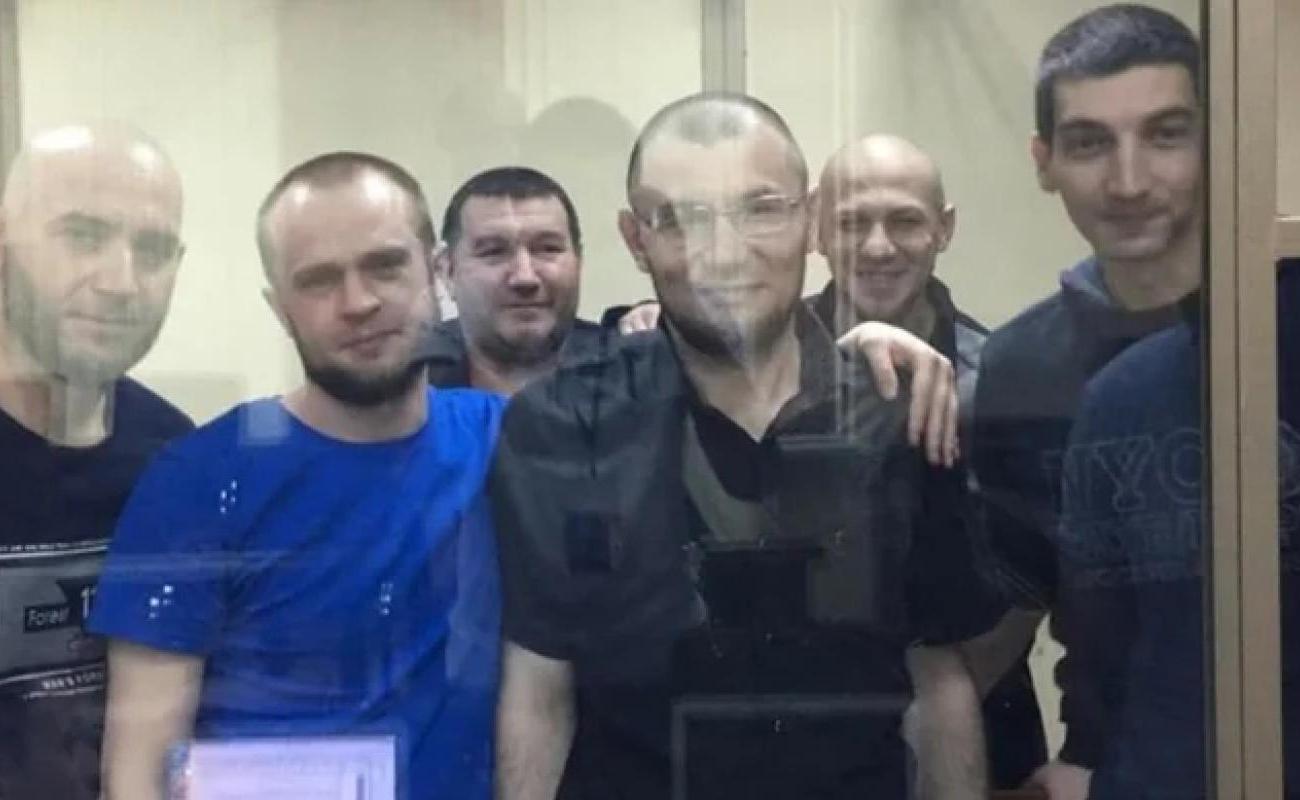
Russia now holds 520 Ukrainians on politically motivated criminal charges from occupied Crimea — more than double the 238 documented at the time of the full-scale invasion in February 2022. Many of them are Crimean Tatars, reports the Crimean Tatar Resource Center.
The number has grown through a year of peace talks in Geneva, Abu Dhabi, and Istanbul. Combatants have been exchanged. A handful of 2014-era civilians have trickled home. But the 520 Ukrainians Russia converted into its own "domestic criminals" through the legal fiction of its 2014 annexation are almost never on the lists.
Examples of persecution
Of those political prisoners, 277 are Crimean Tatars, and 351 are in pre-trial detention or serving sentences in penal colonies, according to the Crimean Tatar Resource Center as of 20 April 2026. In the first quarter of 2026, the occupation authorities carried out 57 arrests on the peninsula, 18 of them targeting Crimean Tatars, Zarema Bariiev from the Crimean Tatar Resource Center told Ukrinform.
Behind these figures are individual cases that follow a familiar pattern. Russia has built what the Kharkiv Human Rights Protection Group and Ukrainian activists have called a conveyor belt of fabricated cases against the peninsula's pro-Ukrainian residents — farmers, pensioners, Muslim believers, human rights defenders, journalists. What has changed is the scale and the silence: the cases multiply, while the diplomatic tables where Ukraine's future is being drawn have no seat for the people Russia is still arresting.
Oleh Prykhodko: the welder, who refused to look away
Oleh Prykhodko was 62 when a Russian military court in Rostov-on-Don sentenced him, on 3 March 2021, to five years in a high-security colony for preparing terrorist attackshe never prepared. He is a welder from the village of Orekhovo, in the Saky region of western Crimea. He had been openly pro-Ukrainian since long before the occupation, flew a Ukrainian flag over his land, and never hid his view that Crimea belonged to Ukraine.
The case against him rested on explosives the FSB said they had found in his garage during a search. The catch: the FSB had already searched his home earlier, during previous rounds of pressure on his pro-Ukrainian activity. When Prykhodko asked the officers to search his second garage, they refused — which suggested, as his defence pointed out, that they knew there was nothing there.
Prykhodko pleaded not guilty and stated at trial that he was an ordinary man who had openly opposed the occupation of Crimea. The court convicted him anyway. An extra month was added to his sentence — officially for contempt of court over insults aimed at the two FSB officers who had fabricated the case. Then, in November 2023, a Russian court added another four-and-a-half years, based on fellow inmates' testimony that he had "promoted terrorism" and "praised Hitler" in prison cell conversations — the sort of charge, as the Memorial Human Rights Centre has warned, that can be mechanically applied to any political prisoner Russia wants to keep.
On 5 March 2026 the FSB announced a fourth criminal case against him. This one charges him with "abetting terrorist activities" and "planning to incite state treason" — based on alleged conversations with cellmates. It can carry up to life in prison. Now 67, he suffers from hearing loss and other untreated health conditions.
Emir-Usein Kuku: the human rights defender Russia keeps breaking
Emir-Usein Kuku lived in the village of Koreiz, near Yalta, with his wife Meriem and their two sons. He is a Crimean Tatar, an economist and accountant by training, and a human rights defender. After the occupation, he helped found the Crimean Contact Group on Human Rights, which monitored the growing list of Crimean Tatars abducted, disappeared, or killed on the peninsula.
In April 2015 the FSB beat him severely on his way home from work, injuring his spine. He never received proper treatment. Russian officers then approached him several times and asked him to become an informant. He refused. In February 2016 they came for him, charging him with membership in Hizb ut-Tahrir — an Islamic political movement legal in Ukraine and most of the world, but which Russia's Supreme Court banned as "terrorist" in 2003. Russia applies the ban on the peninsula it occupies. The only evidence against Kuku was a recording of a kitchen conversation where the participants discussed politics, Islam, and the fate of Crimea; one of the men, his lawyer stated, was likely a planted witness.
A Russian military court sentenced him to 12 years in a maximum-security colony in November 2019. In between, he was subjected to forced psychiatric evaluation, spent almost a month in isolation at Simferopol Psychiatric Hospital No. 1, and went on a 24-day hunger strike in solidarity with filmmaker Oleh Sentsov. Russia moved him to Penal Colony No. 16 in Salavat, Bashkortostan — 2,500 kilometres from his home.
The spine never healed. Neither did the kidneys. In June 2023, Kuku was rushed to hospital with acute abdominal pain; doctors performed emergency surgery for an intestinal obstruction, Front Line Defenders reported. Three days later, against medical advice, he was sent back to the colony. He received no post-operative care, no diet guidance, and no record of what had been done to him. In February 2025 the UN Special Rapporteur on torture publicly called on Russia to provide him with urgent medical care. No response followed.
Server Mustafayev: the man who was punished for helping prisoners' families
Server Mustafayev was born in 1986 in Uzbekistan, where Stalin had deported his family in 1944. As a boy, he returned with his parents to newly independent Ukraine and rebuilt a life in his ancestors' homeland. By the time Russia occupied Crimea, he was a father of four and a co-founder of Crimean Solidarity — the grassroots network that documents searches, arrests, and sham trials, and that raises money for the wives and children of Crimean Tatars imprisoned by Russia.
In May 2018 the FSB detained him. The charge was the familiar one: participation in Hizb ut-Tahrir. On 16 September 2020 a Russian military court in Rostov-on-Don sentenced him and six other defendants in what human rights activists call the "second Bakhchysarai case" to between 13 and 19 years. Mustafayev received 14 years in a strict-regime penal colony. The case rested on covertly recorded conversations inside a mosque, transcribed by an FSB operative who did not know Arabic well and made dozens of errors, and analysed by "experts" from a pedagogical university in Ufa with no background in Islam.
On 20 May 2025, Freedom House awarded Mustafayev its first-ever Alfred Moses Liberty Award for his work with Crimean Solidarity, noting that he had helped victims of Russian persecution before Russia decided he was one of them. He is currently serving his sentence in a Russian colony. His four children have grown up without him.
History, in his case, is repeating itself. His family was exiled from Crimea by the Soviet state in 1944 on invented charges of collective treason. Now a Russian state has again removed him from Crimea and placed him in a colony in Russia — for helping the children of other exiles.
What release looks like
Since 2014, fewer than a dozen political prisoners from Crimea have been returned to Ukraine through exchanges, according to the Crimean Tatar Resource Center's count. The most visible among them show what it takes.
Akhtem Chiygoz, deputy head of the Mejlis, was arrested in January 2015 for his role in organising a rally in Simferopol on 26 February 2014, in support of Ukraine's territorial integrity — a rally held before Russia had even formally extended its "jurisdiction" to the peninsula. He spent 1,000 days in pre-trial detention and was sentenced to eight years. On 25 October 2017 he and fellow Mejlis deputy head Ilmi Umerov were released by Russia and flown to Türkiye, reportedly pardoned by Vladimir Putin after personal intervention by Turkish President Recep Tayyip Erdoğan.
Nariman Dzhelyal, first deputy chairman of the Mejlis, was taken in September 2021 — days after he attended the inaugural Crimea Platform summit in Kyiv. Russia accused him and his cousins of blowing up a gas pipe in Perevalne. He was sentenced to 17 years. On 28 June 2024 he was returned to Ukraine in a 53rd prisoner exchange brokered with Vatican mediation. The Holy See, Cardinal Matteo Zuppi, and the Apostolic Nuncio to Ukraine were publicly credited; the diplomatic weight required was considerable. In January 2025 Ukraine appointed Dzhelyal its ambassador to Türkiye.
Human Rights House Crimea and Crimean Process have launched an AI-assisted platform that makes it possible to write letters to Crimean political prisoners through official channels that work with Russian prisons. The system generates a letter based on answers to a short questionnaire, translates it into Russian to comply with prison censorship requirements, and forwards any response to the sender.
For now, that may be the only channel available. As negotiations continue, the number of Crimean prisoners keeps growing—largely unseen and almost entirely excluded from the deals meant to end the war.