
Moldova’s quiet push for Transnistria’s reintegration: a new chapter unfolds
As Moldova edges closer to the EU, Transnistria’s reintegration could mark a historic step toward reintegration, stability and development, writes Sergiy Sydorenko, chief editor of EUalive’s partner European Pravda.
Transnistria, a breakaway region of Moldova under Russian occupation, is legally recognised as integral part of Moldova, mirroring challenges faced by Ukraine with its occupied territories. However, unlike Ukraine, where de-occupation is a national priority, Moldova’s public and political spheres have shown little urgency for resolving the Transnistrian issue.
Discrete preparations
In recent parliamentary elections, no major party campaigned on reintegration, and none presented a detailed plan to unify Moldova. Yet, beneath this apparent apathy, Moldova’s government is discreetly laying the groundwork for reintegration, with signs pointing to a potential resolution in the near future.
The lack of public discourse on Transnistria stems from two realities. First, Moldovan society does not prioritize reunification, so politicians avoid raising the issue to sidestep controversy. Second, the question of handling the Russian military presence – though minimal, often jokingly said to “fit in two buses” – remains unresolved.
Despite these hurdles, indirect evidence suggests Chisinau is preparing for a unified Moldova. Budgetary planning and infrastructure investments increasingly account for controlling both banks of the Dniester River, signalling confidence in imminent reintegration.
A key indicator is Moldova’s infrastructure strategy, particularly the proposed Ungheni-Chisinau-Odessa highway, announced by Deputy Prime Minister Doina Nistor during Moldova Business Week in September 2025. This highway, intended to bolster Moldova’s role as a transit hub between Ukraine and Romania, is designed to pass through Transnistria, the most efficient and cost-effective route.
The alternative – bypassing Transnistria through southern Moldova – is longer, more complex, and requires a new bridge in Ukraine, with costs estimated at €3 billion. When pressed about the Transnistrian route, Nistor avoided a direct answer, saying, “Let’s let everything develop in turn,” a response that speaks volumes about the government’s cautious optimism.
This highway project, backed by a feasibility study from the European Investment Bank, underscores Chisinau’s belief that Transnistria will soon be under its control. The preferred route crosses the Dniester north of Bendery, skirts Tiraspol, and enters Ukraine near Kuchurgan. Such planning reflects a broader, albeit discreet, strategy.
Ina Kosheru, head of Moldova’s European Integration Committee, recently confirmed the existence of a non-public reintegration plan, further hinting at serious preparations.
Gas was Russia’s advantage, now it’s Moldova’s
The catalyst for these developments lies in Transnistria’s economic fragility, exacerbated by Russia’s manipulation of gas supplies.
Since January 2025, when Ukraine halted Russian gas transit, Transnistria became a “gas-free sector,” plunging into crisis. Heating was cut, gas stations closed, and the local power plant switched to dwindling coal reserves, causing rolling blackouts. Transnistria’s economy, heavily reliant on free Russian gas to generate electricity for sale to Moldova, collapsed without it. The region’s budget, propped up by this energy scheme and gas-dependent industries like the Moldovan Metallurgical Plant, faced a severe shortfall.
Russia’s intent was clear: leverage the energy crisis to destabilize Moldova’s pro-European government ahead of elections. By February 2025, limited gas supplies resumed, but only for humanitarian needs, not industry, and under strict conditions. Since October, Transnistria has faced another gas austerity phase, with supplies reduced to 1.5 million cubic meters daily – enough to avoid outages but not to sustain the economy. Tiraspol’s administration, operating under a state of emergency, openly fears systemic collapse, especially as winter looms.
Chisinau now holds significant leverage. With gas flowing through Moldova, the government has imposed conditions on Tiraspol, including political demands like releasing prisoners and allowing journalists access, alongside economic restrictions limiting gas to humanitarian use. While Tiraspol has made token gestures, such as releasing a few prisoners, it has largely ignored these demands. Post-election, however, Moldova is signalling a tougher stance, reminding Transnistria of its vulnerability.
Moldova’s restraint stems partly from its own energy dependence. The Soviet-era power grid routes electricity from Romania through Transnistria, giving Tiraspol the ability to disrupt supplies. By year-end, the Vulcanesti-Chisinau high-voltage line should eliminate this vulnerability, strengthening Chisinau’s position. This development could embolden Moldova to press Tiraspol harder, though it avoids a full blockade out of humanitarian and strategic concerns.
A critical factor is the shifting allegiance of Transnistria’s business elite, particularly the Sheriff conglomerate, led by Viktor Gushan, Transnistria’s strong man. Sheriff, which dominates the region’s economy and influences its leadership, faces a stark choice: cling to Russia’s sinking ship or negotiate with Chisinau for a role in a unified, EU-aspiring Moldova. Gushan could retain significant assets by cooperating, transforming from a shadowy tycoon into a legitimate businessman.
This prospect, coupled with Russia’s waning influence – its military presence is negligible, with only about 100 Russian soldiers and a small FSB contingent – makes peaceful reintegration increasingly viable.
The Kremlin’s grip, maintained through gas and propaganda, is slipping. With pro-Russian forces defeated in Moldova’s elections and Transnistria’s economy in tatters, the region’s 35-year separation is nearing its end. Chisinau’s calculated silence, strategic investments, and growing leverage over gas and power suggest that reintegration may happen sooner than anticipated, driven by pragmatism rather than confrontation.
A longer version of this article in Ukrainian can be found here.
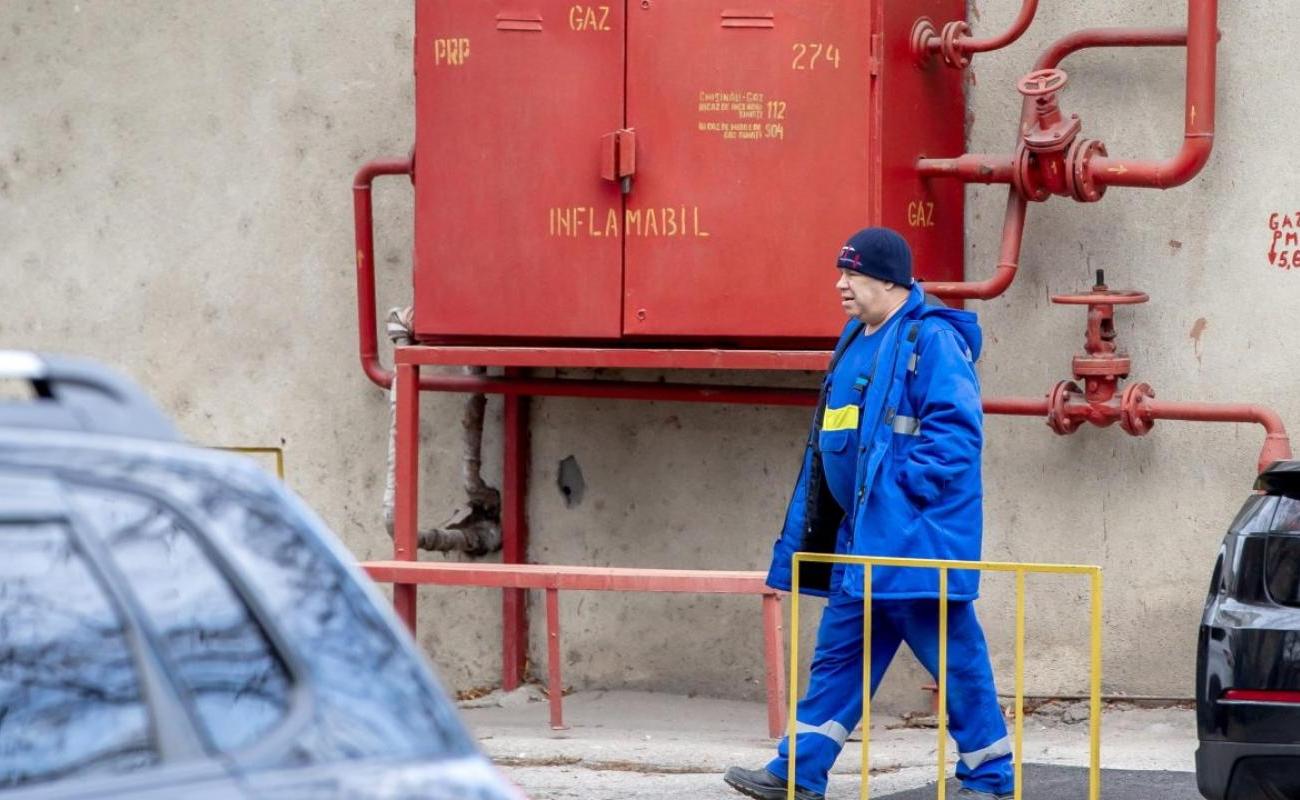
Caption: A Chisinaugaz worker walks past a gas panel near the Moldovagaz building in Chisinau, Moldova, 6 January 2025. Russian energy giant Gazprom suspended natural gas supplies to Moldova as of 01 January 2025, citing unpaid debts. EPA/DUMITRU DORU