
It's time for Russia to stop its war
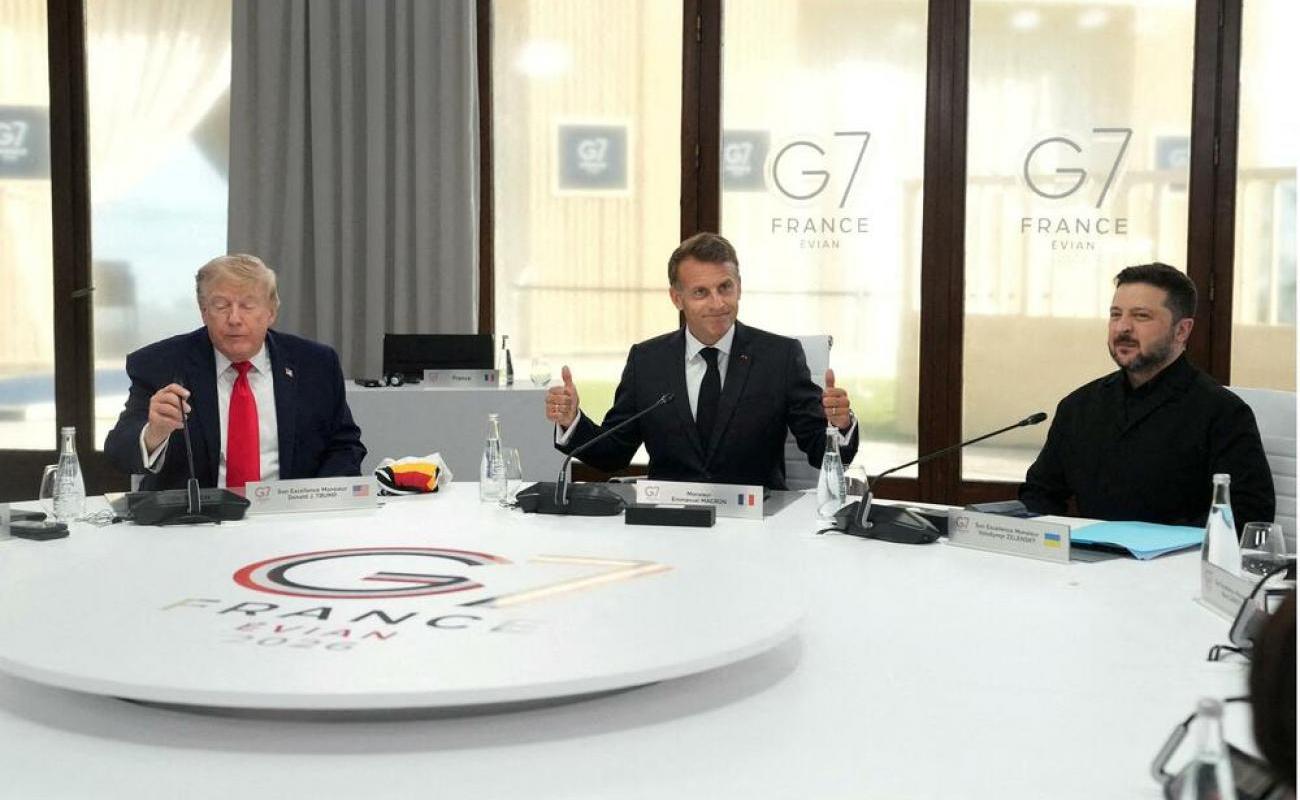
The G7 summit in France was held at a time when a key question is increasingly being asked of the international community: how to stop Russia's armed aggression against Ukraine, which has been going on for more than four years, and force Moscow to finally accept peace? Not a temporary ceasefire that would serve Russia to prepare for a new attack, but a just, comprehensive and lasting peace.
Ukraine has never been an obstacle to peace. On the contrary – Ukraine knows the price of war better than anyone. Every day of Russian aggression means new lives lost, families destroyed, homes, schools, hospitals, churches, power plants and cities destroyed. That is why Ukraine, like every Ukrainian, sincerely wants peace.
President Volodymyr Zelensky recently said what he meant in an open letter to Russian leader Vladimir Putin: this war is a conscious and harmful choice of Russia and its political leadership. It was not caused by NATO, it was not caused by the Ukrainian language, it was not caused by Europe. It was caused by the Kremlin’s imperial obsession – the belief that Ukraine has no right to exist as a free, European and independent state and that Ukrainians as a nation must not exist.
That assumption has proven to be a huge historical error. The Russian attack on Ukraine has proven to be a catastrophic geopolitical move. In 2022, Russia believed that Ukraine would fall within days. Today, we are in the fifth year of the all-out Russian invasion. Ukraine has not fallen. It has defended its statehood, preserved its institutions, sustained its economy, built one of the most innovative armies in the modern world, and gathered democratic partners around it. The Ukrainian people have shown that they will not break under Russian armed pressure and aerial terror – no matter how strong. Now is the time for the Kremlin to come to its senses and accept reality.
Last winter was one of the most difficult in the history of independent Ukraine. Russia systematically and mercilessly targeted Ukraine's energy infrastructure, trying to leave millions of people without electricity, heating and water. It was, in fact, an attempt to crush society through terror. But Ukraine stoically survived this bitter winter - even in the darkness, our resilience remained stronger than Russian missiles.
Today, it is clear that the dynamics are changing. Russia has failed to achieve any of its strategic goals. It has not divided Europe or destroyed international support for Ukraine. On the contrary, Russian aggression has strengthened European security awareness, accelerated the development of the Ukrainian defense industry, and shown that imperial power can be stopped when there is determination.
At the same time, Ukraine has significantly developed its own defense capabilities. Today, it can strike those capacities on Russian territory that directly serve to conduct aggression – military facilities, logistics, and the energy infrastructure that finances and feeds the Russian war machine. The recent fires at refineries near Moscow are the strongest illustration of this. This is legitimate defense. When Russia attacks Ukrainian power plants, ports, railways, and residential buildings, it must know that war is no longer a one-way process. The price of aggression must be returned to the one who initiated it. As the President of Ukraine said, “war is coming home.”
That is why the G7 message is important. The leaders of the most developed democracies have clearly confirmed their support for Ukraine’s freedom, sovereignty and territorial integrity. New steps have been agreed to strengthen Ukraine’s air defences, additional systems and interceptors, long-range capabilities, support for energy resilience and new pressure on the Russian war economy. This is the right response to Russia’s strategy of attrition: more protection for Ukraine, stronger sanctions for the aggressor and more responsibility for all who feed the Kremlin’s war machine. Peace today does not come closer with empty calls for a “compromise” with the aggressor. It comes closer when Moscow realises that continuing the war only leads to greater losses, greater isolation and a deeper internal crisis. And that the path of war only leads to a dead end. Sanctions, limiting Russian energy revenues, pressure on the banking sector, stopping the “shadow fleet”, blocking access to critical technologies and strengthening Ukraine’s defence are effective instruments that give diplomacy a real chance.
But there is also a new – and largely unexpected – reality. War fatigue is growing in Russia itself. Even in a closed society, under propaganda and repression, it is increasingly difficult to hide the fact that people are feeling the consequences of Putin’s election: losses on the front, rising prices, fuel shortages, restrictions, fear of a new mobilization, and deepening international isolation. The latest surveys and analyses show that support for negotiations is growing, while some official indicators of trust in the Russian leadership were showing a decline before Russian pollsters began changing their methodology. This does not mean that Russian society has suddenly become free. Russians still largely support Putin’s fundamental goal of destroying Ukrainian statehood. But it does mean that war is increasingly entering Russian everyday life – and that the cost of aggression can no longer be hidden.
In his open letter, President Zelensky offered Putin a direct meeting on any neutral ground. Ukraine is ready for a complete ceasefire during negotiations and for an exchange of prisoners of war on the principle of “all for all”. It is ready to discuss the return of civilians and children deported or forcibly relocated by Russia. And we are ready for a diplomatic process in which Europe and the United States would play a real role as guarantors.
But Ukraine is not ready to accept ultimatums. The withdrawal of Ukrainian forces from its own territory would not be a compromise, but an invitation to Russia to continue its advance. Ukraine, however, is ready for an immediate cessation of hostilities along the current front line and for the opening of the door to diplomacy. Without further casualties and destruction.
That is why Ukraine's red lines are clear: sovereignty and the right to its own foreign policy and security choices, a strong defense capability, and credible guarantees that aggression will not be repeated. These are sound principles of the international order. If they collapse in Ukraine today, no European country will be safe tomorrow.
Montenegro knows very well how important the right of every state to decide its own future is. That is why supporting Ukraine's defense against the Russian aggressor is a matter of principles on which Montenegro's European path is based. If it is once accepted that a larger power has the right to blackmail a smaller one, to determine its alliances, borders and identity, then not only the security of Ukraine is destroyed, but also the entire logic of the European order in which Montenegro is building its future.
Russia has a choice today. It can continue a war it cannot win, costing hundreds of thousands of lives, destroying its own future, and deepening its dependence on regimes like North Korea and Iran. Or it can stop the aggression, accept reality, and sit down at the table to discuss a real and lasting peace for all future generations.
Ukraine chooses a peace that has dignity, justice and guarantees that evil will not be repeated. This is both a Ukrainian and a European interest.
That is why the message from the G7 Summit is important for all of Europe, including Montenegro, the country that is closest to future EU membership. Because today in Ukraine, the right of every country to decide for itself about its future is being defended. The principle that borders cannot be changed by tanks is being defended. The belief that force must not prevail over law is being defended.
Russia can stop its war now. That is the simplest truth of this tragedy. And until it does, Ukraine will defend itself. And the world must continue to help it – not so that the war will last longer, but so that peace will finally become possible.
The author is the ambassador of Ukraine in Montenegro