
How China, Iran, and North Korea are helping Russia confront the West
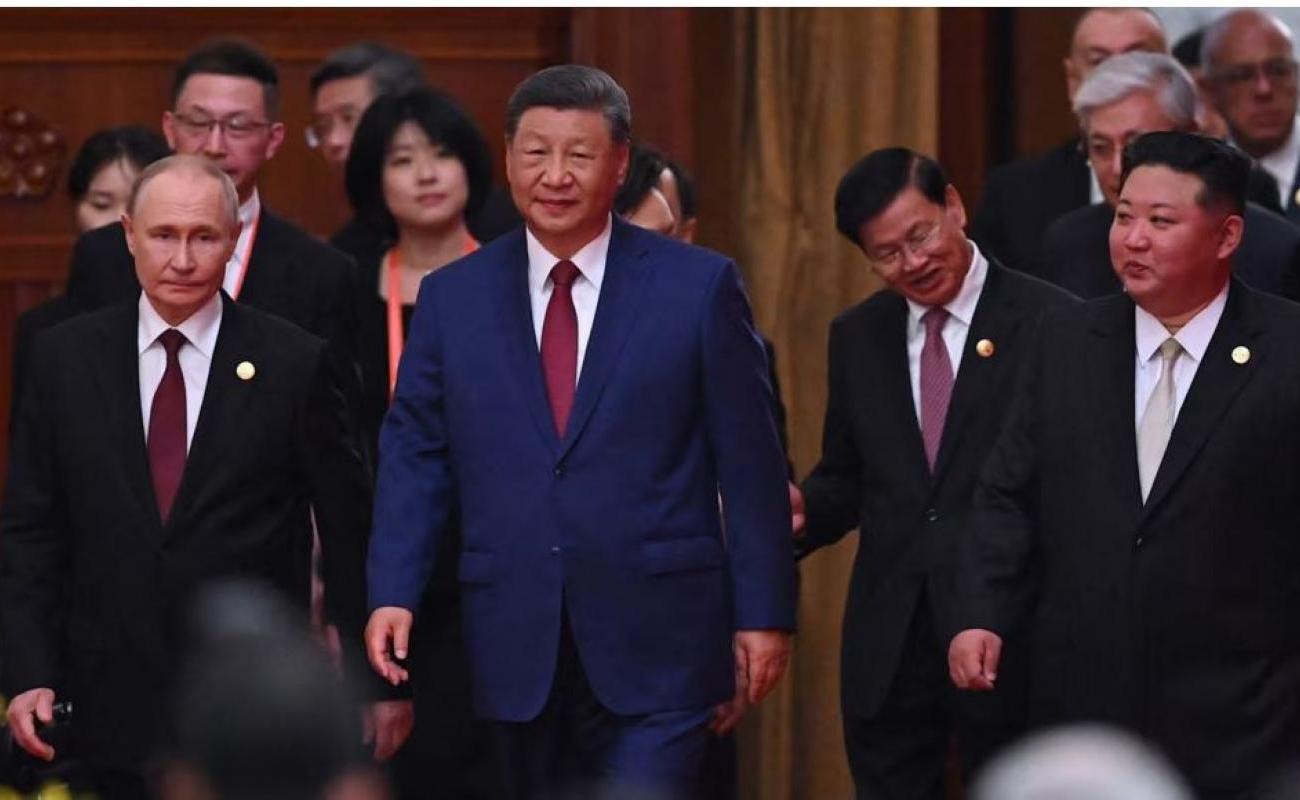
The growing partnership between Russia, China, Iran, and North Korea constitutes one of the most significant geopolitical shifts prompted by the war in Ukraine, creating a network of cooperation aimed at weakening American influence and circumventing Western pressure.
This was stated by Andrea Kendall-Taylor, senior fellow and director of the Transatlantic Security Program at the Center for a New American Security (CNAS), in an interview with Radio Free Europe.
According to her, this grouping should not be seen as a traditional military alliance, as it is not based on formal treaties, but as a flexible network of partnerships that enables these countries to increase military capabilities and reduce the effect of Western sanctions.
"Their partnerships strengthen the military capabilities of all US adversaries and its allies, while simultaneously weakening the effectiveness of foreign policy instruments such as sanctions," Kendall-Taylor said.
She assessed that the war in Ukraine has served as a catalyst for deepening relations between Moscow and its partners.
According to her, North Korea has provided Russia with large amounts of ammunition and military support, while Iran in the early stages of the war has supplied Moscow with drones and other military technology.
"China has been the most important partner. It has enabled Russia to circumvent Western sanctions and export controls, providing access to semiconductors, components and technologies critical to the Russian defense industry," she said.
Also, according to her, China's purchase of Russian oil has been a vital financial source for Moscow and has helped to continue the war in Ukraine.
Kendall-Taylor has said that what holds these countries together is a shared opposition to American influence and the current international order.
"These countries believe that the current international system does not give them the influence and status they believe they deserve. By acting together, they can challenge this system more effectively," she said.
According to her, China benefits from the instability that distracts the West, while Iran benefits by committing American resources to the Middle East.
She emphasized that, despite their differences, these countries have common interests that push them towards long-term cooperation.
Speaking about what Russia offers its partners, the American analyst said that Moscow is sharing the experience gained from the war in Ukraine and transferring military technology.
According to her, the relationship with North Korea has been transformed the most during the war, with Pyongyang seeking Russian help in satellite technology, missiles, submarines and other military systems.
Meanwhile, for China, Russia particularly offers battlefield experience in Ukraine, helping Beijing improve its military capabilities.
Regarding Iran, Kendall-Taylor said that Russia is providing support in intelligence and drone technology, based on experience gained during the war.
China remains Moscow's main partner
According to Kendall-Taylor, despite the importance of Iran and North Korea, China remains Russia's most important strategic partner.
"Putin has no closer relationship with any other leader than with Xi Jinping," she declared, adding that Russia has become too economically dependent on China.
She said that this dependence creates concerns in Moscow, as Russia risks becoming the weaker partner in this relationship.
However, according to her, due to the war in Ukraine and the confrontation with the US, Putin is willing to accept this dependence.
Kendall-Taylor said that Washington should not only focus on trying to create divisions between these countries, but should work to limit their influence.
According to her, the US should strengthen relations with countries that are not clearly aligned, such as Turkey, Brazil, Vietnam and South Africa, and limit this group's access to advanced technologies.
"The goal should be to curb this network, not to assume that it can be dismantled," she stated.
She has warned that the main challenge for the West is the fact that this network can create crises in several regions simultaneously - in Europe, the Middle East and the Indo-Pacific.
According to her, the main indicators for the future will be the continuity of Putin's and Xi Jinping's leadership, as well as the possibility that other countries, such as Belarus, Cuba or Venezuela, will move closer to this network.