
Despite US and EU Calls, Montenegro Yet to Require Removal of Chinese Telecoms Equipment
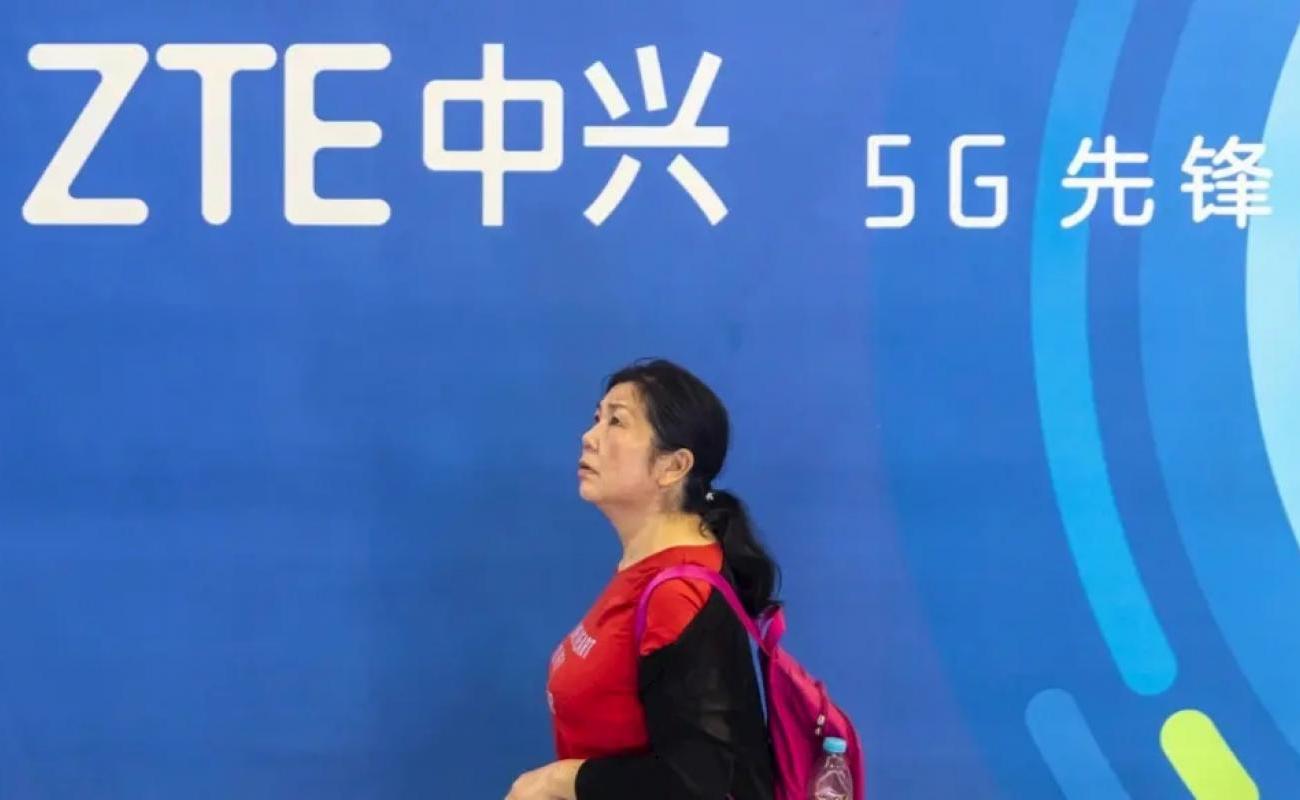
Montenegro has three mobile operators: Crnogorski Telekom, owned by Deutsche Telekom from Germany, One Crna Gora, owned by Hungarian 4iG Plc, and M:tel Montenegro, owned by Serbia’s state-owned telecoms company Telekom Srbija. All three use Chinese equipment, according to the Electronic Media and Postal Services Agency, EKIP, Montenegro’s independent communications regulator. The core network of One Crna Gora, for example, relies on equipment from ZTE, while its radio access network including the 5GNR network uses Huawei equipment.
“To date, the Agency has not received any information from the competent authorities indicating that any equipment, device, or project poses a risk to Montenegro’s national security,” EKIP told BIRN.
“For these reasons, it has so far not contested any request or project, nor banned the use of any communication equipment.”
Vuk Vuksanovic, a foreign policy lecturer at King’s College London, said it was likely only a matter of time before Montenegro at least restricts the use of Chinese equipment in its 5G network.
“It is highly probable that at some point, Montenegro will – perhaps not entirely replace or end partnerships with companies like Huawei – but deny them projects regarding the 5G spectrum,” he told BIRN. “However, we cannot predict that cooperation will vanish completely.”
Gjeloshaj’s ministry did not respond to a request for comment.
Security concerns
For years, the US and EU have warned of security and privacy risks posed by Chinese telecoms equipment, arguing that the likes of Huawei and ZTE are vulnerable to pressure from the Chinese state to assist in cyber-espionage.
The US Federal Communications Commission formally designated Huawei and ZTE as national security threats in 2020; US intelligence services have also warned of risks from Chinese cyber operations targeting telecom networks and supply chains.
Montenegro’s 2024 Law on Electronic Communications liberalised the telecommunications market but allowed the government to restrict the procurement and use of equipment from manufacturers deemed harmful to national security.
Draft amendments to the law, published in March, envisage the possibility of “different conditions” being applied to companies outside Montenegro and the EU, “when justified and necessary to protect public order, national or internal security, or public health”.
The US embassy in Podgorica said Washington encourages Montenegro “to assess the security implications of its telecommunications infrastructure and consider trusted alternatives that protect sensitive data and critical networks”.
For its part, the Chinese embassy said no one would benefit from such a move.
“Chinese enterprises have not only provided quality products and services to people of all countries across the world, but also contributed to local and social developments as well as employment, and this is widely welcomed by various countries,” the embassy told BIRN. “Politicising trade issues will only disrupt normal technological exchange and cooperation and does not serve any party’s interest.”
None of the three big mobile operators in Montenegro responded to requests for comment.
Telecommunications expert Aleksandar Mastilovic said the wholesale replacement of such equipment is no small task.
“Financially, replacing the core and radio access network is the heaviest burden,” he said. “For a small market like Montenegro’s, the problem is amplified because operators lack the economies of scale enjoyed by major European players, making the unit cost of migration relatively higher.”
“Without some form of state or European support, a portion of that cost will inevitably trickle down to subscribers.”
Mandatory removal
Canada banned Huawei and ZTE from national telecom networks in May 2022, while Britain outlawed the purchase of new Huawei 5G equipment in 2020 and ordered its complete removal by the end of 2027.
In 2024, Germany required operators to remove all critical Huawei and ZTE components from the 5G core by the end of 2026, and critical management systems in access and transport networks by the end of 2029.
And in January, the European Commission proposed a revision of the Cyber Security Act to make the 5G Toolbox guidelines binding and set member states a three-year deadline to strip high-risk vendors from their ICT infrastructure.
“Since not all EU member states approached the protection of critical infrastructure from untrusted vendors in the same way under the 2020 guidelines, a procedure is underway to adopt new measures that will be binding for all EU member states,” said Montenegro’s EKIP.
“If adopted, they will require the removal of untrusted suppliers’ equipment from all network segments within 36 months.”
Mastilovic warned that mandatory 5G replacement could slow down development, as operators redirect budgets from expanding their networks to replacing existing infrastructure.
“But long-term, it doesn’t have to mean poorer quality, and European experience tells us a lot here,” he said. “Denmark switched to trusted vendors when upgrading to 5G and today has the best 5G coverage in the EU, proving that the transition does not have to come at the expense of performance.”
“The real dilemma for Montenegro is neither ignoring the risk nor an abrupt, unplanned removal, but a clear, phased, and regulatory-driven plan that starts with the most sensitive parts of the network and addresses upfront who bears the cost.”
US-China fight for dominance
According to Vuksanovic, the US and China are in a fight for dominance of technological standards, saying that “whoever controls the standards controls the market”.
“In this context, the 5G spectrum is seen as the newest and strategically most important form of wireless communication,” Vuksanovic told BIRN. “Numerous systems crucial to the economy and the functioning of society in the 21st century will depend on it, which is why the question of who will dominate this technology is increasingly being raised.”
He believes the 5G issue is not just about economics, but security and data control: Western countries fear that Chinese tech giants, due to their close ties to the state, could grant Beijing access to sensitive information.
Mastilovic said the core issue is not proven misuse, but the architecture of the technology itself. When a single vendor controls both the core and the access network, he said, the operator and the state gradually lose technical and negotiating autonomy.
“A modern network, especially its core and management systems, is not a static box that you install once and forget,” Mastilovic told BIRN.
“It constantly receives software updates and remote maintenance from the manufacturer. The moment that manufacturer is legally subject to a jurisdiction that can compel it to cooperate with its intelligence services, the ability to access traffic, manipulate it, or disrupt service exists at the architectural level, regardless of whether it has ever been exploited.”
“That is precisely the point of the security logic warned about by NATO, the US, and the European Commission – it doesn’t start from intent, but from capability, because a state cannot base its critical infrastructure on the assumption of goodwill.”