
Ahead of the State Duma Elections: The Results Will Be Decided in the Kremlin
In 2026, the effects of the war against Ukraine have reached most Russians for the first time.
Those have taken various forms: fuel shortages caused by Ukrainian drone strikes, which have cost the Russian state budget dearly; damage from Ukrainian drone strikes to warehouses operated by Wildberries, a company dubbed Russia’s Amazon, where goods worth hundreds of millions of dollars have been destroyed; and rumours of an imminent mobilisation, despite repeated denials by the authorities. At the same time, the country’s economic difficulties are deepening. They have already lowered Russians’ living standards and, in a recent shift, unemployment has begun to rise, replacing the labour shortage that previously characterised the economy.
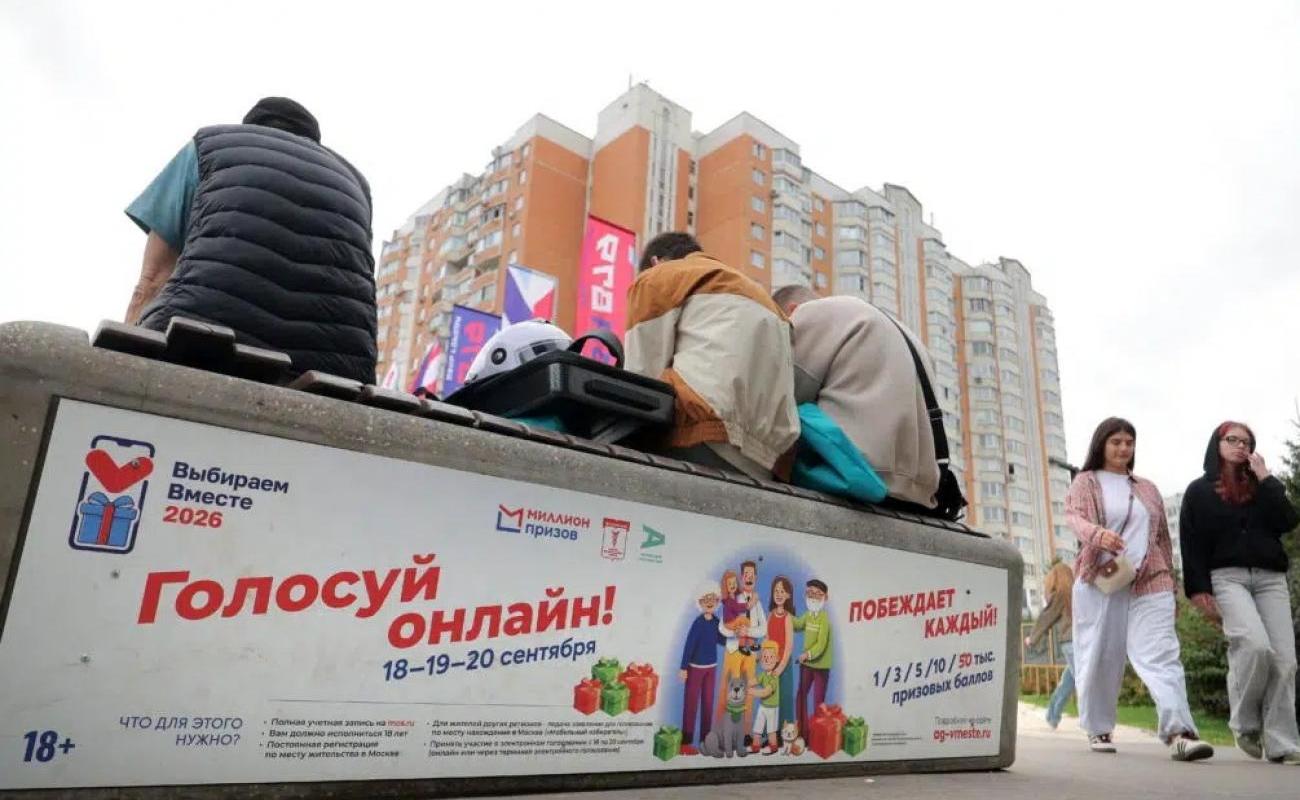
Against this backdrop, Russia will have its annual so-called single voting day on 18–20 September, when elections at various municipal and regional levels are held across the country. This year, the three-day voting period will also include elections to the State Duma — for the first time since Russia launched its full-scale war against Ukraine in February 2022.
Back to the Future
What initially promised to be a dull and uneventful election has been enlivened somewhat by growing social tensions and the Kremlin’s management of the electoral process. At least as far as the State Duma is concerned, however, this will make little difference. The new Duma will remain compliant and consist solely of parties that have publicly pledged, to varying degrees, their loyalty to Vladimir Putin and his political course. The official election results are essentially communicative messages from the ruling regime, directed at both Russian citizens and the wider world. In this respect, the Kremlin is hardly unique: this is a common feature of authoritarian regimes.
What still distinguishes present-day Russia from Stalin’s Soviet Union is the absence of mass repression.
Indeed, it is difficult to call this process an election at all, since everything — from who is allowed to run to the final count — is under the Kremlin’s strict control. Before February 2022, a few remnants of civil liberties survived in Russia, although elections were already stage-managed by the Kremlin. In the years since, the country has moved at an accelerating pace towards conditions last seen during the Soviet era. Moreover, today’s Russia increasingly resembles not the late Soviet Union under Mikhail Gorbachev but the Soviet Union under Joseph Stalin. What still distinguishes present-day Russia from Stalin’s Soviet Union is the absence of mass repression.
Much has been written in both the international and Russian-language media about electoral fraud. Adjusting the results at the margins is one thing, but manipulating them on a large scale without making the fraud conspicuous is considerably more difficult. To make this easier for the presidential administration, which oversees elections, voting has been spread over three days rather than a single election day since the 2021 State Duma election. This makes election monitoring considerably more labour-intensive and gives the authorities more room to conceal manipulation.
In addition to the result itself, turnout is also important. From the Kremlin’s perspective, it should not be significantly lower than at the previous election, when it stood at 51.72%, and should ideally exceed 50%. The actual turnout in 2021 is very difficult to estimate. The official figure this time will likewise depend on what figure the Kremlin chooses to report. Vladimir Putin’s overriding concern is to ensure that the regime appears legitimate, at least on the surface. The final numbers for both turnout and party support will therefore be set at whatever levels the Kremlin considers best suited to achieving that objective.
Vladimir Putin’s overriding concern is to ensure that the regime appears legitimate, at least on the surface.
The Central Election Commission initially allowed 11 parties to stand in the election, including all the Kremlin-loyal parties already represented in the parliament: United Russia, the Liberal Democratic Party (LDPR), the Communist Party (CPRF), A Just Russia, and New People. Somewhat surprisingly, Yabloko was also initially allowed to stand, and was even given No 2 on the ballot. Within a couple of weeks, however, it became clear that the Kremlin had made a serious mistake, and on 10 August, the Supreme Court removed the party from the ballot. Yabloko appealed the decision, but, as expected, the appeal was dismissed. After that exclusion, the central question is whether United Russia will retain its constitutional majority in the new State Duma.
United Russia
In July, leaked reports suggested that the presidential administration had initially planned for United Russia to receive 55% of the vote, but had since reportedly lowered the target to 45% to avoid too stark a discrepancy with the actual mood in Russian society. A cautious estimate would put United Russia’s real support at no more than 35%, while some even place it below 30%. As recently as late June, media were speculating that United Russia would retain its constitutional majority. Since half of the 450 seats in the State Duma are allocated through party lists and the other half as individual mandates, the Kremlin’s reported decision to lower the target share of the vote does not automatically abandon the goal of a constitutional majority, as the necessary additional seats can be secured through individual mandates.
The central question is whether United Russia will retain its constitutional majority in the new State Duma.
Even if United Russia fails to do so, that outcome would not, in itself, be disastrous for Putin or his government. The Kremlin-controlled electoral process ensures that only manageable representatives of the so-called systemic opposition enter the State Duma, and their ‘yes’ votes are not difficult to secure.
Given the broader political and economic outlook, the Kremlin is likely to prefer a strong result for United Russia so as not to appear weakened — something Putin has feared above all else throughout his years in power. Such a result would also allow the regime to demonstrate to both the Russian public and the wider world that its chosen course is correct and unwavering. This interpretation is borne out by Putin’s speech at the United Russia party congress. On 22 August, he argued, among other things, that the State Duma election would demonstrate the determination of millions of Russians to safeguard Russia’s sovereignty and security. Putin went on to claim that the whole of Russian society supports the war against Ukraine and stressed the need to unite in pursuit of victory.
Yabloko
With social discontent on the rise, 57% of respondents described the situation in Russia as ‘tense’ and 13% as ‘critical’ or ‘potentially explosive’. A Levada Center opinion poll found that 62