
Xi Jinping's trust in China's top generals appears to wane
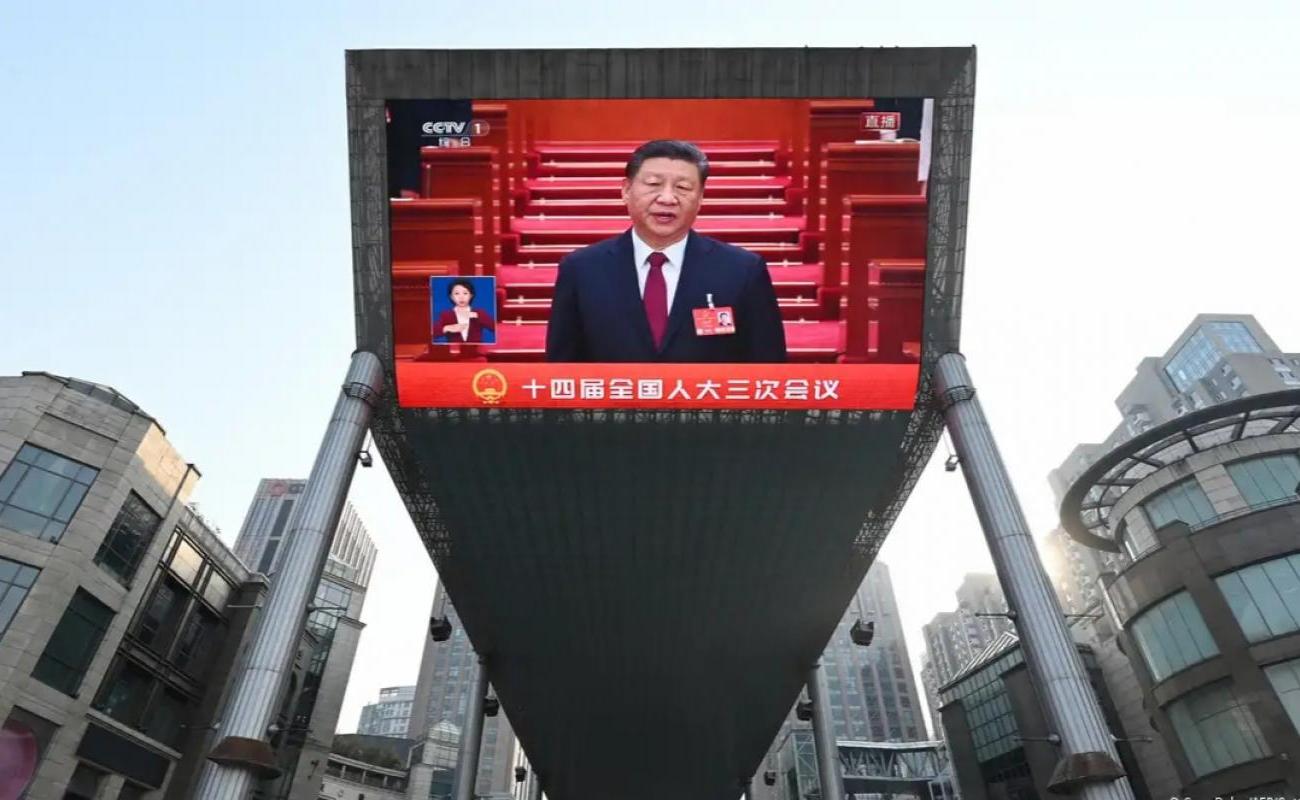
Over the weekend, it emerged that authorities in China have opened investigations into two senior figures at the top of the People's Liberation Army for "serious disciplinary violations" — a phrase commonly used in Chinese official communications to refer to corruption.
Those affected include top general Zhang Youxia, who is one of President Xi Jinping's closest allies in the military and one of the two deputy chairmen of the powerful Central Military Commission. Another senior general, Liu Zhenli, is also being investigated. Both have been removed from their posts.
The Central Military Commission is the collective command body overseeing all of China's armed forces — the army, navy, air force and nuclear-armed rocket forces — as well as the armed police and the militia. Its chairman is Xi, who, in addition to being the country's president, also serves as the ruling Communist Party's general secretary.
Among the three top posts Xi holds, the chairmanship of the military commission is widely considered the most powerful. According to Article 93 of China's constitution, it is the chairman of the commission — not the president, as is often assumed — who commands the armed forces.
China's founding leader, Mao Zedong, famously argued that "political power grows out of the barrel of a gun."
This logic has long shaped Chinese politics. In 2005, then-President Jiang Zemin retained control of the military commission for months after stepping down from his other posts, handing it over to his successor Hu Jintao only after a delay.
A general with combat experience
The case of Zhang Youxia, China's highest-ranking uniformed officer, is particularly striking. Within the commission's leadership trio, he was the only one to have risen through the ranks from an ordinary soldier to the top.
He joined the army in 1968 at the age of 18. In 1979 and 1984, he commanded a regiment and fought in the border war with Vietnam. Zhang later became commander of China's army in the northeast before moving to Beijing to take on senior leadership roles at military headquarters.
"The case is surprising," political scientist Ying-Yu Lin of Tamkang University in Taiwan, told DW. "The Central Military Commission now has no one in its leadership with actual war experience. That is questionable."
Xi and the commission's other deputy chairman have political, rather than military, backgrounds.
Zhang was also a member of the Communist Party's powerful 25-member Politburo, where he represented the military. He was widely regarded as Xi Jinping's preferred candidate. His promotion to the Politburo at the age of 72 — when most would have already retired — broke with established norms.
Zhang's personal ties to Xi were close. Zhang's father had served alongside Xi's father, and both families came from the same province.
An apparent breach of trust
Anticorruption campaigns have for years been used within the Communist Party to bring politicians into line and punish disloyalty.
More recently, the focus appears to have shifted to the generals and the military, as Xi looks to reshape the armed forces' leadership structure.
In October, Chinese authorities announced corruption investigations into nine military officials.
Zhang had been a vocal supporter of Xi Jinping in 2022 when Xi broke with longstanding internal norms to secure a third term at the Communist Party's 20th congress, says Ming-Shih Shen of Taiwan's Institute for National Defense and Security Research.
"Xi has broken many long-established rules and taboos within the military as well, promoting trusted allies earlier than usual in order to secure his power," Shen told DW.
But Shen argues that after the first waves of the anticorruption campaign against the military, Zhang may have felt increasingly cornered and threatened — even though he was not initially a target.
"Xi Jinping clearly no longer trusts him," said Lin. "Speculation about why Zhang fell from grace — whether corruption, bribery or even alleged espionage for foreign intelligence services, as reported by US media — is beside the point if trust exists. Once trust is gone, the specific charge becomes a mere formality."
Networks and power struggles
In its reporting on Zhang's case, the People's Liberation Army Daily accused him of abusing the authority granted to him by the chairman as the overall commander of the armed forces. The newspaper stressed that no rank grants immunity and no military honor offers protection from prosecution.
This language suggests that Zhang may have built a network of loyal supporters within the military, says Chung Chieh, also a researcher at Taiwan's Institute for National Defense and Security Research. "This network was likely seen by Xi Jinping as a potential threat. Core interests of Xi or the party must have been at stake."
Anyone who questions Xi's authority as chairman risks being accused of disloyalty or even mutiny, Chung adds.
China has not fought a war for decades. In Chinese-language online forums, political jokes are circulating, such as: "The army is now fighting wars against its own generals," or "The next military parade will be led by a general who prefers not to be named."
At the same time, China continues to demonstrate its military strength, particularly through naval maneuvers off its Pacific Coast. In 2025, China's military spending amounted to the equivalent of €220 billion ($263 billion).