
What China’s new PLA leaders reveal about Xi’s unfinished military rebuild
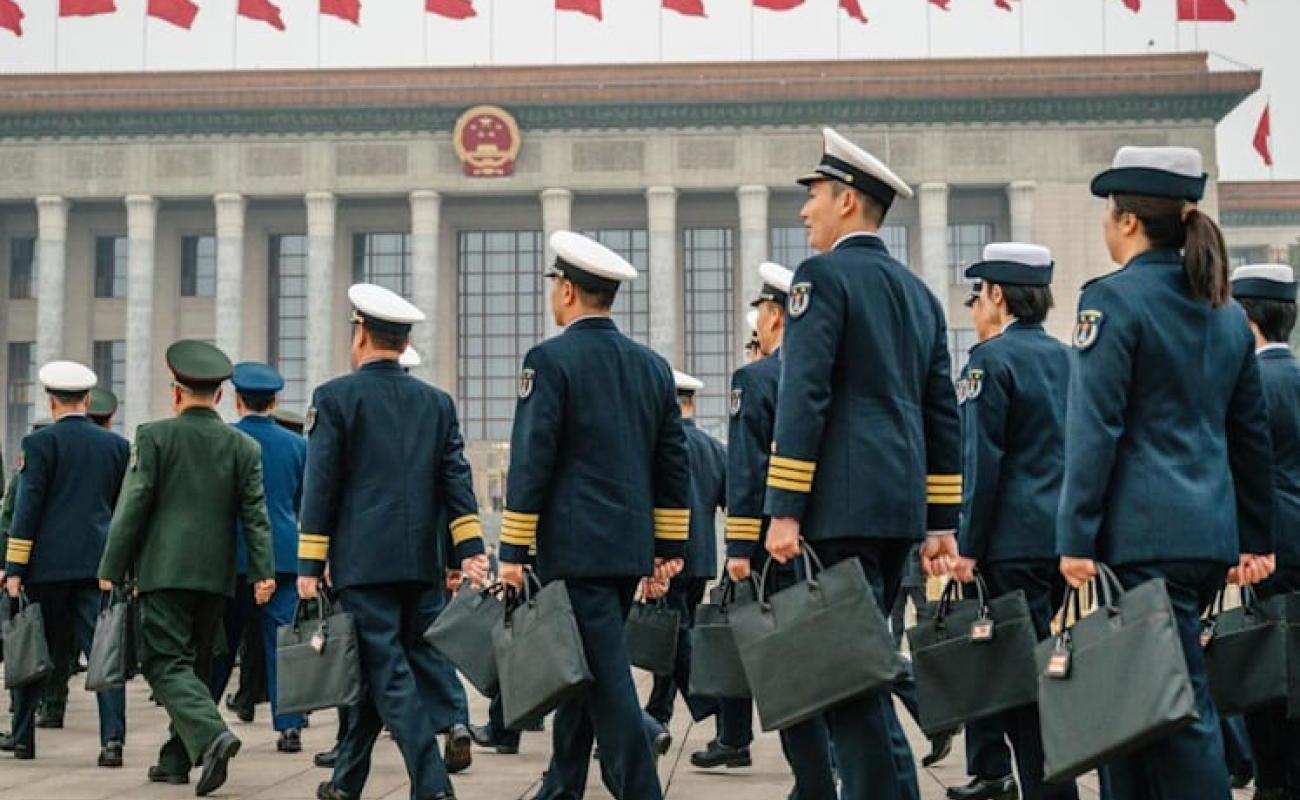
Lower-ranking officers have emerged in some of the People’s Liberation Army’s (PLA) most senior roles without Beijing publicly announcing them, with analysts saying the unusual move suggests President Xi Jinping is far from rebuilding the military’s top brass amid a sweeping anti-corruption purge.
They add that the reliance on acting or unconfirmed leaders also points to a narrower pool of trusted officers and uncertainty over who will ultimately survive the transition, even as elevating experienced insiders helps maintain day-to-day continuity, with newly promoted full generals taking charge of key commands.
“The PLA is restoring day-to-day command and organisational continuity faster than Xi Jinping is rebuilding confidence in the officers now filling senior roles,” Nathan Attrill, a senior analyst at the Australian Strategic Policy Institute (ASPI), told CNA.
“Xi is ensuring that key organisations remain operational by elevating deputies and other senior officers, but he remains cautious about granting many of them permanent appointments, full rank and the institutional authority that comes with formal confirmation.”
The latest round of reshuffling follows several years of sweeping anti-corruption purges that have reached the PLA’s highest ranks.
In January, Zhang Youxia and Liu Zhenli - respectively vice-chairman and Joint Staff Department chief of China’s highest military leadership body, the Central Military Commission (CMC) - were placed under investigation.
An editorial by the PLA Daily, the Chinese military’s official newspaper, subsequently described their cases as part of the armed forces’ anti-corruption campaign.
Fellow CMC members He Weidong and Miao Hua were expelled from the Communist Party and military in 2025, and former defence minister Li Shangfu in 2024.
The upheaval has effectively left the seven-member CMC, formed after the 20th Party Congress in 2022, with only two active members - Xi as chairman and vice-chairman Zhang Shengmin. Zhang Shengmin was promoted to the post in October 2025.
The fallout has extended well beyond the CMC, with senior posts across its departments, the theatre commands and the armed services also left vacant or unsettled after officers were removed or disappeared from public view.
WHO IS FILLING THE GAPS?
As many as 20 key PLA positions have been reassigned following the purges, the South China Morning Post (SCMP) reported on Aug 5. The news outlet identified 15 officers by name as apparent new leaders.
SCMP said it pieced together the changes largely through state media footage and other public appearances - examining officers’ rank insignia, departmental markings and protocol seating to assess who appeared to be taking over senior responsibilities.
CNA was able to independently corroborate eight of the officers named in the report as holding senior posts or visibly assuming higher-level responsibilities, based on state news and military reports, foreign official readouts and other publicly available records.
But not all eight have been formally announced by Beijing as permanent chiefs of the units they appear to be leading.
Among those formally elevated, Zhang Shuguang was identified by state news agency Xinhua as head of the CMC’s discipline inspection and supervisory bodies, while Wang Gang was identified as air force commander. Both were promoted to full general in July.
Yang Zhibin was similarly promoted to full general in December last year as commander of the Eastern Theatre Command.
Han Shengyan was promoted to full general alongside Yang as commander of the Central Theatre Command, according to Xinhua.
The two full generals now head commands whose areas of responsibility include the capital region and operations involving Taiwan, respectively.
Meanwhile, Zhang Like has been publicly identified by PLA media as head of the CMC’s National Defence Mobilisation Department.
Beyond these announced appointments, the picture is less clear.
Cai Zhijun is the PLA Army’s chief of staff, but has not been formally announced as its commander. He has nevertheless emerged as one of the service’s most senior publicly visible operational officers after commander Li Qiaoming was stripped of his National People’s Congress deputy status in February.
The remaining two officers independently corroborated by CNA are in the navy. Vice-Admiral Zhang Zheng has appeared in protocol positions associated with the navy’s top operational leadership, while Vice-Admiral Hu Yuhai has appeared in positions associated with its top political leadership.
Beijing has not formally announced either man as navy commander or political commissar.
SCMP identified Zhang Zheng, Lieutenant General Zhu Chuansheng at the CMC Joint Staff Department and Lieutenant General Lei Kai in the Rocket Force as apparent successors to senior leaders who had been removed or disappeared from public view.
The positions attributed to them - navy commander, Joint Staff Department chief and Rocket Force commander respectively - have traditionally been held by full generals or admirals.
Zhang Zheng, Zhu and Lei had all risen to their current ranks only in recent years, but none has been formally announced in the top positions SCMP attributed to them.
Analysts said there also appears to be a broader layer of deputies, chiefs of staff and other lower-ranked officers keeping key bodies functioning while permanent appointments remain unsettled.
Shanshan Mei, a political scientist at the RAND Corporation, a US-based nonprofit research organisation specialising in public policy and national security, said formal appointments had so far appeared in some of the most strategically important commands, including the Eastern and Central theatres, while a “much larger layer underneath” is being run by “lower-ranked, unannounced acting officers”.
“With so many seats unsettled, real decision-making authority has concentrated at the very top, in Xi and perhaps a handful of confirmed principals, rather than being distributed the way a mature chain of command normally would,” she told CNA.
Analysts said the pattern suggests that the PLA has maintained day-to-day command continuity despite the upheaval, but has yet to restore a fully settled senior hierarchy.
“What this shows is the aftermath of the purges, which generated serious internal instability and created openings of critical positions that must be filled,” Yang Zi, a research fellow at the S Rajaratnam School of International Studies (RSIS), a Singapore think tank, told CNA.
“However, Xi seems to be taking his time in assessing these new leaders. That’s why officers occupying these positions are only acting leaders, rather than permanent ones.”