
Will Putin be able to continue the war if Russia loses the ability to replenish its military?
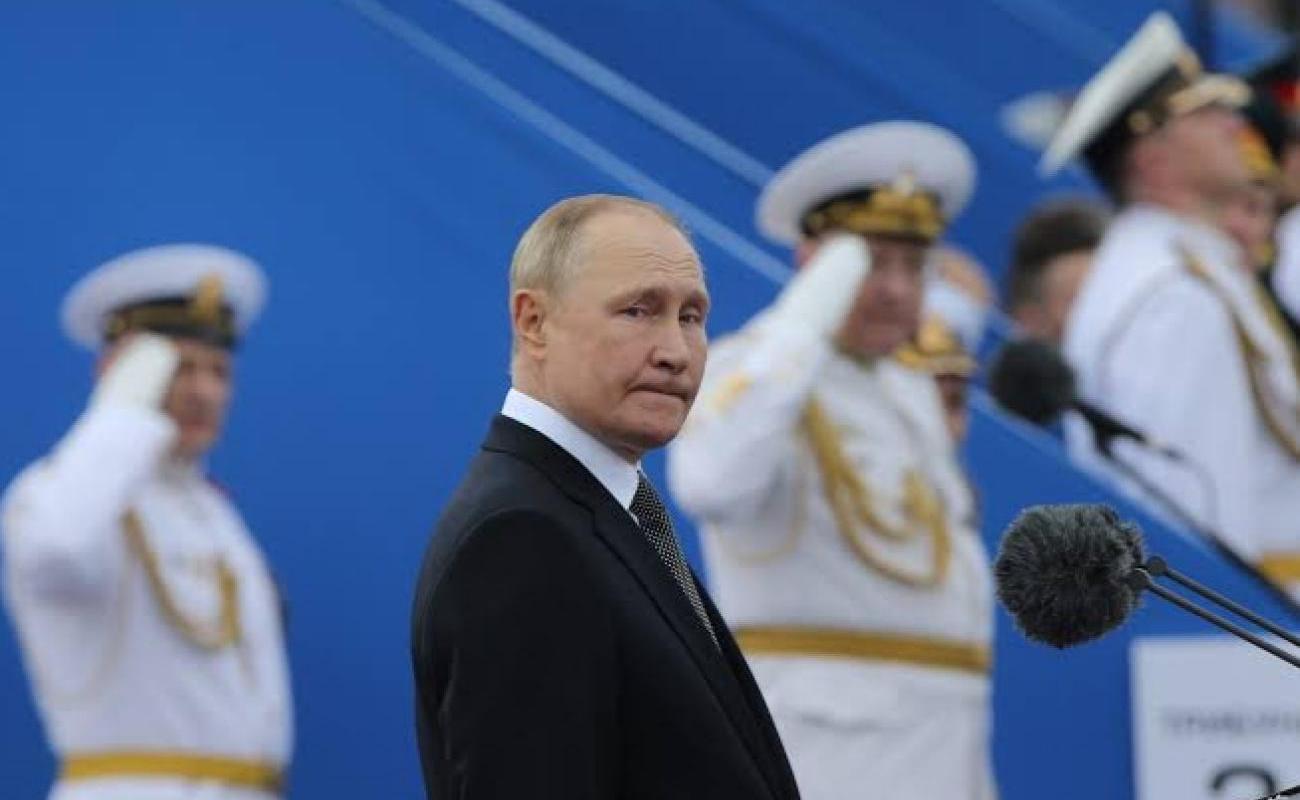
The recruitment crisis is a harbinger of the Kremlin’s strategic exhaustion, signaling that a moment is approaching when the Russian military-political leadership will be forced to re-evaluate its strategic objectives.
An article titled "Finding willing recruits is becoming increasingly difficult: The rate of contract soldier recruitment for Putin’s army has fallen by 11 percent, despite million-ruble bonuses" appeared on the website of the Russian service of *The Moscow Times*.
It reports a significant slowdown in the recruitment of contract soldiers for the Russian military, despite record-breaking cash payouts. According to experts, the Russian army recruited 37,000 fewer people in the first ten months of this year compared to the same period last year; this recruitment shortfall threatens to deplete troops on the front lines.
*The Moscow Times* writes: "The recruitment 'conveyor belt' of the Russian Ministry of Defense—tasked with finding 409,000 people for the front this year..." Despite the fact that the average regional bonus for deployment to the front has reached 2.4 million rubles, the number of individuals signing contracts in the third quarter has fallen by 10 percent, according to calculations by Janis Kluge—head of research on Eastern Europe and Eurasia at the German Institute for International and Security Affairs—based on data regarding regional budgets.
By his estimates, 109,500 people signed contracts between July and September, with another 34,000 signing in October. Recruitment figures for October were 11 percent lower than a year earlier and 17 percent below the levels seen in October 2024. Cumulatively, the recruitment campaign over the first 10 months has added 297,000 personnel to the army fighting in Ukraine—a figure 37,000, or 11 percent, lower than during the same period last year. With each passing year and month, it is becoming increasingly difficult for the Russian military to find people willing to go to war.
According to Western intelligence, the Russian army in Ukraine is currently suffering approximately 50,000 casualties—killed and wounded—every month. Total losses accumulated since the start of the war are approaching 1.5 million.
It is clear that Russia’s war against Ukraine is gradually approaching one of the most critical strategic tests for Vladimir Putin’s regime: the ability to regenerate its own military power amidst a protracted armed conflict.
For while the Kremlin may have counted on a swift military victory during the initial stages of its large-scale invasion, it now faces a far more daunting task: not only must it hold occupied territories and sustain offensive operations, but it must also constantly replace massive human losses—all while preventing a major socio-political crisis within Russia itself.
In this context, data published by *The Moscow Times* regarding a decline in the recruitment of contract soldiers for the Russian military takes on particular significance. At first glance, an 11 percent drop in recruitment might appear to be merely a statistical figure. In reality, however, it points to the emergence of a systemic problem—one that could potentially impact the Kremlin’s future capacity to wage war against Ukraine. The most critical aspect of these figures is not the absolute number of soldiers who failed to enlist, but rather the underlying trend. This decline is occurring despite unprecedented financial incentives offered to those willing to sign a contract; according to the data, the average regional bonus for deploying to the front has reached 2.4 million rubles. This indicates that the Russian authorities are being forced to pay increasingly higher sums for human resources—yet even these larger financial rewards are no longer sufficient to maintain the necessary rate of new enlistments.
And this is an extremely significant signal. The Kremlin has effectively turned military recruitment into a marketplace for human resources, where the state competes for potential personnel by offering large one-time payments, high salaries, social guarantees, and financial promises.
However, this mechanism has inherent limitations.
First, the number of people for whom participating in the war is an acceptable way to resolve financial difficulties is not unlimited.
Second, with each passing year of the war, public perception of military service shifts. While some Russians may have initially viewed the full-scale invasion as a short-term military campaign with relatively predictable risks, the war’s protracted nature—along with the high probability of death or injury and the lack of any prospect for returning to a normal life—has become increasingly apparent.
Third, massive monetary payouts cannot indefinitely compensate for the fear of death, physical suffering, and the realization that the state is sending its citizens into a war of annihilation.
It is particularly telling that a decline in recruitment is occurring at a time when the Russian military is in need of significant replenishment. According to estimates by Western intelligence agencies, Russian losses in Ukraine—including both the dead and the wounded—may amount to approximately 50,000 per month.
Comparing this figure to the rate at which contract soldiers are being recruited reveals an obvious disparity. Even if Russia continues to recruit tens of thousands of new personnel each month, a substantial portion of these resources is consumed by replacing losses already sustained, rather than by forming additional combat-ready units.
At the same time, it is important to understand that the number of dead and wounded cannot be equated directly with the permanent removal of all these individuals from the military; some of the wounded eventually return to service. Nevertheless, even with this caveat, the scale of human casualties places a colossal burden on the systems responsible for the recruitment, training, rotation, and replenishment of Russian forces.
Furthermore, it is necessary to distinguish between two concepts: the state’s ability to recruit new military personnel and its ability to maintain the military's combat readiness. These are not the same thing. Russia may well continue to find tens of thousands of people willing to sign a contract, but that does not mean it is capable of transforming them into a military asset that can effectively compensate for the loss of experienced units.
A soldier must be trained, equipped with weapons, gear, and communication systems, integrated into a unit, and given time to gain combat experience.
When an army constantly requires replenishment due to heavy losses, training time is reduced, and the quality of personnel gradually declines. This creates a vicious cycle: insufficient training increases the army's vulnerability on the battlefield; further losses drive a greater need for recruitment; and the urgency to quickly replenish units leads to a further degradation in the quality of training.
Putin’s reluctance to initiate a new, large-scale mobilization is a key factor in Russia’s current personnel policy. The Kremlin is well aware that mobilization is not merely an administrative decision to call up more people. It carries a political risk that could directly affect broad segments of Russian society—including residents of major cities, the middle class, and the economically active population.
The "partial" mobilization of 2022 demonstrated that even a totalitarian government cannot fully control the public reaction to the mass removal of citizens from their civilian lives. Consequently, Putin seeks to maintain a model of warfare in which the primary burden of human casualties falls on the most socially vulnerable groups, residents of remote regions, and those for whom substantial financial payouts represent virtually the only opportunity to significantly improve their families' economic situation.
However, this model is gradually reaching its limits. The longer the war drags on, the harder it becomes to find new segments of the population willing to sign military contracts. While financial incentives may temporarily boost the number of volunteers, they cannot indefinitely expand the pool of available manpower for the war. Furthermore, increasing these payments places additional strain on regional budgets—a significant portion of which already relies on federal transfers.
Equally significant is the war's impact on the Russian economy. The withdrawal of hundreds of thousands of working-age men from the civilian sector, labor shortages, rising wages within the military-industrial complex, and the constant need to fund military requirements are exacerbating structural imbalances.
A war economy may show growth in production, but this does not necessarily translate into an improvement in the country's overall economic well-being.
The production of weapons, ammunition, and military equipment boosts statistical indicators of industrial activity; yet, at the same time, it consumes resources that could otherwise be used to modernize civilian infrastructure, advance technology, and increase labor productivity. Russia is increasingly tailoring its economy to the demands of the war, which in turn deepens its reliance on sustained military spending.
At the same time, one should not underestimate the Russian regime's capacity to sustain the war, even under adverse demographic and economic conditions. A totalitarian system possesses the ability to shift a substantial share of the costs onto society, suppress public debate, conceal the true scale of casualties, and employ propaganda to justify continued bloodshed.
For Putin, the continuation of the war carries not only military but also political significance. The war has become one of the primary tools for legitimizing his power, justifying repressive policies, consolidating powerful elites, and maintaining the image of Russia as a state that supposedly stands against the entire West. Consequently, even as the military campaign becomes increasingly costly and less effective, the Kremlin may view its continuation as a lesser political risk than acknowledging a strategic defeat.
An important conclusion follows from this: Putin’s decision to continue the war will not necessarily depend on whether Russia is able to secure a sufficient number of volunteers for its army.
If the system of financial-incentive-based recruitment begins to yield diminishing returns, the Kremlin may alter the recruitment mechanisms themselves—increasing coercion and expanding the scope of mobilization measures. In other words, a decline in the number of volunteers does not signal an immediate end to the war; rather, it makes the continuation of the conflict politically, economically, and socially more costly for the Russian state.
It is fundamentally important for Ukraine to accurately assess this trend. It is not feasible to build a strategy based solely on the expectation that Russia will exhaust its human resources and be forced to halt. Such an approach would be overly optimistic and potentially dangerous.
The Moscow regime demonstrates a willingness to expend a vast number of human lives to achieve political objectives that Putin himself deems essential for the preservation of his own power. At the same time, the gradual decline in the efficiency of the recruitment system creates additional strategic opportunities for Ukraine.
The higher the cost to Russia for each new soldier—and the more resources it is compelled to spend on recruitment, training, and supply—the more difficult it becomes to sustain the current scale of hostilities without incurring negative consequences for other areas of state functioning.
In this context, it will be of particular importance for Ukraine to sustain its own military potential, enhance the efficiency of its manpower utilization, develop technological superiority, strengthen its air defense, and strike at the enemy’s military logistics and infrastructure. The strategic exhaustion of Russia will not be achieved solely by reducing military recruitment. It requires systemic pressure on all components of the Russian war machine—human, economic, technological, financial, and logistical. International support for Ukraine remains equally crucial, as it prevents a scenario in which Russia could offset its own structural problems through a superior resource base.
In a broader international political context, the current slowdown in war-related recruitment in Russia should be viewed as a sign that its model of warfare—built on the mass mobilization of human resources and their continuous replenishment via financial incentives—is facing increasingly serious challenges.
This does not mean that Russia has lost its ability to fight, but it does point to a gradual increase in the cost of each subsequent phase of the war. For a totalitarian regime that avoids the open mobilization of society, this trend is particularly dangerous, as it forces a choice between several unpleasant alternatives: paying even more, increasing coercion, or risking political stability through a new round of mobilization.
Will Putin be able to continue the war if the number of people willing to fight for Russia keeps shrinking? Yes—at least in the medium term, that possibility remains. Russia still possesses the resources to continue the fight, and its political leadership shows no willingness to abandon its military objectives simply because of mounting human casualties.
However, something else is undergoing a fundamental shift: the war is becoming increasingly less economically viable, harder to sustain in terms of manpower, and politically less comfortable for the Kremlin. While the Russian authorities were previously able to relatively easily replace losses with new contract soldiers, each subsequent round of recruitment now demands higher financial outlays and increasingly complex mechanisms to attract those willing to die for the state.
The primary danger for Putin is not that Russia will suddenly run out of people willing to sign military contracts tomorrow. Rather, it is the gradual erosion of the state’s capacity to regenerate its military power without significant strain.
When maintaining the existing size of the army requires constantly increasing payouts, expanding the use of coercion, siphoning labor from the civilian economy, and consuming ever-greater portions of the state budget, it means that the war has begun to undermine the very resource base upon which the state relies. This process of strategic attrition may become one of the most important factors that will ultimately limit the Kremlin's ability to continue its aggression against Ukraine.
Therefore, the key question today is no longer just how many more people Russia can send to the front. Much more important is at what cost they will be able to do this, how long they will be able to sustain this level of losses and when financial, demographic and political constraints will begin to outweigh the Kremlin's willingness to continue the war.
And although the exact date of such a turning point is impossible to predict, signs of the gradual exhaustion of the Russian recruitment system already warrant special attention. This is no guarantee of a swift end to the war, but rather an important signal that the resource-based model of Putin’s aggression is not limitless.