
Unfriending Europe: How Georgian Dream Turned its Rhetoric against the EU
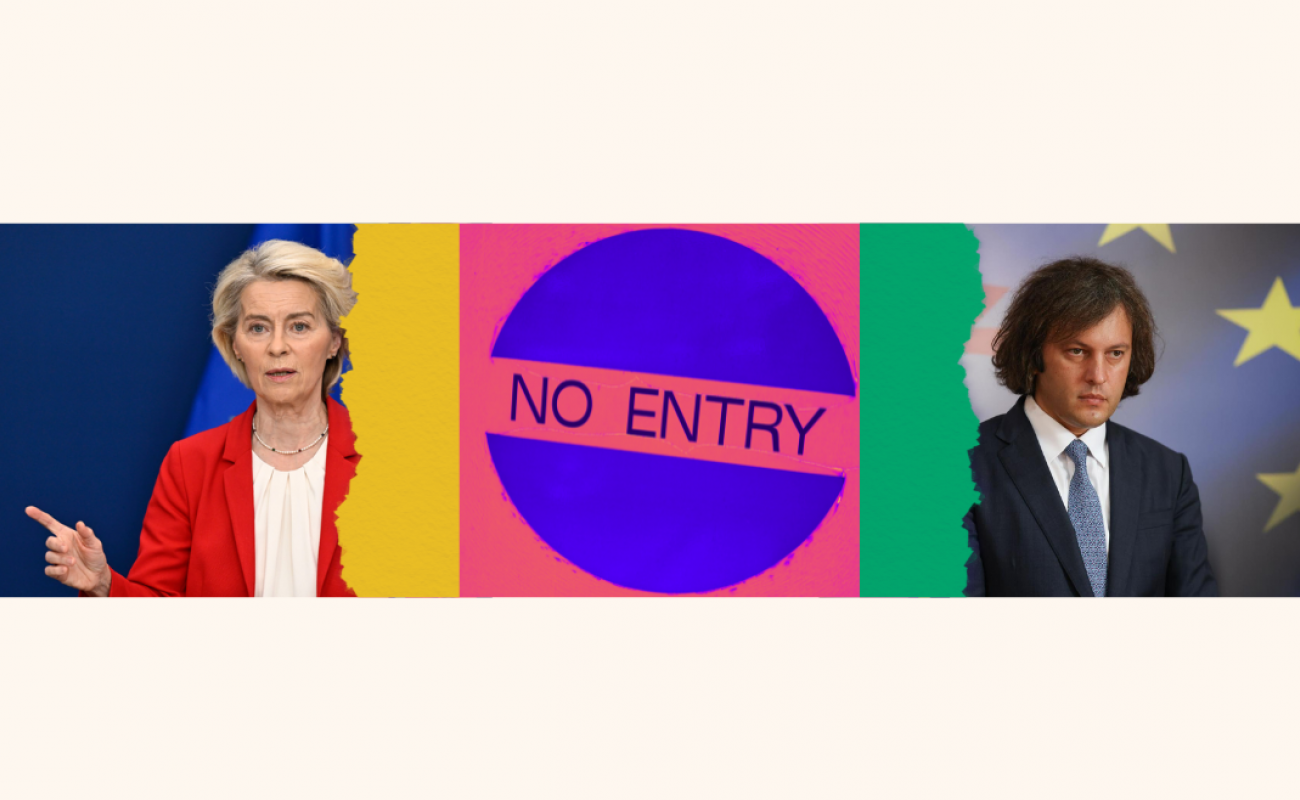
The speed of Georgia’s authoritarian descent has stunned many in Europe. Once hailed as a success story for public administration reforms, anti-corruption efforts, and European integration, Georgia now makes headlines for violent crackdowns on dissent, draconian laws curbing freedoms of speech and expression, illicit trade flows benefiting Russia, and the alleged use of chemical agents against protesters.
Tornike Zurabashvili is a researcher and practitioner focused on political, social, and security affairs in Georgia and the broader Black Sea region. He is a former chief editor of Civil.ge.
The authoritarian turn has already left its visible mark. Tbilisi, which just two years ago was a thriving hub for think tanks, civil society, and media gatherings, is no longer so. The opposition, frail but still diverse and vibrant, has been sidelined, imprisoned, or pushed into unofficial exile. Media outlets and civil society organizations have either ceased operations or have been working in survival mode. The protest movement, the last remaining pocket of physical resistance, has been steadily weakened, first through naked violence and then through cripplingly high fines, detentions, and other forms of harassment. Accounts of people leaving Georgia – some out of fear of retribution or some out of desperation – are becoming ever more common.
Georgia’s authoritarian turn is real, and the Georgian Dream is doing it by the book.
In short, Georgia’s authoritarian turn is real, and the Georgian Dream is doing it by the book. Having secured the loyalty of security forces, disciplined their own ranks, and taken control of all remaining cash flows, the authorities have consolidated power to a degree unprecedented in contemporary Georgian history. But asserting full dominance requires more than brute force, internal cohesion, and money. Just like in other authoritarian settings, the battle is waged as much on television screens as in rubber-stamp courtrooms, and on Rustaveli Avenue, the country’s main thoroughfare and the traditional site of anti-government rallies.
Winning the battle of minds
The GD has been far from innovative in information control, scrupulously following the well-worn playbook of repressive regimes. Like their peers in Russia, Belarus, and elsewhere, they have built their narrative around fear, portraying the nation, with its values and way of life, as being under threat from enemies, be it internal or external.
First, it was the previous ruling party, Mikheil Saakashvili’s United National Movement, but as GD’s post-2012 momentum waned, the storyline lost resonance in large swaths of the population. After this, the media and civil society organizations more broadly became the primary scapegoats. Then, after 2022, the infamous “Global War Party” entered the rhetoric of GD leaders, later accompanied by the equally opaque idea of a “Deep State.” The concepts were confusing, perhaps intentionally so, but the underlying message was simple, if not primitive: shadowy forces operate behind the scenes, pulling the strings of nations and deciding the course of global affairs. In this framing, Georgia appeared in the crosshairs of global powers (read the West), who sought to drag the country into a devastating war with Russia, but Tbilisi was heroically resistant to pressure.
The absurdity of these claims was laid bare by Mariam Lashkhi, a ruling party MP and deputy chair of the parliament’s Foreign Relations Committee, who, caught off guard by a journalist’s follow-up question – a rare breach of the usual GD script – likened, perhaps half in disbelief herself, the Global War Party to the ‘Freemasons’. Yet absurdity aside, the relentless repetition of such claims – that Georgia was under threat, first from hidden forces and, if it did not “behave,” perhaps later from Russia – has left a lasting imprint on public sentiment. In January 2025, nearly half of the respondents believed that the threat of war with Russia was real.
But claims of shadowy forces steering global affairs still lacked credibility: every enemy needs a face, and that face was missing. True, it was clear who GD was implicating – the US and Europe – but the connection was not always spelled out. With Trump coming to power and the new administration downplaying democracy rhetoric, including towards Georgia, the US ceased to be a viable target. GD therefore made a choice.
The EU, above all, the European Commission and its so-called “Eurobureaucrats,” became the new and almost exclusive target of GD’s propaganda narratives. Although this shift was partly a reaction to mounting criticism from Brussels over democratic backsliding, it also served another objective: GD recognized that consolidating its power required eroding Georgians’ historically high level of trust in, and enthusiasm for European integration and EU institutions, which always served as a benchmark for democratic progress for Georgians.
According to the EU Neighbors East 2025 report, the share of Georgians with a positive image of the European Union has dropped from 60% to 43