
Three conclusions for Ukraine after Magyar's victory in Hungary
€90 billion for Ukraine and a "kiss of death" for populists. How the Hungarian elections will affect Brussels and Kyiv
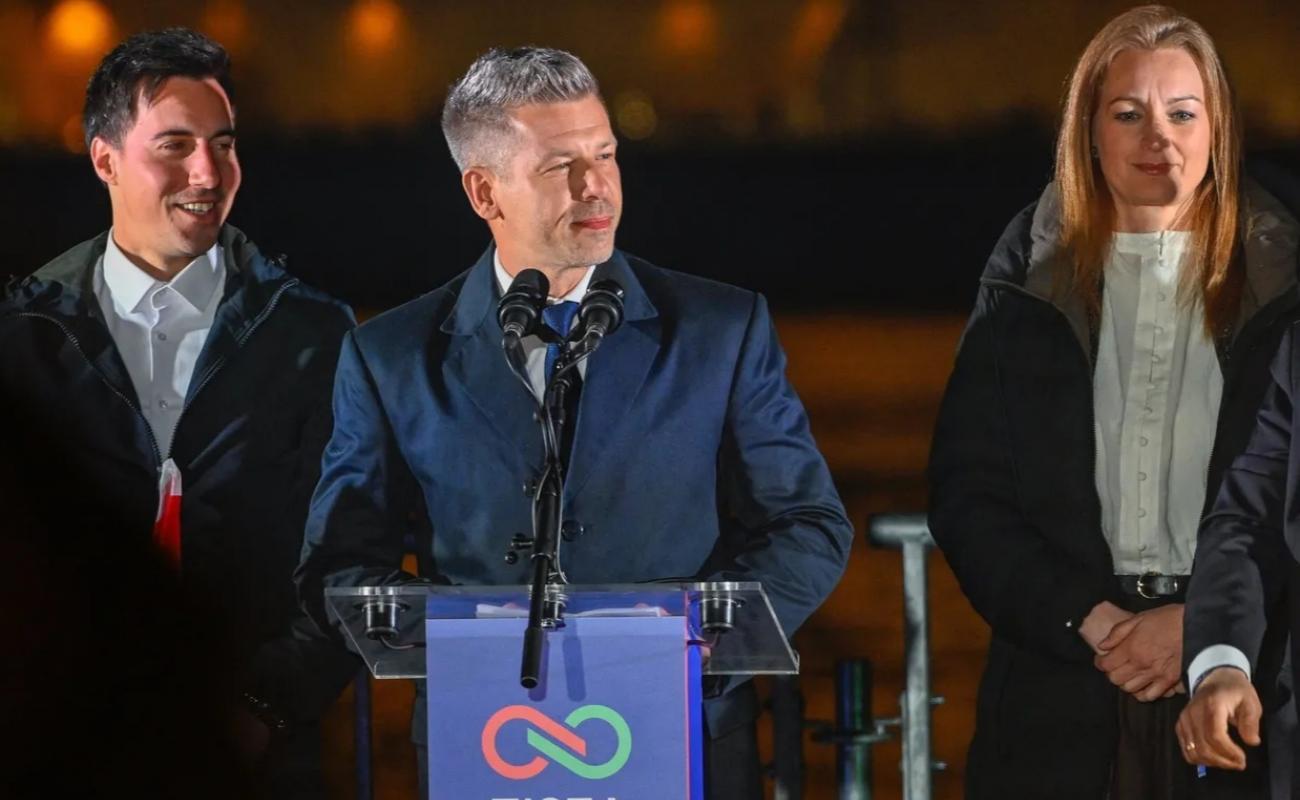
Péter Magyar's victory in Hungary destroys a 16-year-old system of power Viktor Orbán and gives a chance for a radical rebooting relationships Brussels and Kyiv with Budapest. The new leader also states that Hungary will not block the EU loan to Ukraine for €90 billion.
Brussels demands confirmation of reforms from Hungary. Orbán's defeat also hits the Kremlin and the global camp of populists, including Donald Trump. LIGA.net reread The Guardian, Politico, Die Welt, The Times, The Atlantic, The Telegraph, Foreign Policy and drew three conclusions from the victory of the Hungarian opposition.
Mihály Varga promises not to block €90 billion for Ukraine
The landslide victory of the Fidesz party in the Hungarian elections put an end to the 16-year rule of the right-wing populist. Viktor Orbán"Tisa" won 138 seats in the 199-seat parliament. In contrast, Orban's "Fidesz" won 55 seats.
Thanks to this, "Tisa" has two-thirds of the votes. This allows Magyar to push through constitutional changes.
Mayer will likely become prime minister on May 5. His priority is to unblock €18 billion from EU funds frozen due to Orbán's retreat from democracy. He also seeks to obtain €16 billion in European defense loans and cancel the €1 million per day fine that the EU imposed on Budapest for non-compliance with migration legislation.
But Brussels will not simply give this money to Hungary. It must prove that it wants to reform Orbán's authoritarian state. Brussels has a set of demands that Hungary must meet.
For Brussels, the key goal is for Hungary to lift its veto on the EU's €90 billion loan to Kyiv and to support a new package of sanctions against Russia. The European Commission wants Budapest to stop resisting the start of official negotiations on Ukraine's accession to the European Union.
Time is running out for Hungary – it will lose EU funds if it does not carry out reforms in the area of the rule of law by August.
On Monday, in a telephone conversation with the head of the European Commission, by Ursula von der Leyen Mayer pledged to align Hungary's commitments to reforms and implement anti-corruption measures, including joining the European Public Prosecutor's Office, ensuring the independence of the judiciary, and protecting media freedom.
Von der Leyen expressed optimism about a possible reboot: "We will start cooperating with the government as soon as possible to achieve rapid and proper progress for the benefit of the Hungarian people."
President Volodymyr Zelenskyy stated that Ukraine "is ready for meetings and joint constructive work for the benefit of both peoples, peace, security and stability in Europe."
Ukraine is a delicate topic for Hungary, given the strong anti-Ukrainian sentiment in the country, but diplomats are confident that a compromise can be reached.
Hungary for EU sanctions against Russia
Although Madyar referred to Moscow as a "security threat" to Europe in his speech, some of his statements on Russia and Ukraine are not too different from Orbán's words. For example, he hopes that Russian aggression will soon cease so that sanctions against Russia can be lifted.
"We are Russia's neighbors, and it is not in Europe's interest to buy raw materials at higher prices, because it destroys our competitiveness," Madjar said.
Mayer added that Hungary wants to buy Russian oil, but agrees that EU sanctions against Russia should remain in place during the war against Ukraine.
Orbán called himself a "mouse" helping the "lion" (Putin) during a phone conversation with the Russian dictator, which was made public in the media before the elections.
Head of the Ministry of Foreign Affairs Péter Szijjártó He became the subject of two publications in the final days of the campaign – his conversations with the head of the Russian Foreign Ministry were leaked to the media. by Sergey Lavrov, where he directly carries out the instructions of his Russian counterpart.
The new Hungarian government may initiate legal proceedings against Orbán and Szijjártó for corruption and treason. Consequently, both may seek refuge in Moscow.
For many years, the Russian capital has been a haven for deposed dictators – from Viktor Yanukovych to Bashar al-Assad.
Trump's "kiss of death" for European right-wing populists
Orban's defeat is a blow to the far-right in Europe and to Trumpism in the US.
Mayer's victory dealt a blow to Trump and his MAGA movement. As former Trump advisor Steve Bannon once said, Orban was "Trump before Trump" – a strongman leader of illiberal, bulldozer politics.
Trump has repeatedly supported Orbán. The political and ideological importance of the Hungarian prime minister to the US president was underscored by last week's visit of the vice president. J.D. Vance to Hungary.
"We wanted to show that there are many friends in the world who recognize that Viktor and his government are doing a good job, and that they are important partners," Vance said.
Across Europe, right-wing populists are now either distancing themselves from Trump or suffering from the association with his brand.
The scale of Magyar's victory has made some European right-wingers wonder if backing Trump might be a "kiss of death." Belgium's defense minister, Theo Francken, called Vance's endorsement "a stupid pre-election move."
"I am a right-wing politician, and I think the far-right is behaving foolishly. MAGA should stop its international campaign because everyone they support loses elections," Franken said.
Orban's defeat puts an end to Putin's belief that illiberal parties are destined to win and will hold power forever because they have the support of the "real" people. It turns out that's not the case. "Real" people get tired of rulers, and old ideas become stale. Young people doubt orthodoxy. Illiberalism leads to corruption. If Orban can lose, then his Russian and American admirers can too, writes historian Anne Applebaum.
For Trump and his allies, the outcome of the Hungarian elections underscores the limits of the culture war as a sustainable political strategy. Voters, ultimately, are looking for real improvements in their daily lives. At the same time, corruption, especially when linked to the leader, his family, and associates, is a slow-acting poison.
For Trump's opponents, the lessons are clear: they should not be afraid to challenge the populist movement based on patriotism and nationalism. But candidates need new, appealing ideas and a campaign outside the comfort zone of urban electoral strongholds. They should focus on non-ideological, pressing issues – corruption, the cost of public healthcare. Finally, they should go on social media to connect with young voters.